Investment, growth follows streetscape completion
TONY BROWN/DAILY FORUM
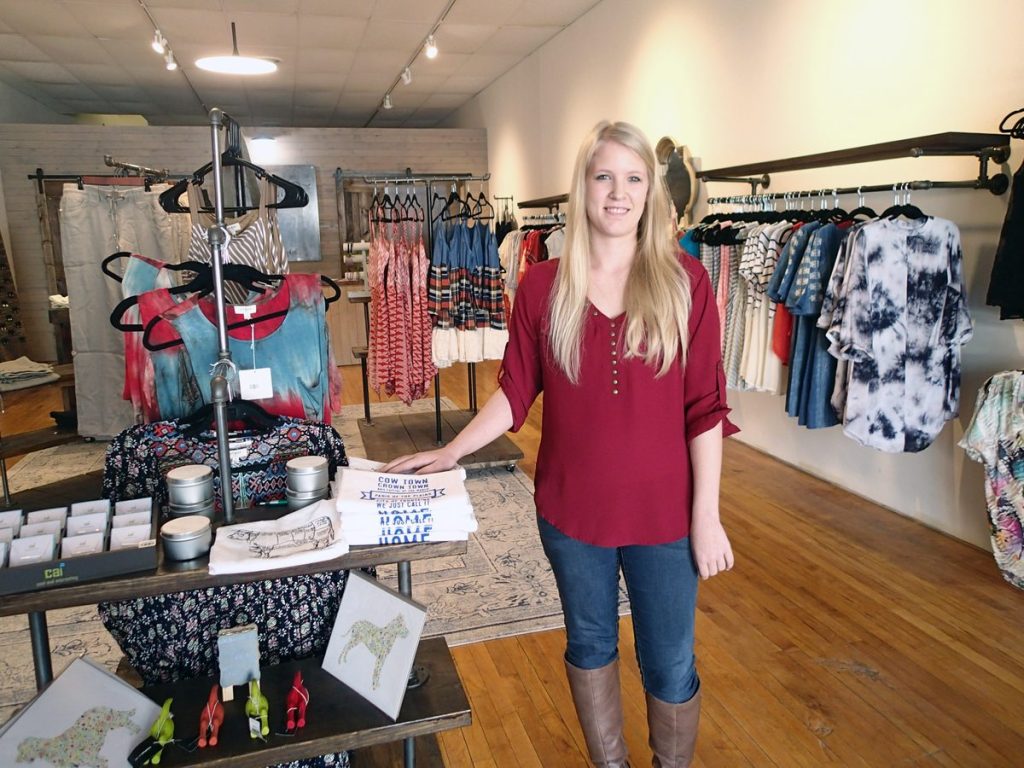
Sales clerk Shayna Emery stands amid displays of merchandise at the Blue Willow Boutique, located at 220 N. Main St. in Maryville. The specialty clothing shop is one of several new downtown businesses that have opened their doors since completion of the courthouse square streetscape in 2011.
The change has been so gradual that somebody who drives or walks Maryville’s streets on a daily basis may not notice much of a difference, but over the past six years a quiet transformation has been occurring around the courthouse square and other parts of downtown.
Nodaway County Economic Development, a non-profit corporation whose goal is to plan for growth while recruiting new enterprises to the Maryville area, recently released a list of completed downtown projects and initiatives, which taken together reveal a steady pattern of growth and renewal in the city’s central business district.
It’s hard to say if the there’s a connection, but all of the developments cited in the brief report by NCED Executive Director Josh McKim have followed completion of a citizen-led campaign to fund and construct a new streetscape around the square, an effort that was completed in late summer of 2011.
In addition to new sidewalks and pavement, the $3 million upgrade included vintage-style street lighting, decorative masonry, and public sculpture.
McKim said that like the architecturally related Fourth Street pedestrian corridor, which was built at a cost of around $2 million and dedicated in 2015, the square overhaul relied on various funding sources, including local tax dollars and $500,000 in Neighborhood Assistance Program tax credits.
Taken together, the sale of NAP credits provided nearly one-fifth of the funding for the combined $5-million-plus investment required to renovate both the square and West Fourth Street between downtown and the main entrance to the Northwest Missouri State University campus.
Other state aid for downtown has come in form of $252,000 from the Missouri Development Finance Board, which was made available in the form of low-interest loans to merchants and business owners seeking to improve storefront facades, add awnings, and make other renovations.
McKim believes the influx of cash has helped create a climate that supports renovation, expansion, and retail startups, and noted that even though a couple of downtown businesses have closed in the last few years, more than a half-dozen new enterprises have started serving customers.
These include Veronica Luke Accounting; Miles & Me Photography; the Minnie Lane antique and collectibles shop; Home by Sonja, a home décor and custom furniture retailer and consultant; Encryption Entertainment; On the Spot Designs; Blue Willow Boutique; and Rapid Elite, a toner and ink supplier that also provides printing services.
What’s more, McKim said, NCED has been working in support of a number of proposed downtown ventures now in various stages of development with an eye toward the creation of new businesses either on or near the square. These include a coffee shop, a board game store, four restaurants, and two commercial redevelopments in the form of building remodels the owner would then seek to lease to commercial tenants.
As far as recruiting goes, McKim said his office is concentrating on niche stores that will offer customers “an experience and not just a place to buy stuff.”
Niche and specialty shops can have a dramatic effect in terms of rejuvenating small-town central business districts, McKim said, citing the example of Hamilton, a town of 1,800 people in Caldwell County that has become a national tourist destination for quilters.
Jenny Doan founded the Missouri Star Quilt Co. in Hamilton in 2008. Since then at least a dozen new businesses, including both restaurants and shops related to fabric and quilting gear, have sprouted along the town’s main street.
Hamilton officials estimate that during some months, Star Quilt-related businesses and events bring as many as 3,000 quilters and other tourists to town.
McKim said that what Hamilton is doing is exactly the kind of thing he would like to see in Maryville — specialty shops, eateries, and pastime-oriented stores that draw people from other communities while creating jobs and fueling the local retail economy.
“Niche stores and small boutiques — that’s our main focus for downtown,” he said, adding that Arkansas-based consultant Ron Drake, who recently toured Maryville at the request of the Community Foundation of Northwest Missouri, advocated a similar strategy during his visit here earlier this month.