Volunteer seeks funds to aid African school
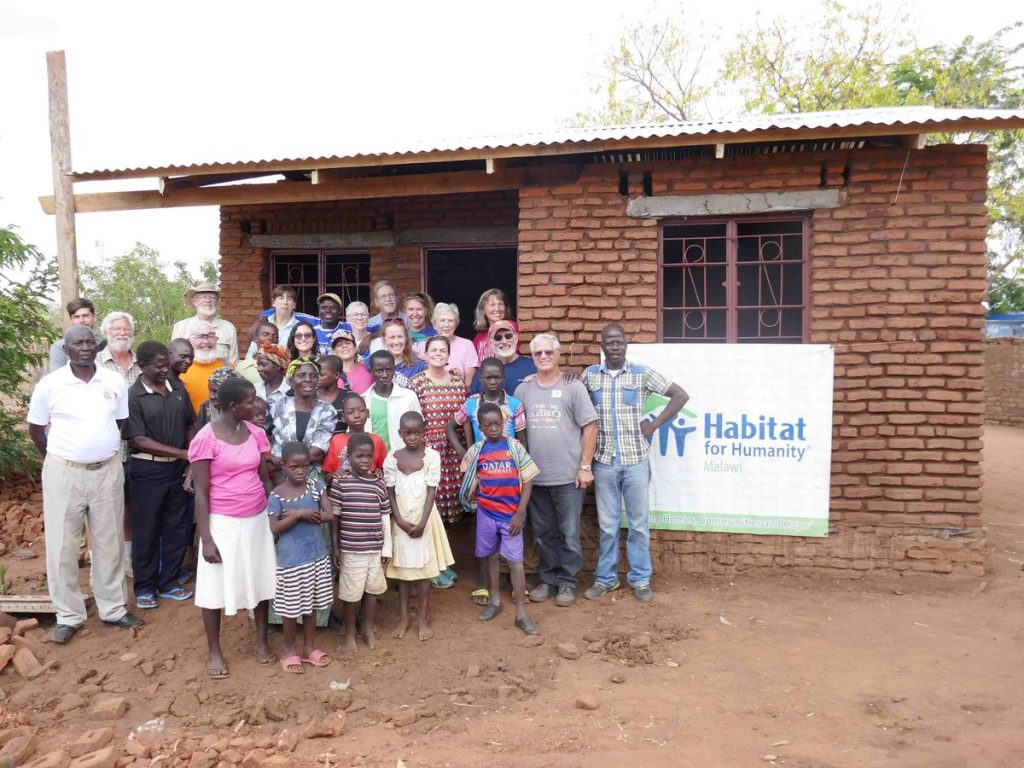
SUBMITTED PHOTO
Maryville resident Joe Ford, second from right, is shown with fellow Habitat for Humanity volunteers and residents of Kambwiri, Malawi, the African village where Ford and his Habitat colleagues built three small houses for women raising their orphaned grandchildren.
To most Americans the poverty afflicting millions of people in developing nations worldwide are just stories they see on television or read in a newspaper.
But for Joe Ford, a retired livestock biologist known in Maryville for his work with the local Habitat for Humanity organization, the suffering of the world’s poor and dispossessed is real and personal. He’s seen it up close, and he’s working hard to do something about it.
In a display of the kind of hands-on compassion that fuels his work with Nodaway County Habitat, Ford, along with a small group of like-minded volunteers, journeyed late last year to Malawi, a small country in southeast Africa.
Their mission in Malawi, supported by Habitat’s Global Villages program, was to build houses in a rural community decimated a decade and a half ago by the AIDS epidemic.
While in the village of Kambwiri near the central Malawian city of Salima, the group built three small brick houses for women raising their orphaned grandchildren.
“It was the most emotionally gratifying ministry of my life,” said Ford, a devout Christian who belongs to the First United Methodist Church of Maryville.
Malawi is among the world’s least-developed and poorest countries, and approximately 85 percent of the population lives in places like Kambwiri, which lacks electricity and plumbing. In recent years, much of the economy has been dependent on substantial economic aid from the World Bank, the International Monetary Fund, and more fortunate nations.
In January 2015, southern Malawi was devastated by catastrophic flooding, which, according to UNICEF, the United Nations Children’s Fund, displaced 336,000 people.
The Habitat houses in Kambwiri, Ford said, were built of clay brick with corrugated tin roofs and neighboring outhouses. He said the three-room dwellings represented a genuine step up in terms of quality of life.
But for some people, doing just one good thing isn’t enough. When needs arise they simply strive to address them, and Ford is one of those people.
During their two weeks in Kambwiri, Ford and his fellow Habitat volunteers walked almost daily past the village school.
Free public education is relatively new to Malawi, and the nation has been struggling to build and equip enough classrooms to serve its children, many of whom come from families eking out a living through subsistence agriculture.
Intrigued by the school, the Habitat volunteers paid a visit and learned that the most basic kinds of equipment and furnishing — including desks — were in short supply.
The children start learning English in first grade, and Ford said one youngster asked him if it would be possible for the Americans to provide some desks “so we don’t have to sit in the dirt.”
Ford said he and some other Habitat workers started talking that over and began to realize, “Hey, we can make this happen.”
But unfortunately, Habitat for Humanity is in the house-building business, not the desk business, and going through Habitat, Ford said, might place unrealistic expectations on future teams of volunteers.
Then a small miracle occurred, what Ford called “the blessing of God.”
On the way back to Johannesburg, South Africa, to catch their flight home, the Americans ran into the husband of the U.S. Malawian ambassador, who told them about a charity named Child Legacy International that just might be willing to construct and deliver school desks to Kambwiri — if somebody could come up with the money.
Soon a deal was struck. The Habitat group would return to the states, and each volunteer who wished to do so would try to raise money in their home community to pay for a total of 100 two-person desks. Ford, of course, signed on to do his bit and has enlisted the local Ministerial Fellowship to assist with fundraising.
The amount needed to make school desks a reality in Kambwiri is $6,800.
“They don’t have electricity, and good quality water is carried from village wells to houses,” said Ford, who has also participated in Habitat trips to India, Bali, and Haiti but found that the Malawians touched a special place in his heart.
He described Kambwiri as a hopeful, well-scrubbed community filled with adults who work hard for a meager living village and children eager to receive an education.
“They’re happy people,” he said. “They just don’t have much.”
Anyone wishing to contribute to the school desk project can mail a check made out to the Maryville Ministerial Fellowship in care for Ford at 26912 Haultain Drive, Maryville, MO, 64468.
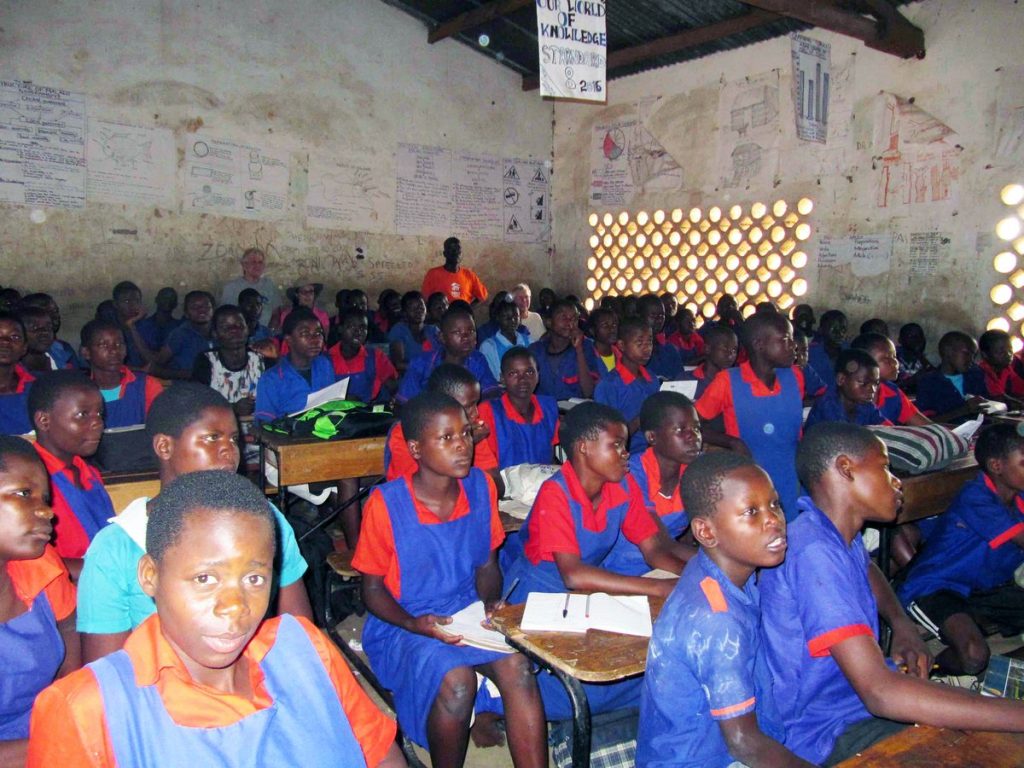
SUBMITTED PHOTO
Eighth graders in Kambwiri, Malawi, gather in a large room at their school to greet members of a Habitat for Humanity team that included Maryville resident Joe Ford, who is currently raising money to provide the school with 100 new desks.
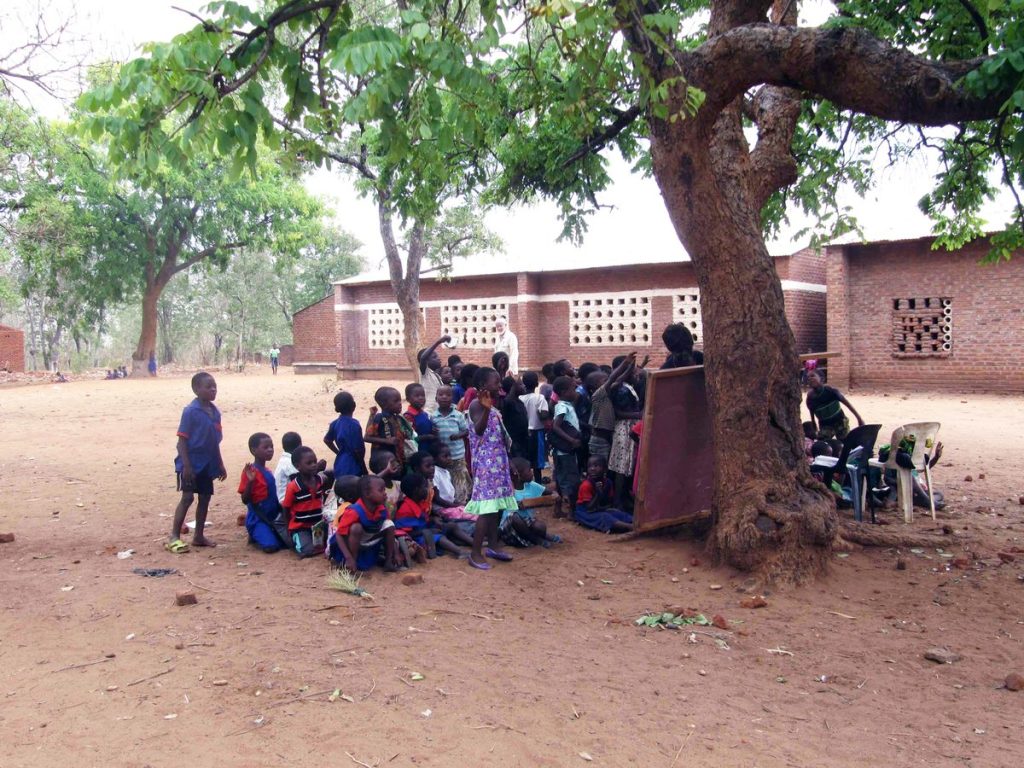
SUBMITTED PHOTO
Malawian children attend a class taught just outside their school in the village of Kambwiri. Habitat for Humanity volunteer Joe Ford is seeking to raise money to buy desks for the school, where one young student told him he was tired of “sitting in the dirt.”