City setting stage for sales tax renewal vote
TONY BROWN/DAILY FORUM
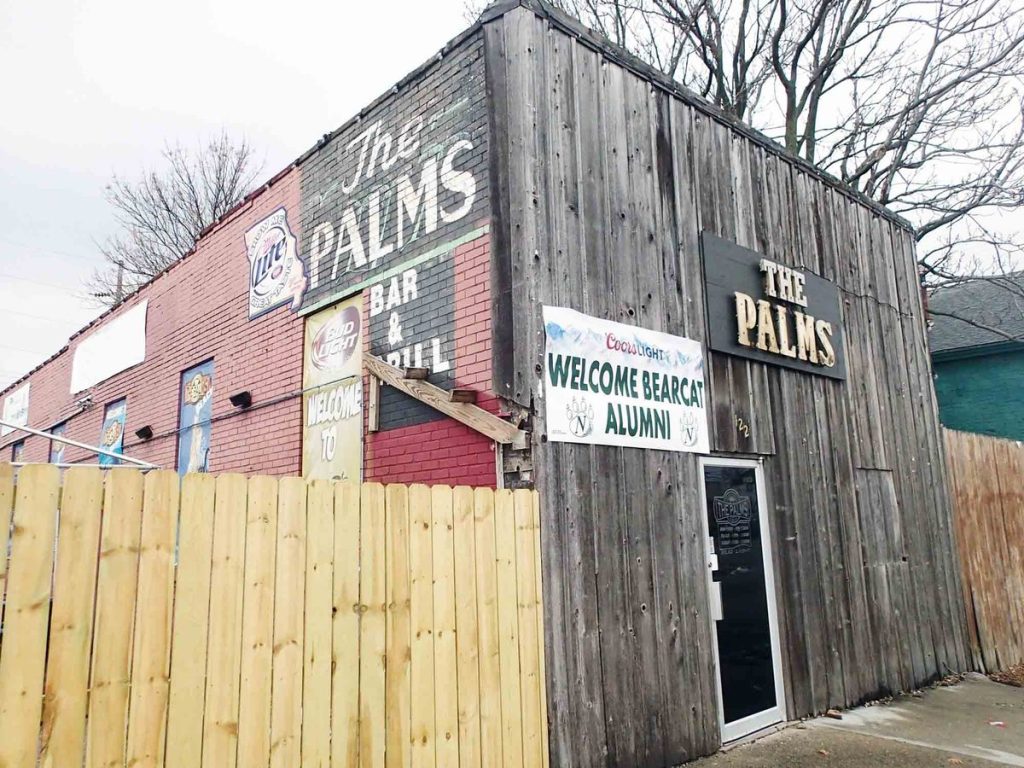
Business before the Maryville City Council this week included scheduling of a liquor license suspension/revocation hearing involving The Palms bar set for 6 p.m. Wednesday, Jan.18, at City Hall. The hearing was requested by the governing board following reports of violations in connection with a food truck with expired plates, which has since been moved, and the sale of alcohol to minors.
In a Maryville City Council meeting this week given over largely to tax issues, City Manager Greg McDanel presented the five-member board with information regarding the city’s half-cent capital improvements sales tax, which “sunsets” — that is, goes off the books — in September 2018.
Before that happens, McDanel said, the city needs to make every effort to inform voters about the importance of the tax before it comes up for renewal, probably during the April 4 municipal election.
The tax was originally approved by voters in 2008 and produces nearly $1 million a year, which for the past decade has been used to pay for everything from street reconstructions to two new fire trucks.
A partial list of projects and purchases funded with capital improvements revenue includes the resurfacing of Main Street between First and Halsey; reconstructions of 16th Street, Munn Avenue, and Depot Street; the Fourth Street pedestrian corridor; storm water infrastructure associated with retail development along East First Street; seven new pedestrian/bicycle trails; a new storm siren system; new dump trucks and snow plows; and two new fire trucks.
McDanel called renewal of the sales tax “critical for the equipment and capital improvement needs of the city.”
Among those needs, as set forth in a list of priorities approved by the council at the start of the new budget year, are a $5 million police and fire headquarters; $3 million in “phase one” traffic flow improvements along South Main; at least $2 million in proposed asphalt overlays for city streets; a $1.5 million aerial ladder truck for the fire division; $150,000 for 911 equipment; a replacement fire truck; and a new dump truck.
But while priorities with regard to foreseeable capital expenditures have been set, the exact form of the tax proposal to be placed before voters has not.
As opposed to seeking another 10-year levy, McDanel suggested asking citizens to renew the tax for 20 years, or even to make it permanent.
He said enacting the tax for less than 20 years might make it difficult to finance large-scale expenditures such as the Public Safety headquarters.
Essentially, cities can use capital improvements income in one of two ways: by letting funds accumulate and paying cash for the project at hand or by borrowing capital funds and servicing the debt with tax revenue.
While the “pay as you go” approach works for smaller initiatives, McDanel said, larger investments in buildings, infrastructure, and equipment generally have to be financed. And having a long-term revenue stream makes obtaining such financing a lot easier.
Following McDanel’s remarks, Mayor Jason McDowell said a tax implemented over a longer term could provide continuity, offering the example of a “permanent” program to overlay streets.
Councilman Tim Shipley also commented that lengthening the sunset clause — or dispensing with it altogether — would indeed make it easier to pay for major projects.
However, Councilman Jerry Riggs said he was not sure the “ten-year track record” of the current levy gave the council a mandate for asking voters to approve a tax that would never come off the books.
“I don’t think it ever hurts to go back and get reconfirmation from the voters,” Riggs said, adding that the priorities of the current council might not be the same as those set forth in the future.
Following the discussion, McDanel said municipal staff would prepare two or three ordinances defining the renewal proposition’s parameters for council consideration at its next regular session in two weeks.
He said following the meeting that all three options — no sunset, a 20-year sunset, and a 10-year sunset — were still on the table, but that in his view the 10-year option “wouldn’t really accomplish all the needs.”
In other business this week, the council was told that a liquor license hearing with regard to alleged infractions at The Palms bar, located at 422 N. Buchanan St., would take place at 6 p.m. Wednesday, Jan. 18, at City Hall.
Back in October the council ordered City Attorney Taryn Henry to begin the notification procedure for holding the suspension/revocation hearing, which is to address reported violations involving a food truck parked on Palms property that, according to Public Safety Director Keith Wood, has been cited several times for expired plates.
The truck has since been moved.
Council members called for the hearing after learning of an incident in which police were summoned to the bar by an anonymous caller who alleged underage drinking at the establishment.
Wood said four people were inside The Palms when an officer responded, the bartender and three reportedly underage patrons. All four were arrested.
During such hearings, the council essentially acts as a judge and jury. Following arguments by both sides, the governing board has the power to revoke a liquor license, suspend it, issue a warning, or take no action.
Also on Monday, the council:
· Passed an ordinance approving the issuance of $7.7 million in Certificates of Participation, a form of debt that will be used to finance a $4 million conference center at Mozingo Lake Recreation Park and a $3 million comprehensive replacement of municipal water meters.
· Approved an ordinance enacting a voter-renewed half-cent sales tax, revenues from which are earmarked for maintenance, operations, and development at Mozingo Lake Recreation Park. The tax will be collected for a term of 20 years.
· Approved an ordinance executing a contract with ZENON Environmental Corp., which is to perform a facilities audit of the municipal water treatment plant. A main goal of the audit is to inspect the plant’s five-year-old filter membranes, which have a useful life of between seven and 10 years and will cost between $2 million and $3 million to replace.
· Passed an ordinance establishing a voter-approved transient guest tax in the form of a 5-percent surcharge added to local hotel bills. Revenue derived from the tax, which goes into effect April 1, will help finance construction of a new multipurpose athletics facility at Northwest Missouri State University and provide funds for various initiatives designed to enhance tourism and economic development.