Effort continues to get word out on bed tax
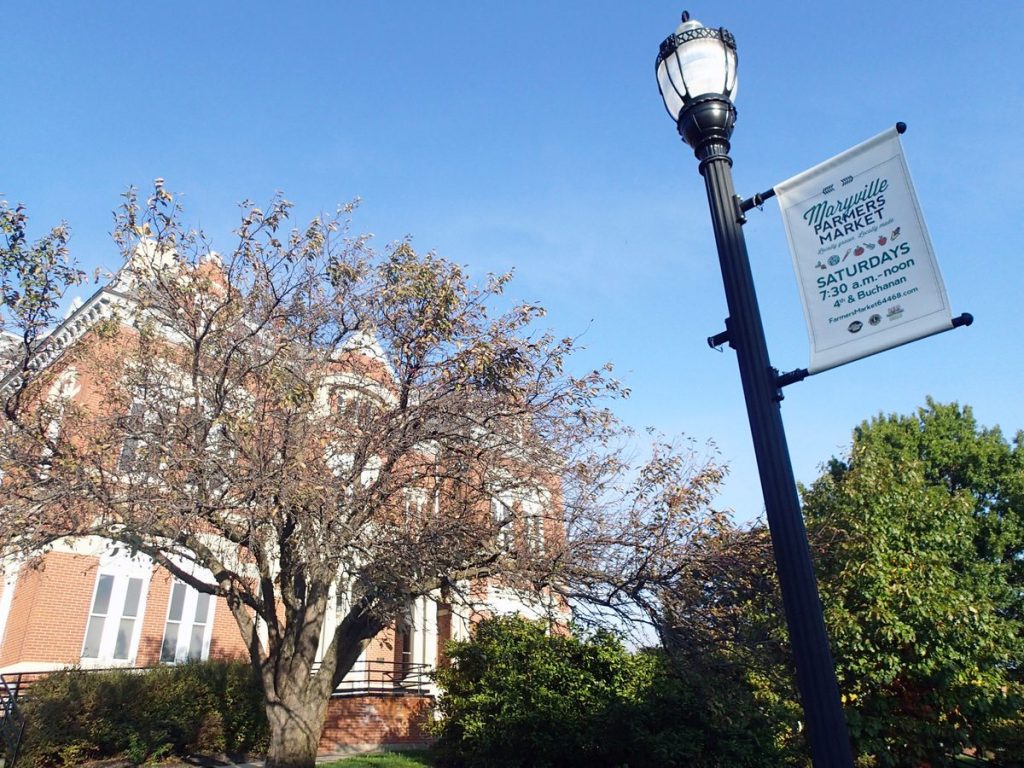
TONY BROWN/DAILY FORUM
A wiring error associated with installation of LED bulbs in streetlights on the Maryville square this spring is gradually causing the fixtures to fail. According to city Public Works Director C.E. Goodall, general contractor Brightergy has accepted responsibility for the mistake and pledged to correct it. So far, more than a half-dozen of the nearly 30 streetlights on the square have burned out. Goodall said the remainder will fail as well unless repaired in the near future.
The upcoming general election on Nov. 8 was the focus of this week’s Maryville-Nodaway County Joint Planning Task Force quarterly meeting hosted by the Northwest Missouri Regional Council of Governments.
Those attending included Maryville City Manager Greg McDanel, who summarized an ongoing informational campaign designed to educate voters about a local ballot question calling for creation of a 5-percent transient guest tax that would be added as a surcharge to local hotel bills.
Commonly referred to as a “bed tax,” the levy, if approved by voters, would produce an estimated $215,000 annually earmarked by state law for the sole purpose of enhancing tourism and encouraging economic development.
The proposal has generated a lot of attention because a portion of the tax, which would add just under $4 a night to the cost of the average hotel stay, is to help pay for a $20 million athletics and special-events venue to be constructed on the campus of Northwest Missouri State University.
Should the tax pass, the city is proposing to subsidize center construction and maintenance by transferring $150,000 a year to Northwest over 23 years. The remaining $65,000 would go for other tourism and economic development initiatives likely to be carried out by the city in concert with the Greater Maryville Chamber of Commerce, the Maryville Downtown Improvement Association, Nodaway County Economic Development, and Maryville Parks & Recreation.
Just who gets a share of that yearly $65,000 — an estimate derived from current hotel occupancy rates — is to be decided by a committee, not yet formed, comprising civic leaders, local government officials, and university representatives.
Prohibited by law from advocating directly for the bed tax proposal, McDanel, along with senior administrators from Northwest, has been making the rounds of service clubs and other community groups in order to educate voters about the proposal and its possible effects on the Maryville region.
McDanel said during Monday’s Task Force meeting that he has made about 50 bed tax presentations so far and received both positive and negative feedback from citizens.
He said he has also encountered a number of “misconceptions,” including the idea that bed tax revenues would be better spent on streets, sewers, law enforcement, and other basic municipal services. But while more money for streets might be nice, under Missouri law proceeds from transient guest taxes can only be used to promote tourism and economic development.
McDanel said some voters opposed to the proposed levy appear motivated by the deep national divisions coloring the current presidential campaign and a widespread distrust of government at all levels.
“I think there is a tendency by some just to throw negativity out there and see what sticks,” McDanel said, adding that reaction to the tax appears to moderate when people learn it is supported by local business interests and organizations, including Maryville’s hotel owners.
“There are those who support the proposal and those who are against it,” he said. “Our job is just to provide information.”
McDanel added that Missouri’s bed tax statute allows such proposals to be placed before voters only every other year, so that if the proposal fails it won’t return to the ballot until at least 2018.
Given that a similar bed-tax question failed by a handful of votes back in 2003, McDanel said a second defeat could spell the end of efforts to install such a levy in the foreseeable future.
Had Maryville citizens approved the original proposal, McDanel estimated that about $2.5 million would have been produced in support of local tourism and economic development over the past 13 years.
Also speaking at this week’s meeting was Public Works Director C.E. Goodall, who described a wiring glitch that has snuffed more than a half-dozen streetlights on the downtown square recently outfitted with high-efficiency LED bulbs.
Goodall said a subcontractor hired by the Brightergy company to install the LED fixtures mis-wired the units back in April, and that all of the nearly 30 streetlamps lining both sides of the square will eventually fail if the mistake is not corrected.
Brightergy, he said, has acknowledged the error and pledged to rewire the streetlights at no cost to the city.
Turning to issues beyond the city limits, North District Nodaway County Commissioner Robert Westfall told the Task Force that the chore of repaving two winding streets serving the Timberview subdivision just north of town is complete.
Earlier this year, Timberview residents asked the county to approve the creation of a Neighborhood Improvement District, in essence a special taxing entity through which revenues will be collected from the subdivision’s 24 property owners in order to reimburse the county for paving costs.
The county provided the necessary funding up front, about $150,000, an amount that is to be repaid interest free by NID members over the next seven years.
Keller Construction of St. Joseph was hired to pave the streets with a 5-inch layer of asphalt and completed the project a little over two weeks ago, Westfall said.
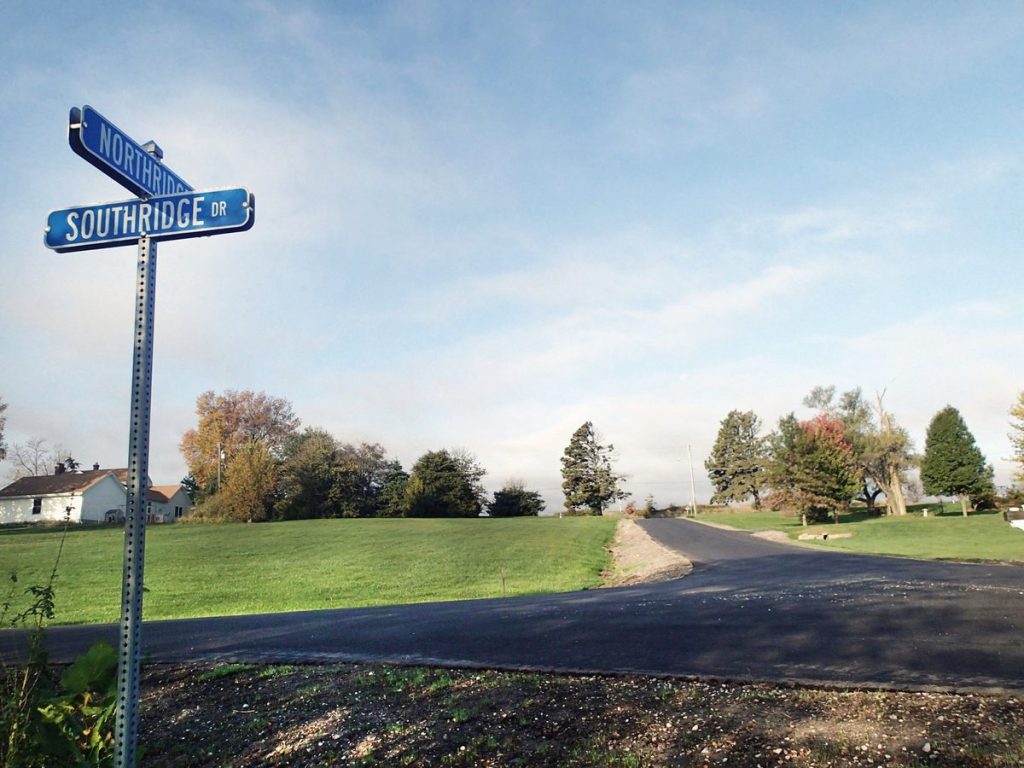
TONY BROWN/DAILY FORUM
Repaving of two winding streets serving the Timberview residential subdivision just north of the city limits is now complete. The project went forward following creation of a Neighborhood Improvement District through which residents will reimburse Nodaway County over seven years for $150,000 in up-front asphalting costs.