Officials reach out to voters on ‘bed tax’
TONY BROWN/DAILY FORUM
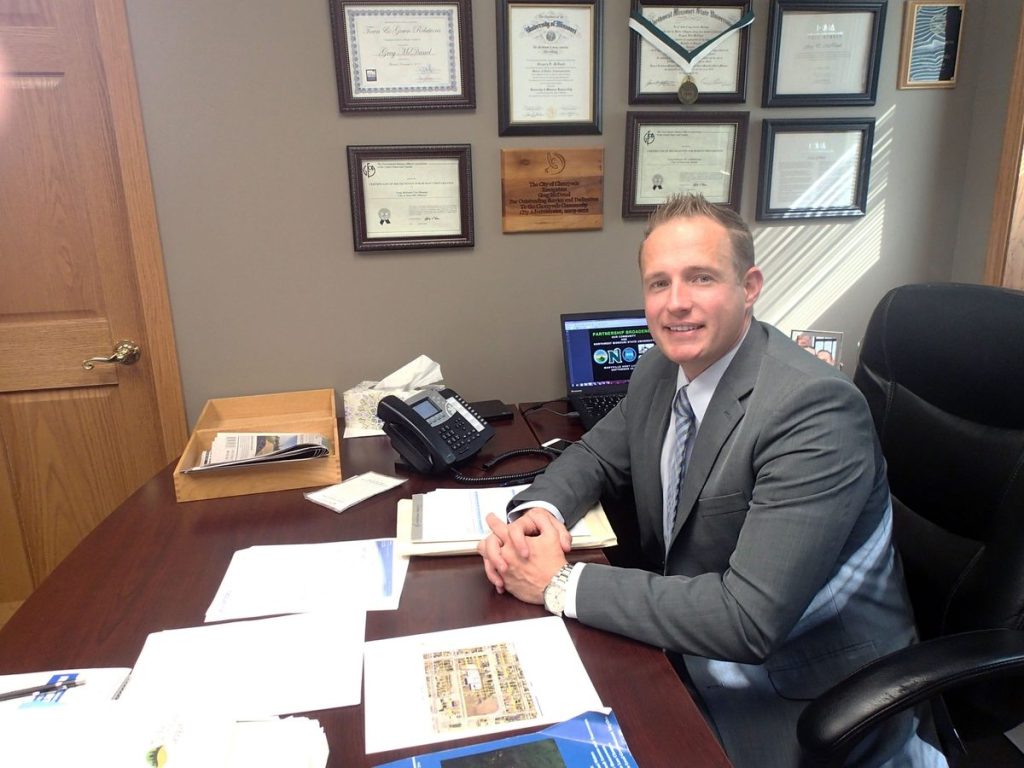
Maryville City Manager Greg McDanel has been staying busy these days speaking to local service clubs and civic groups about a proposed bed tax set to go before voters in the November general election. If passed, part of the revenue from the levy would be used to help construct a $20 million indoor athletics and special events center on the campus of Northwest Missouri State University.
In something of a repeat of the effort to educate voters earlier this year about a couple of sales tax measures earmarked for development and operations at Mozingo Lake Recreation Park — including construction of a $3.4 million conference center — the City of Maryville is once again reaching out to citizens with regard to creation of a new revenue stream tied to a major capital project.
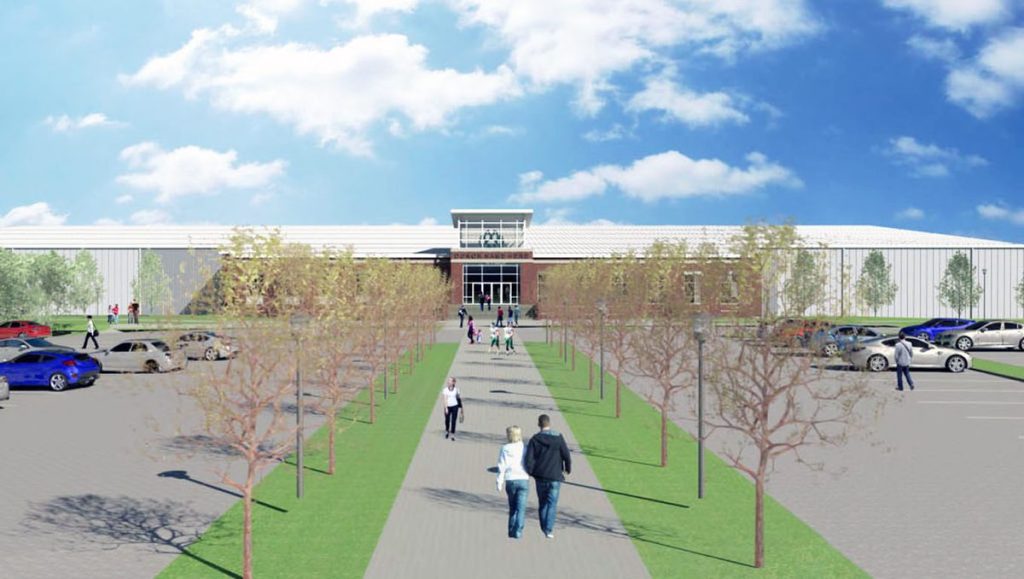
This time the issue at hand is a proposed $20 million dollar multipurpose building — in essence a giant indoor sports field and track complex — on the campus of Northwest Missouri State University.
In addition to a football field and baseball/softball practice field, the 137,000 square foot facility — embracing about 3 acres under one roof — would include a removable flooring system, meaning that in addition to sporting events it could also be used for a host of large gatherings, including trade shows, conventions, graduation ceremonies, and concerts.
Seating for such events could accommodate as many as 7,000 people.
The project has garnered enthusiastic support from members of Maryville’s business and civic establishment, but a key portion of the multipurpose center’s financing still needs to be approved by voters during the general election on Nov. 8.
Northwest is paying most of the construction cost. However, an estimated $3.45 million over 23 years is to come from the establishment of a 5-percent surcharge added to local hotel bills in the form of a levy commonly known as a “bed tax.” A proposal establishing such a tax is to be included on the November ballot.
While the City of Maryville is prohibited by state law from directly advocating for voter approval of new taxes, it can conduct information campaigns designed to acquaint citizens with the issues at hand.
And that is exactly what City Manager Greg McDanel, usually in the company of Northwest Missouri State University President John Jasinski and Bearcats Athletics Director Mel Tjeerdsma, has been doing.
McDanel said Friday the group has made about 20 presentations recently to various service clubs and civic groups, and is expected to expand those efforts during October in the last few weeks before the election.
“We’re just trying to get the information out and urging people to get to the polls, no matter how they vote,” McDanel said, in a statement calculated to stress awareness over advocacy while toeing the statutory line.
But while he can’t say so explicitly, there is little doubt that McDanel and other local officials — not to mention Northwest administrators — think both the bed tax and the multipurpose center are very good ideas.
For one thing, while the city can’t express an official opinion, McDanel is quick to point out that other entities can and have, including both Maryville Parks & Recreation and the Greater Maryville Chamber of Commerce, each of which have issued letters of support.
Also firmly on board is Nodaway County Economic Development, which McDanel said sees the facility, along with the events it would host, as a tool that would aid in the recruitment and retention of business and industry.
One question that has come up, McDanel said, is the potential impact of the center on Parks & Rec, which some fear might lose Maryville Community Center patrons to new fitness opportunities offered by a facility that will likely be open to the public at least some of the time.
However, Parks & Rec Director Aaron Dobson backs the center, and McDanel said opportunities for youth sports tournaments and other organized activities will likely add to current Parks & Rec offerings rather than the reverse.
McDanel said the multipurpose center should create opportunities for “sports tourism” as well, potentially bringing thousands of athletes and spectators to town for such events as collegiate track meets, since the building will boast one of only three 300-meter indoor tracks among NCAA Division II schools.
One of those is in Pittsburg, Kansas, home of the Pittsburg State University Gorillas, a leading rival of the Northwest Bearcats.
In talking about the multipurpose center to local residents, McDanel said he is consistently confronted with a couple of questions that he said are based on misconceptions. The first question has to do with the mistaken notion that all bed tax revenue will go for the multipurpose center.
According to estimates based on current hotel occupancy, if passed, the tax will generate an estimated $215,000 annually. Of that yearly total, $150,000 would go for the complex, leaving about $65,000 for additional tourism and marketing initiatives — money that local economic development entities, such as the Maryville Downtown Improvement Organization, are already lining up for.
The second concern, McDanel said, is that the city would be helping pay for a campus facility rather than using potential new revenue for paving streets and upgrading other municipal infrastructure and services.
But while more money for new streets would be infinitely welcome at City Hall, it’s not going to come from the bed tax, since such revenue — under state law — has to be spent on programs designed to spur either tourism or economic development.
On a third front, McDanel noted that a bed tax — more properly called a transient guest tax — has been tried before and was narrowly defeated back in 2003 after an aggressive “vote no” campaign organized in part by local hotel operators, who argued that the tax would reduce occupancy rates and send patrons to nearby towns.
McDanel, who has been talking with hotel owners about the proposal, said things are different know, not least because bed taxes have become common throughout Missouri as well as Iowa and Kansas.
In addition, he said, the multipurpose center — in conjunction with the new conference center at Mozingo Lake — will likely attract enough new events that occupancy rates should rise, despite an estimated room-rate increase of a little under $4 a night.
“It’s kind of a self-supporting proposal,” said McDanel, who noted that the proposed tax will cost local residents nothing unless they rent a hotel room.
If the bed tax passes in November, McDanel said construction of the center would likely begin in summer 2017 with a projected completion date sometime in early 2018.
TONY BROWN/DAILY FORUM
Pictured is an architect’s rendering of a multipurpose athletics and events center proposed for construction on the campus of Northwest Missouri State University. City Manager Greg McDanel, along with Northwest President John Jasinski and Bearcats Athletics Director Mel Tjeerdsma, have been conducting an “informational campaign” in an attempt to educate voters about a bed tax that, if approved by voters this fall, will be used to cover $3.45 million of the facility’s $20 million cost.