
However you want to look at it, it was cool to be in my generation
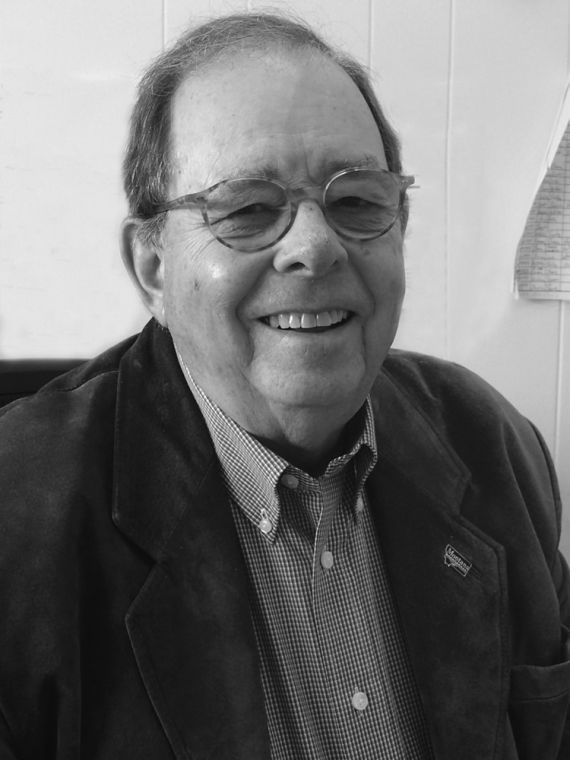
Jim Fall
I had never really given too much thought to this topic before receiving a couple of emails from a long-time friend with the same background.
Chronologically, at least.
Both conveyed the same general message, but in significantly different terms.
Both dealt with a toåpic I have joked about, and spoken about seriously with my children. Just from different angles.
It’s a generational thing, so to speak.
It derive a degree of pride from being included in what is recognized as the Greatest Generation, that group of us born between 1901 and 1945.
With a 1936 birthday, I am in the Silent Generation.
We were born between the world wars and too young to serve when World War II started, although many had fathers who served — my physician father was exempted.
After us, from 1946 to 1964, came the Baby Boomers, the Hippies. The next 15 years brought Generation X, the MTV Generation marked by the rise of mass media and the end of the Cold War.
Next came Generation Y with the rise of the Internet, terrorism, and escalated food and fuel prices.
And now, since 1995, we are in Generation Z, with its expansion of the Information Age and digital globalization.
So, I readily identified with these reasons for my generation’s “greatness.”
“We survived being born to mothers who may have smoked and/or frank while they were pregnant. They took asprin and ate blue cheese dressing and tuna from a can.
“We were put to sleep on our tummies in cribs covered with bright-colored, lead-based paint.
“We had no childproof lids on medicine bottles, locks on doors or cabinets, and, when we rode our bikes, we wore baseball caps, not helmets.
“We rode in cars with no car seats, no booster seats, no seat belts, and no air bags. Riding in the back of a pickup truck was always a special treat.
“We drank water from the garden hose, not a bottle. We shared our soft drink with four friends, from one bottle, and no one actually died.
“We ate cupcakes, white bread, real butter, and bacon. We drank Kool-Aid made with real white sugar, and we weren’t overweight.
“Why? Because we were always outside playing. We would leave home in the morning and play all day. No one was able to reach us, and we were okay.
“We did not have Play Stations, Nintendos, and X-boxes. There were not 150 channels on cable, no video movies or DVDs, no surround-sound or CDs, no cell phones, personal computers, no Internet and no chat rooms.But we had friends, and we went outside and found them.
“We fell out of trees, got cut, broke bones and teeth, and there were no lawsuits. We would get spanked with wooden spoons, switches, ping-pong paddles, or just a bare hand, and no one would call child services to report abuse.
“Little League had tryouts, and not everyone made the team. Those who didn’t had to learn to deal with disappointment.
“The idea of a parent bailing us out if we broke the law was unheard of. They actually sided with the law.”
Then, a couple of days later, came a different takem on the same idea.
“Born in the 1930s and early 40s, we exist as a special age cohort. We are the smallest number of children born since the early 1900s.
“We are the last generation, climbing out of the depression, who can remember the winds of war and the impact of a world at war which rattled the structure of our daily lives.
“We are the last to remember ration books for everything from gas to sugar to shoes to stoves. We saved tin foil and poured fat into tin cans.· We hand mixed ’white stuff’ with ‘yellow stuff’ to make fake butter.
“We are the last to hear Roosevelt’s radio assurances and to see gold stars in the front windows of our grieving neighbors.
“We can also remember the parades on VJ Day and we saw the boys home from the war.
“We are the last generation who spent childhood without television; instead we imagined what we heard on the radio. As we all like to brag, with no TV, we spent our childhood “playing outside until the street lights came on.” To play in the water, we turned the fire hydrants on and ran through the spray.The lack of television in our early years meant, for most of us, that we had little real understanding of what the world was like.
“Our Saturday afternoons, if at the movies, gave us newsreels of the war and the holocaust sandwiched in between westerns and cartoons.
“Telephones were one to a house, often shared and hung on the wall.Computer were called calculators and were hand cranked; typewriters were driven by pounding fingers, throwing the carriage, and changing the ribbon. The ‘internet’ and ‘Google’ were words that didn’t exist. We are the last group who had to find out for ourselves.
“As we grew up, the country was exploding with growth. The G.I. Bill gave returning veterans the means to get an education and spurred colleges to grow. VA loans fanned a housing boom. New highways would bring jobs and mobility. The veterans joined civic clubs and became active in politics. In the late 40s and early 50’s, the country seemed to lie in the embrace of brisk but quiet order as it gave birth to its new middle class (which became known as ‘Baby Boomers’).
“The radio network expanded from three to thousands of stations. The telephone started to become a common method of communications and faxesx sent hard copy around the world.
“Our parents were suddenly free from the confines of the depression and the war and they threw themselves into exploring opportunities they had never imagined. We weren’t neglected, but we weren’t today’s all-consuming family focus.
“Most of us had no life plan, but with the unexpected virtue of ignorance and an economic rising tide, we stepped into the world and started to find out what it was about.
“We enjoyed a luxury; we felt secure in our future. Of course, just as today, not all Americans shared in this experience. Depression poverty was deep rooted. Polio was still a crippler.
“The Korean War was a dark presage in the early 50s. Russia built the Iron Curtin and China became Red China. Castro set up camp in Cuba and Khrushchev came to power.
“We are the last generation to experience no existential threats to our homeland. The war was over and the cold war, terrorism, Martin Luther King, civil rights, technological upheaval, global warming, and perpetual economic insecurity had yet to haunt us.
“Only our generation can remember both a time of apocalyptic war and a time when our world was secure and full of bright promise and plenty.
“We have lived through both. We grew up at the best possible time, a time when the world was getting better; not worse.”
It was the best time to grow up.



