Weight loss surgery helps local resident defeat three major health problems
By JENNIFER DITLEVSON HAGLUND Staff writer
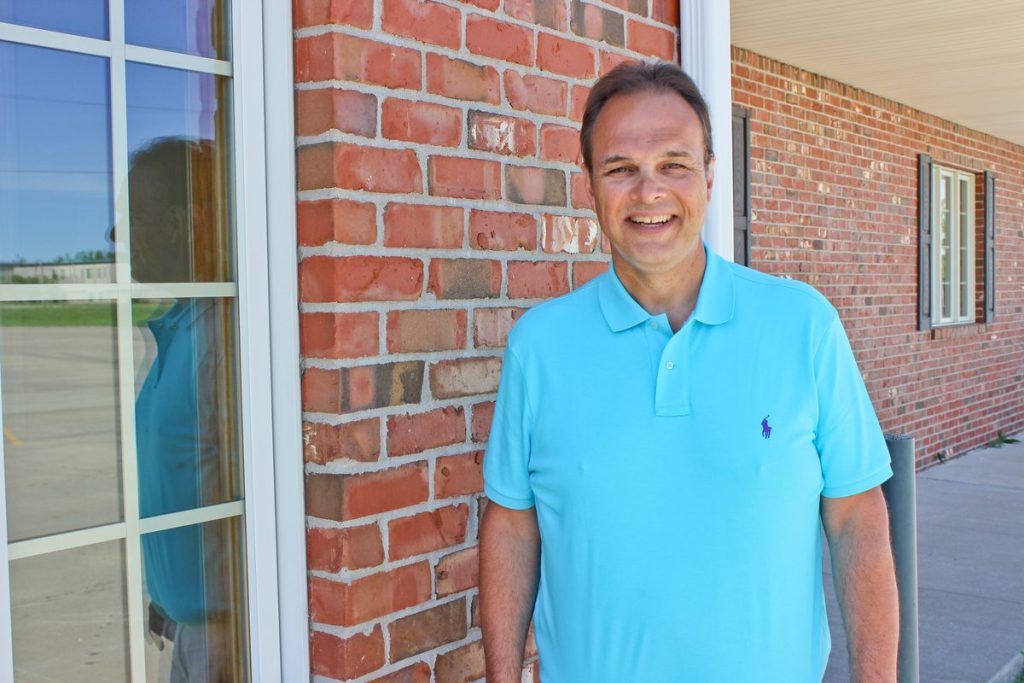
Tim Dreier, Nodaway County Farm Service Executive Director, underwent weight loss surgery in September 2015. Since then, he’s lost nearly 100 pounds and no longer takes medication for Type 2 diabetes, cholesterol, or blood pressure.
Since Nodaway County Farm Service Agency Director Tim Dreier was diagnosed with Type 2 diabetes five years ago, he tried to find ways to manage his weight. Dreier said he’s been overweight for 20 years, and he’d been yo-yo dieting for the last three. When he injured his knee last summer, that was the turning point for him because he wanted to remain active and live long enough to get to know his grandchildren.
“My doctor told me, ‘You won’t see your grandkids graduate high school if you don’t do something,’” Dreier said. “I’d never really thought of it on those terms.”
After researching different options in weight loss surgeries, he opted for the gastric bypass due to feeling most comfortable with the success rates.
Gastric bypass surgery divides the stomach into two sections. The smaller, upper portion is used as the new food pouch, and the larger, lower part of the stomach is no longer used. Surgeons connect the large intestine to both parts of the stomach. With a much smaller volume in which to hold and process food, the patient is forced to reduce their caloric intake.
Dreier said his insurance company covered the procedure.
“With all the medications I was taking, they knew it wasn’t cosmetic,” Dreier said.
Since he had the surgery in September 2015, Dreier has lost about 100 pounds.
“I’ve gone shopping a lot,” he said. “Now I’m able to share some clothes with my 20-year-old son.”
Through this process, Dreier has learned more about how the body functions, and how each body differs from another. He said he doesn’t expect that weight loss surgery would work the same way for others. For him, however, it has solved the three conditions that bothered him most. Dreier once took medication for blood pressure, diabetes, and cholesterol. Now he only takes a vitamin to avoid mineral deficiency due to eating less.
Dreier’s experience supports evidence presented at the Second Diabetes Surgery Summit that took place in London last fall. There, 11 clinical trials presented showed that most patients with diabetes who underwent weight loss surgery had reduced glucose levels below diabetic thresholds or were able to maintain glycemic control with a major reduction in medication dosage.
According to a report in “Diabetes Care,” a journal for the American Diabetes Association, weight loss surgery should be considered as a treatment for some obese patients with diabetes.
Dreier cited having more energy than he did before as another positive effect of the surgery.
“I feel great,” he said.
Dreier’s journey to living a healthier life is far from over. He is happy with the weight he’s lost, but he said he will find out in September what his lowest weight, or nadir, will be. From that point, Dreier expects that he will regain some weight, but he said is trying to control the amount by eating healthfully and working out regularly.
Before getting the surgery, Dreier attended a support group and got to know people who had undergone weight loss surgery. There, it confirmed his role in his health. Some in the group had regained much, if not all the weight they had lost.
“I know it’s up to me to maintain it,” said Dreier.
The surgery has forced Dreier to adjust his diet. Immediately following his surgery, he was restricted to a liquid diet for several weeks, and then he moved on to soft foods. Within the last three weeks, he’s been able to eat most of what he wants, with the exception of several dairy products.
In addition to limiting the amount of food Dreier can eat, he has found that he can’t eat many dairy products without getting an upset stomach.
More than physical, the adjustment for Dreier was mental. Used to eating all his food when he went out to eat, he couldn’t believe he could take half the meal home and still feel full.
“This really is the start of a healthy lifestyle.”