
Why is it some folks just can’t seem to leave our history alone
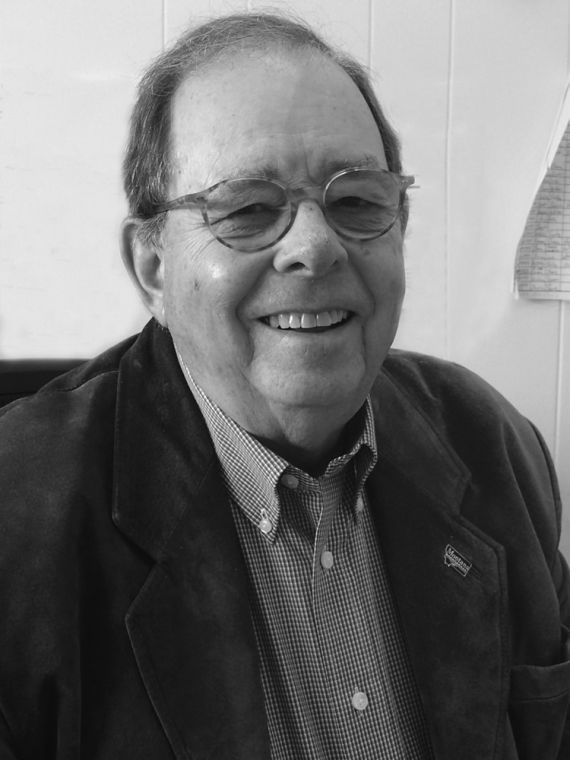
Jim Fall
I know that at times, I am too much of a sentimentalist for my own good.
And to keep me honest, I am reminded of that perceived shortcoming time and time again.
But, I happen to be a firm believer in the fact that we are products of our upbringing, products of our own personal histories, if you will.
What was, was what it was, and there is not too much, if anything, we can really do to change that now.
No matter how far removed from currently accepted norms an instance, or instances, might seem today — especially when seen through eyes that are obviously much more clairvoyant than were those we originally saw through in the first place — what happened, happened.
And in the past couple of weeks, I have become living, breathing proof of that premise.
Here’s my story, and it obviously isn’t just my concern how this eventually plays out.
When I was a little boy, growing up in West Memphis, Arkansas, my grandparents — my mother’s folks — lived in the same town.
My mom’s youngest sister, my Aunt Jean, was still in high school and I remember watcheing her play basketball — on a court that was on the stage in the auditorium.
But that’s maybe another story for another time.
At that time, the Naval Air Station in Millington, Tennessee, just on the other side of Memphis from my home in West Memphis, was very much of a going concern where young Navy fliers and ground crews were trained.
One of the larger aspects of the Millington operation was the medical facility, especially at that time, when its beds were filled with personnel wounded in World War II.
I cannot put an exact year on it, but it must have been 1945 because of the part of this history lesson that probably cannot be disputed.
The request went out to area churches from the Millington Naval Hospital to host patients who were away from their homes and families during the holidays.
Well, my grandparents, Gus and Hattie Frazier, heeded the call and, as I remember, this young sailor joined our family for Thanksgiving dinner.
And, I think, he returned for Christmas, but that’s beside the point.
I would have been 5, or 6 by Christmas, and I was pretty impressed that this war hero — certainly to me at the time, anyway — was having his holiday with us.
Very honestly, that’s about all I remember about those visits — a seemingly very nice young man who had been wounded in the war was eating Thanksgiving dinner with us.
What else was there for a six-year-old to remember at the time?
Well, at some point during that visit, those visits, my dad, who was a fairly avid philatelist, must have expanded the conversation to a significantly higher level.
I say that because I have hanging on my home office wall today — “our” young sailor’s autograph.
Why his autograph?
Hanging on my wall?
Simply because his name is written across the face of a 3-cent United States postage stamp.
The stamps were issued in commemoration of the historic raising of the American flag atop Mount Suribachi, the highest geological point on Iwo Jima, and probably the high point to that date of the United States’ Pacific Campaign during WWII.
As I said, I don’t know the details of how it came about, but I do know that there it is, displayed in a small shadowbox frame — a green, vertical-format stamp featuring the image captured by Associated Press photographer Joe Rosenthal.
The “John Bradley” signature goes from the lower left-hand corner, diagonally across the face of the stamp, to the top right — clear as a bell.
Of course, the story behind the flag-raising on Iwo Jima, replicated in the photograph that many believe is the most reproduced in history, is pretty well documented as to how it actually reflects the second flag-raising on that spot, that day.
The initial raising was done with a smaller flag, on a less stable pole, although most agree it was done by the same handful of Marines — and one Navy corpsman, Pharmacist Mate 2nd Class John Bradley.
And now, here comes the part where some historians and, undoubtedly, family members, are not content to leave history alone.
To recreate the original moment, and ultimatetly create the icon, Marine squad leader Sgt. Michael Strank picked Cpl. Harlon Block, Pfc. Ira Hayes, and Pfc. Franklin Sousley for the “mission.”
Previously accepted history dictates that Marine Pfc. Rene Gagnon took the replacement flag up the mountain. At the top, the squad found another pipe and attached the replacement flag that was subsequently raised by Strank, Block, Hayes, Sousley, Gagnon, and Bradley, who had supposedly also been a part of the original act.
Within the past month or so, however, some turmoil has arisen over whether John Bradley was actually in the “re-enactment” that produced the historic photograph.
Even Bradley’s son, Jim Bradley, who wrote a book about his father and Iwo Jima, reportedly has said he now has doubts about whether his dad was actually involved.
And I say, “What difference does it make?”
Really?
Men fought and died on Iwo Jima, just like they had on the beaches at Normandy and into Berlin.
And that moment so concisely captured on Iwo Jima, that moment that brought a nation more tightly together then, still remains as a deeply moving icon of this country’s all-encompassing bravery that played such a role in bringing us to where we are.
Was John Bradley, a small-town kid from Wisconsin, actually one of the guys in the photograph?
Does it really make any difference?
American fighting men were there, and they did what they did.
I wonder why a young sailor would autograph a postage stamp for a country doctor had he not actually been included in the group photographed.
And I wonder even more when I read about the man John Bradley turned out to be in later life.
Perhaps a part of the answer lies in some of the social media snippets I gleaned from the Internet, before I became pretty much fed up with the tenor of the whole conversation.
It seemed to me more directed at what financial gain might be had from this connection — or that name scrawled across some piece of paper.
Why can’t we forget that part — and remember the magnitude of the moment, and the symbolism that it continues to portray for our nation.
If we will just let it — and not try to rewrite history for selfish reasons.



