Local growers prepare for ’16 planting season
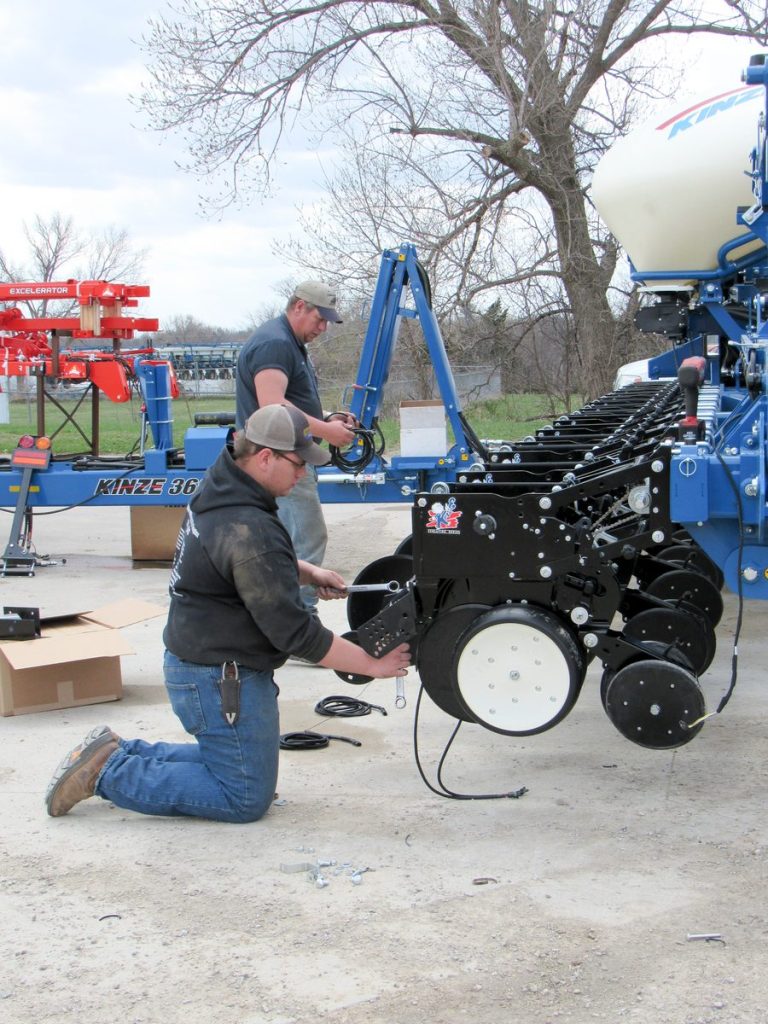
KAITY HOLTMAN/DAILY FORUM
Summa Implement mechanics Jimmy Carter (front) and John Carter work on a Kinze planter Wednesday afternoon to get it ready for the 2016 planting season.
Though it’s still March, conversations about planting corn are well under way.
Warm temperatures and little precipitation throughout February and March allowed growers to put on a lot of anhydrous.
“Getting that much anhydrous on in February and March is an unusual incentive to get started on planting corn,” said Erin Dinsdale, part-owner of Milne-Dinsdale Seed and local agronomist and crop consultant.
At this point, Dinsdale said growers have plenty of calendar time, but they’re really just waiting on soil conditions to be right.
The ideal soil temperature to start planting is 50 degrees, and with the current fluctuation in temperatures, she’d like to see growers wait a little longer.
Missouri’s average last frost date is in mid-April, and insurance for replanting starts on April 5, so she figures most will wait until then to get started.
“Sticking corn in the ground when it’s still cold and white can lead to emergence and stand issues,” she said.
As of Tuesday, temperatures at the Hundley-Whaley Research Farm in Albany in bare soil at 2 inches range from a low of 42.8 degrees to a high of 61.
“That kind of fluctuation can be really hard on seed and can cause issues,” Dinsdale said. “Our goal is to minimize the variation in evening to day temperatures. I don’t like to see that 20-degree difference we currently have.”
Those temperatures dictate a lot about soil temperatures.
“We had a dry winter and now we’re wet again, which is being tied to El Nino,” she said.
“Water is friend and foe, because the soil warms up faster if wet, but soil takes longer to dry out if it’s cool.”
The best ways she has seen to combat cool, wet soils include starting fertilizer and corn seed treatments, which have proven to provide a great return on investment on corn.
Nodaway County Farm Service Agency (FSA) director Tim Dreier said their current spring priorities lie in having producers report information.
Growers should currently be signing up their farms for 2016 agricultural risk and price loss coverage contracts, which are annual requirement to participate.
“We’d like producers to get this done now and out of the way if possible but we will likely catch most of them during crop reporting this summer,” Dreier said. “Deadline is August.”
He also said this is a great time to report land, operation, and crop changes.
Any newly purchased or rented land producers have picked up needs to be reported now so the FSA staff can get records updated.
Operation changes include new trusts they have put their land in, new entities they will be operating as in 2016, or even bank account changes.
“Once they are done planting they need to report to us what was planted where and what date they put it in the ground,” Drier said.
“Reporting deadline is July 15, unless they have oats or other small grains — that deadline is May 15.”
Dreier requests that producers call ahead and make an appointment to come in.
“It helps us to be prepared and saves them time,” he said.