
The preliminaries are over, now the ‘real’ primaries begin
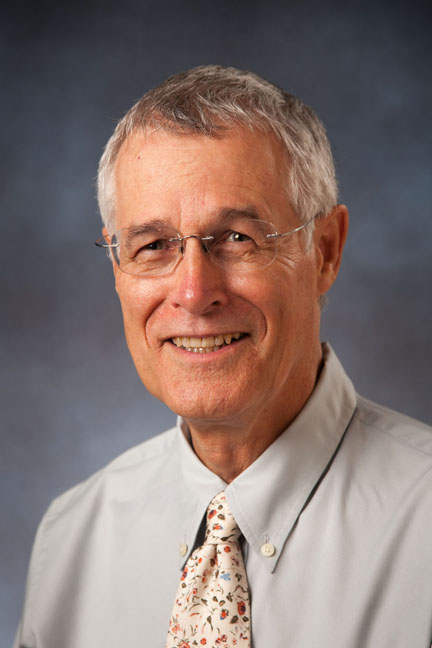
Richard Fulton
Trump and Sanders New Hampshire victors, who would have thought it?
Six months ago anyone even whispering this outcome would have been ridiculed.
One other “winner” emerged from the frozen tundra of the Republican primary — John Kasich, one of the “four governors” still in the race. Kasich, of course, finished second with a whopping 16 percent of the votes in the Republican primary.
Yet this was enough to embarrass the Iowa winner Marco Rubio, befuddle big-spender Jeb Bush, and kick out of the race Chris Christie (he with no money left).
Four of the candidates got to make their case before the cameras of the national news stations: winners Trump and Clinton as well as second-place Sanders and Kasich.
Hillary Clinton’s people were clever enough to get her on first, before many went to bed for the night.
Her speech before a rousing crowd (who’s crowd was not?) tried to place her as a stable, energetic, experienced, and empathetic candidate. She touched many issue buttons and pushed what she sees as her advantage over Sanders, her pragmatism.
Bernie Sanders had a whooping crowd that was ecstatic that he actually won. He took a very long time to repeat his stump speech, hitting all his key issues. His many programs appeal to many constituencies in America and his very presence, with his democratic socialist theme, pokes a stick in the belly of the Democratic establishment.
Which brings on Trump, whose people failed to get him on first. After all, they see him as the story of the moment. His talk was short and bellicose as usual. He reiterated what he perceives as the emotional issues that have mobilized his army of supporters: make America great again, stop immigration by building a fence, create jobs.
He is painfully short on any specifics or programs that would accomplish these goals, but his insistence that he can do it because he is not of the political class rings a bell with many.
Keep in mind, though, that Trump has polled 30-35 percent consistently for six months. He has not been able to increase that percentage. A two- or three-way race, when it develops, may burst his balloon.
John Kasich got a few minutes last. He gave an interesting homily on the virtues of America and how he saw these on the campaign trail. He urged us all to slow down and, in effect, smell the flowers. If nothing else, it was a stark contrast to the stump speeches of the other candidates.
It is now on to South Carolina and Nevada where the electorate is greatly different than Iowa and New Hampshire. There are many more minorities, particularly, of course, in the Democrat party.
The question is, can Bernie Sanders make inroads into this segment of the party. Hillary Clinton has depended upon these demographics to anchor all her campaigns. We’ll get a hint of things to come from the outcomes.
There are also many conservatives and evangelicals in South Carolina that Ted Cruz hopes to tap. He has a good “ground game,” as they say, to help him recoup from finishing so far down in New Hampshire.
Can Kasich gain some momentum in these states or must he wait for Super Tuesday on March 1 to get the final answer to his possibilities?
What will Marco Rubio do in these next few weeks? His image as the robo-candidate has hurt him badly.
Note that these next two states will produce a kind of roll-out effect for the news cycle. South Carolina holds its GOP primary Feb. 20 and its Democratic primary Feb. 27. Nevada holds its Democratic caucuses Feb. 20 but its Republican caucuses Feb. 23.
Some may gain momentum, some may fall back from these two states, but it is March 1 that will tell the tale for the Republicans.
Only two or three candidates will remain after these 10 primaries.



