County receives portion of Energizer property taxes
FILE PHOTO
More than half of an outstanding $479,000 tax bill owed on real and personal property embraced by the former Energizer battery plant campus has been paid. Nodaway County Collector-Treasurer Marilyn Jenkins said she has received funds from Energizer Battery Manufacturing Inc. covering the personal property portion of the bill, which totaled $276,738. Real estate taxes in the amount of $225,324 are still outstanding, and may be owed by the third party to whom Energizer sold the property late last year.
Nodaway County Collector-Treasurer Marilyn Jenkins confirmed Monday that Energizer Battery Manufacturing Inc. has paid $276,738 in outstanding personal property taxes and late fees for 2015.
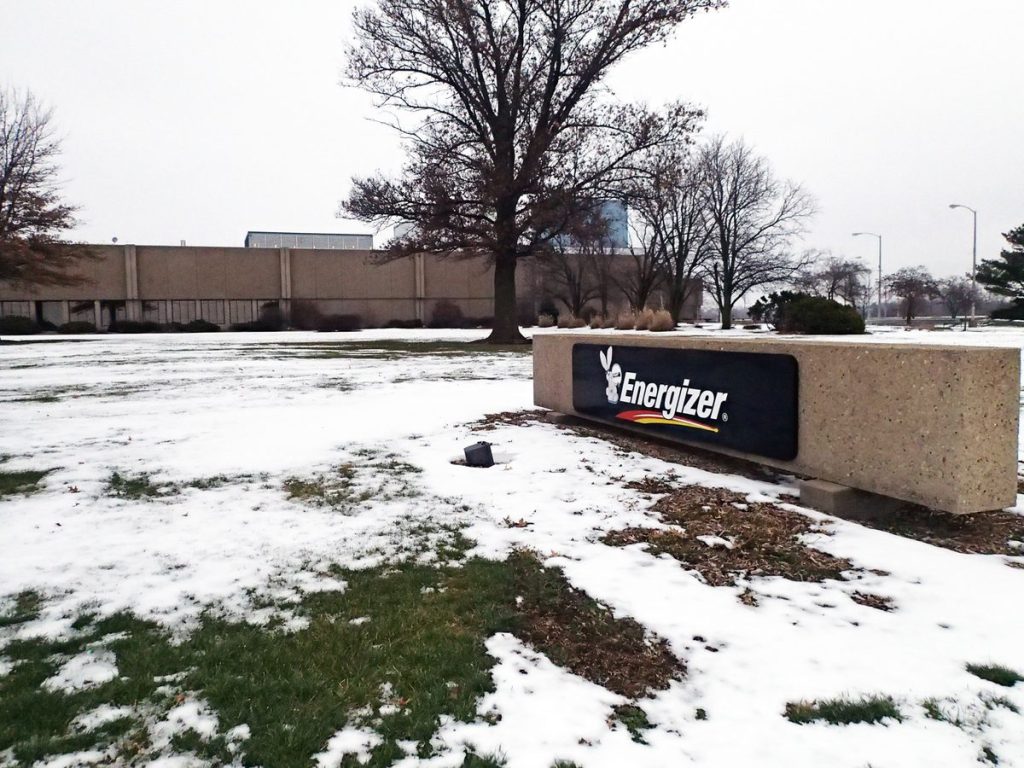
The taxes pertain to fixtures and equipment that remained through most of last year at the now-closed Energizer battery factory located at 3131 E. First St., on the east edge of town.
The equipment has since been sold at auction or otherwise removed, according to Nodaway County Assessor Rex Wallace.
Energizer shuttered the 40-year-old factory, which embraces a half-million square feet of floor space, in late 2013.
Still owed the county, Jenkins said, is $225,324 in real estate taxes and penalties that Energizer reportedly claims is owed by the Mercy Foundation Group, a 501(c)(3) non-profit corporation headquartered in Tampa, Florida.
Nodaway County Prosecuting Attorney Robert Rice said last week that he had been in touch with Energizer’s general counsel and was told that a deal to pay the real property taxes was in place when Energizer sold the factory to Mercy Foundation in December “for $1 and other valuable consideration.”
A warranty deed dated Dec. 7, 2015, and recorded in Nodaway County on Dec. 8 granted the property “for no consideration and as a matter of business convenience” to Mercy-controlled 3131 E. 1st. Street LLC.
Mercy Foundation’s website at mercyfoundation.org describes the organization as a non-profit “that works to reduce the effects of poverty by supporting microloans to the poor across the globe.”
The site further states that the company funds these efforts by “obtaining tax deductible charity donations through the acquisition of underutilized assets.”
The delinquent taxes, and perhaps the sale of the factory to a non-profit entity, is potentially bad news for the Maryville R-II School District, which in subsequent tax years stands to lose more than $300,000 in property taxes unless all or part of the industrial campus is sold to a for-profit entity.
This is because many 501(c)(3) corporations are tax exempt. Wallace said Monday, however, he has received no documentation with regard to Mercy Foundation’s legal standing in this regard, and that the corporation has until May to prove its non-profit status before being assessed for 2016 real estate taxes.
“As of now, they are on the books,” he said.
But only for real property, since the plant’s fixtures and equipment have been removed. Assuming that real property taxes are owed on the Energizer building and grounds for 2016, the local school district would receive approximately $130,000, or less than half of the revenue produced when the factory was operational.
Now that the delinquent $276,738 in personal property taxes has been paid, Jenkins said R-II will receive a little less than $187,000 early this year. It is also owed about $129,000 of the unpaid $225,324 property tax bill.
The status of the former Energizer property became even more complex Monday night, when the Maryville City Council approved a lot split partitioning the factory and “operations area,” a 35.5-acre parcel, from 26 acres of adjoining farmland to the north and east.
In a written report to the council, Maryville Public Works Director C.E. Goodall said the purpose of the split, requested by 3131 E. 1st Street LLC, the current owner, “is to separate surplus acreage that is currently being leased as agricultural land for potential sale.
Josh McKim, executive director of Nodaway County Economic Development, told the council that in the absence of a “clean title,” neither the factory nor the adjoining cropland — 63.6 acres in all — could be sold until the real estate tax liability is taken care of.
The council approved the lot split 4-1, with Councilman Jerry Riggs voting against the lot split.
Riggs said he didn’t feel comfortable approving a request from a corporate entity that he sees as not having honored its tax obligations.