
Hang on to your hats, folks, we’re in for a heckofa ride
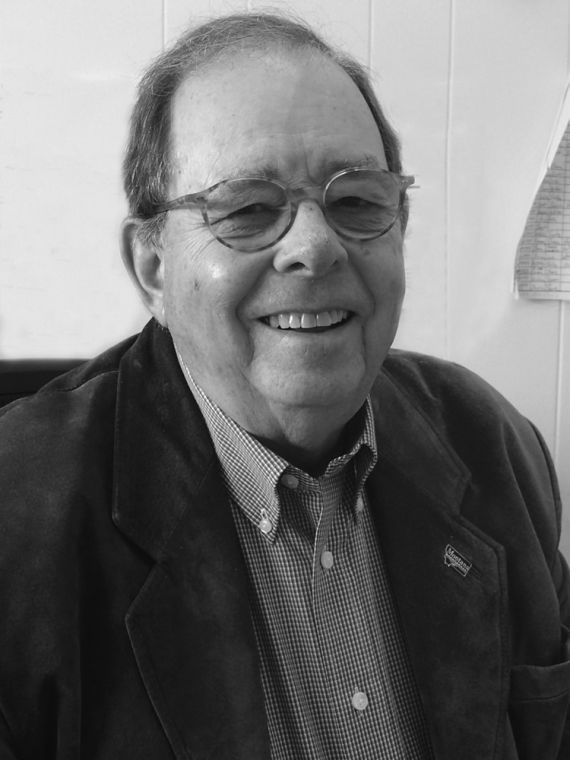
Jim Fall
I will be the first to say that I am about as far from being a retired political science professor like Richard Fulton, whose observations and opinions normally appear in this space on Fridays, as anyone could be,.
This week, however, because the astute professor and his bride are off on a brief trip in celebration of their 50th wedding anniversary — and I expect he would not want that being known, but, — I am being called upon to fill his normal space.
I will admit that I have made a rather serious effort to watch as many of the presidential candidates’ debates as I can so far during this political campaign.
I will also admit that I have not been able to stick through the entire program on at least a couple of occasions — and I certainly have not spend additional hours letting obviously biased pundits tell me what I have just heard.
I obviously go back far enough that I remember when speeches by presidential candidates, much less debates involving hopeful wannabes from either party, were pretty much national events — a significant contrast to the seemingly almost weekly debacles we are being subjected to during this election cycle.
But I also understand what the 24-hour news cycle has done for — to? — politics.
I believe the first presidential election I really remember was when the Chicago Tribune proclaimed New York Gov. Tom Dewey as the winner over Missouri’s own Harry S Truman, the incumbent who had succeeded Franklin D. Roosevelt following his death in office.
Then the war hero, Gen. Dwight D. Eisenhower, defeated Adlai Stephenson in 1952, and again in 1956, while I was in high school and college.
I was totally aware of the John F. Kennedy-Richard Nixon race in 1960 — I remember watching in almost complete awe as JFK accepted the Democratic nomination — and also followed closely four years later when Lyndon Johnson, another elevated VP, out-polled Barry Goldwater in an election that in my vague political sense began to mark the real Democrat v. Republican divide.
Nixon, the ex-vice president, went against George McGovern in 1972, the cycle before the relative unknown from Georgia, Jimmy Carter, defeated Gerald Ford, the third VP in recent history to move into the Oval Office. He moved up, of course, after President Nixon’s resignation following “Watergate”
President Cater lost to The Great Communicator, Ronald Reagan, who “held serve” against Walter Mondale in 1984.
Then, it was George H.W. Bush, Reagan’s vice president, who out polled George Dukakis four year later.
The party divide really began to widen when the upstart governor from Arkansas, Bill Clinton, unseated Bush 41, with a little help from Ross Perot, in 1992, and then was re-elected by defeating former Kansas Sen. Robert Dole four years later.
Things really got nasty when Clinton’s VP, Al Gore, was beaten in a “chad-hanger” by George W. Bush as the century rolled over.
Bush 43 handled current Secretary of State John Kerry in 2004 in what was, to me, anyway, a more clam campaign. Certainly more calm than what has followed.
In 2008, we had Democrat Barack Obama, the relatively young and somewhat inexperienced U.S. senator from Illinois, vying with Arizona Sen. John McCain, the decorated former prisoner of war from the Vietnam era.
Many still contend McCain “lost” that election with his selection of then-Alaska Gov. Sarah Palin as his running mate. Her qualifications to succeed were questioned seriously.
National elections anyway, now seem to be more “liberal” versus “conservative” than Democrat versus Republican, a situation which has really been stoked since Obama was first swept into office, and then out-polled Mitt Romney four years ago.
The pitch of the debates has changed to a much higher level, even if some of the names remain the same.
Former First Lady and Secretary of State Hillary Rodham Clinton and ex-Florida Gov. Jeb Bush, of the infamous delayed recount totals from four cycles ago, are in the race, along with Sens. Mario Rubio and Ted Cruz on the GOP slate.
Sen. Bernie Sanders is muddying the waters for Clinton and her Democratic ambitions.
But the real wild card in the 2016 presidential campaign is none other than “The Donald” — billionaire, investor, socialite, author, and television personality Donald J. Trump.
Hang on to your hats.



