WIC continues legacy of nutrition aid
Jennifer Ditlevson Haglund
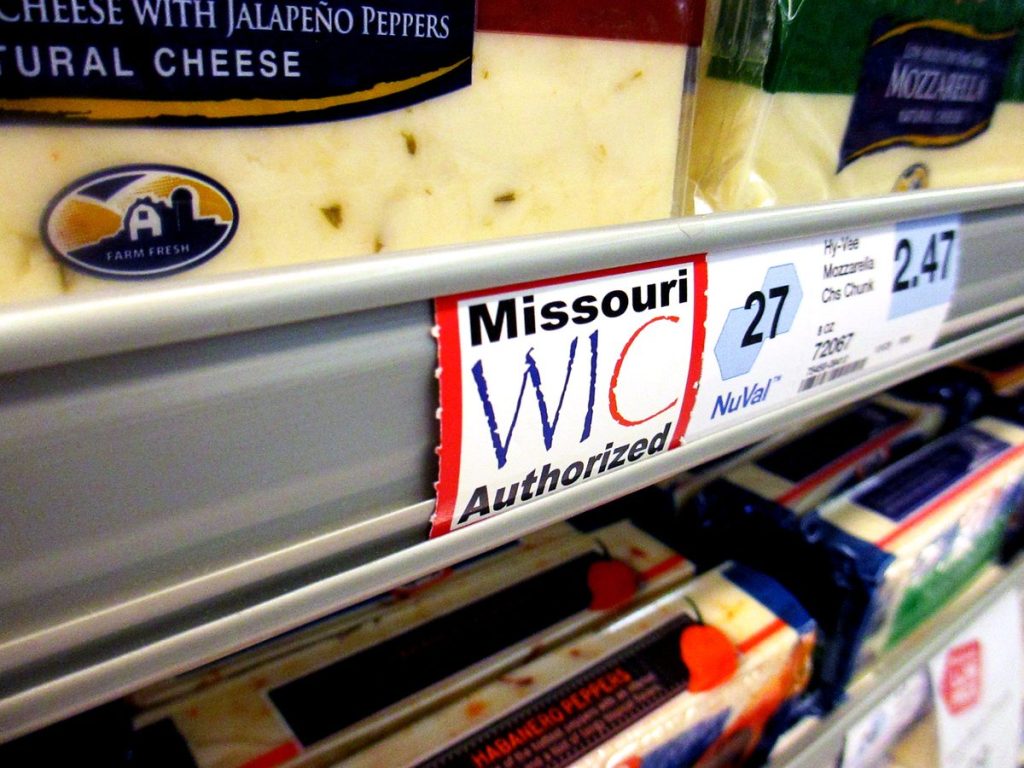
Participants in the supplemental nutrition program for Women, Infants, and Children identify approved-list items at the Maryville Hy-Vee supermarket and other stores using tags like the one pictured here. WIC, which has been providing nutritional assistance to income-eligible women and children since 1975, embraces a number of other social and health services as well.
After four decades, WIC — a federal program providing supplemental nutrition assistance for women, infants, and children — continues its legacy of helping lower-income families get enough healthy food to eat.
The program provides food packages of common grocery items, including baby food, fruits, vegetables, eggs, cheese, milk, peanut butter, and whole grains to pregnant, postpartum, and breastfeeding women and children age 5 and under.
According to Missouri WIC pamphlets, the program can save participants up to $75 every month.
The United States Department of Agriculture reported that during 2014, approximately 8.3 million women, infants, and children received WIC services in the United States. Of those served, approximately 4.32 million were children over age 1 and 1.96 million were infants.
Local Public Health Nurse Tabitha Frank said Nodaway County typically serves 300-350 WIC clients each month.
“I’m sure a lot more people would be eligible, but they have to sign up themselves,” Frank said.
To be receive WIC assistance, applicants must not earn more than 185 percent of what the Federal government determines to be poverty level.
In Nodaway County, that comes to $21,775 annually for one person with $7,696 added for each additional family member. These figures are effective through June 30, 2016.
Some applicants eligible for Medicaid, food stamps, or Temporary Assistance for Needy Families also may be automatically eligible for supplemental assistance through WIC.
In addition to nutritional benefits, the WIC program encompasses screening and referrals to other health, welfare, and social services.
Mothers who would like to breastfeed their children can also obtain pumps through the program.
An online WIC prescreening tool can help potential applicants discover whether or not they are eligible for benefits. The tool asks for household earnings and unearned income and takes approximately 15 minutes to complete.
To use the tool, visit the U.S. Department of Agriculture Food and Nutrition Service website and click the tab for “Programs and Services” to find WIC information.
Parents whose incomes fail to qualify, but still don’t earn enough to provide for their families, may be eligible for aid through other assistance mechanisms, such as the Supplemental Nutrition Assistance Program, commonly called food stamps.
Frank said that while the Nodaway County Health Center can’t bend any rules to get applicants into nutrition assistance programs, they can steer clients to available resources.
“Usually our recommendation is to check with the (Nodaway County) Ministry Center,” Frank said. “And there’s also reaching out to friends and family.”
The ministry center food pantry is located at 971 S. Main St.
In other attempts to aid women and children potentially at-risk, the Family Support Division of the Missouri Department of Social Services began taking applications for the “Show-Me Healthy Babies Program” last Thursday.
FSD is now screening applications for Medicaid for Pregnant Women, which was created to provide insurance for pregnant women who earn too much to qualify for traditional Medicaid but don’t have access to affordable healthcare in the private sector.
Legislation has created two additional categories of Medicaid eligibility. Pregnant women with incomes between 201-305 percent of the federal poverty level are eligible if they meet all other criteria for MPW except income.
Unborn children of pregnant women unable to receive Medicaid coverage due to citizenship will also be eligible for coverage under the recent state law.
According to the Associated Press, the program is expected to affect 1,800 pregnant women a year.