
I turned to say, ‘Thanks, Dale,’ and there was the man himself
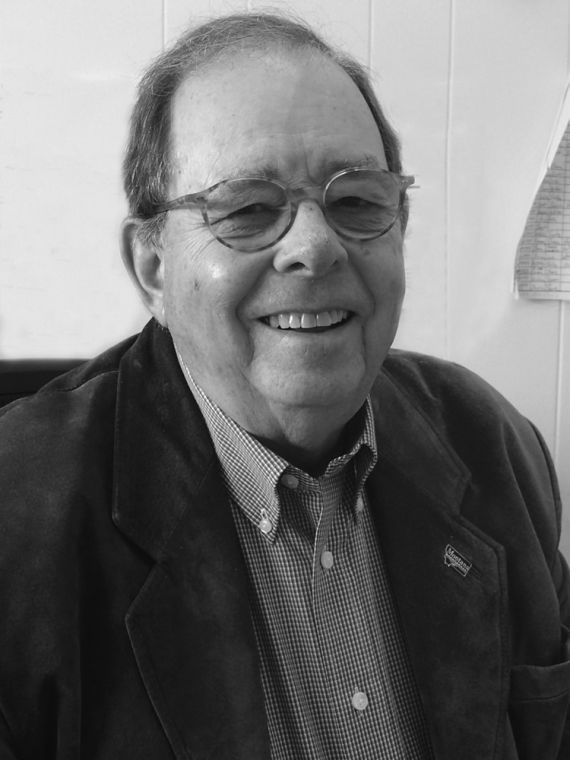
Jim Fall
Things were just beginning to get touchy during one of our country’s proverbial “fuel shortages” when this guy from Arkansas came up with a pretty good — or goofy — idea.
After all, they had been doing it in California since 1937, so the concept was not really all that new when 1975 came along.
The “idea” was that if every vehicle plying the highways and byways in this United States could proceed, after stopping for a red light, to make a right-hand turn after determining that opposing traffic was clear, American drivers could save as much as 12,000 barrels of oil a day.
It was not really the first “crazy” idea the young lawyer from Charleston, Arkansas, — who liked to joke that he was “the Franklin County bar association,” simply because he was the only practicing attorney in the small, rural county — had come up with, and it would not be the last.
When Dale Bumpers got it in his head to run for governor of Arkansas in 1970, he had the backing of his local Jaycees chapter, and that was about it. That was approximately how much statewide name recognition he had, too — less than 1 percent when he tossed his hat into the ring to oppose Gov. Winthrop Rockefeller, the first Republican elected to that office since Reconstruction.
But, first, the ambitious Bumpers had to get through his own Democrat Party’s primary, and that 12-candidate field included some pretty strong names in Arkansas politics. The most formidable was probably its infamous former governor, Orval Faubus. And then there was the party’s newest “fair-haired boy,” Attorney General Joe Purcell.
After a rip-roaring Arkansas campaign, Bumpers edged the highly favored Purcell in amassing enough votes to force a runoff against the legendary “Stop the integration of Little Rock High School, no matter what” ex-governor.
Long story short, Bumpers crushed Rockefeller, the New York transplant whose Winrock Farms was one of the largest farming and cattle operations in the state, in the General Election and went on to become a figurative leader among a group the press eventually classified as “a new kind of Southern Democrat.”
Gov. Bumpers reigned in Little Rock from 1971 until 1975, the year after he decided he was ready to move from the state’s Capitol offices to the nation’s Capitol in Washington.
The only problem with that was there was the incumbent U.S. Senator from Arkansas who was not quite ready to come home.
His name was Bill Fulbright. J. William Fulbright, to be more specific.
The same Sen. J. William Fulbright who was the state’s most widely known and respected representation in D.C., and had been since 1945.
Sen. John McClellan swung his share of weight for the state in the Senate, too, as did Congressman Wilbur Mills, longtime chairman of the House Ways and Means Committee — until he decided to take his date swimming in the Tidal Basin.
But while Fulbright was flexing his muscles in Washington, Gov. Bumpers was pleasing the folks back home and so when he made his move, Fulbright was done — unseated by Bumpers in the primary.
He had “one speech, a shoeshine, and a smile,” Time Magazine said about the Wonder State’s newest senator. He was, however, able to parlay those alleged assets into 24 years as a U.S. Senator from Arkansas.
Because Arkansas was a relatively small state in those days — and things have not changed too very much, really — the people in the media got to know the people in government pretty well. That was certainly the case while I was in a practicing member of the Arkansas press corps during the late 1960s and early ’70s and again in the late ’80s.
That familiarity was such that in 1986 while I was in El Dorado, Arkansas, I had the high honor to introduce both Sen. Bumpers and Sen. David Pryor, also a former governor of the state, and Gov. William Jefferson Clinton, at two separate functions on the same day.
A new lock and dam built by the Corps of Engineers on the Ouachita River was being dedicated as a part of a project to open the river to navigation and the local chamber of commerce was hosting a series of extraordinary events that day.
In addition to the introductions, it was also my responsibility to see that Sen. Bumpers got from place to place in a timely manner.
During one leg of our trips later in the day, I was behind the wheel, with the senator seated beside me in the passenger seat.
It had become a Fall family tradition among our five drivers, when making a “right turn on red,” to say something to the effect of, “Thank you, Dale,” in mock tribute to the legislator who had introduced the bill that made such a maneuver legally possible.
Well, I couldn’t resist the urge — so I turned to my passenger and said, simply, “Thank you, Dale.”
Needless to say, he probably thought I had lost my mind — until I quickly explained the humor of the moment to me — and he shared in it as we had a hearty laugh.
I still have the note, framed, from him, dated 8-23-86, thanking me for transporting him and complimenting the “great job you did at the breakfast.”
Dale Bumpers is probably most widely remembered for his impassioned defense of President Clinton during Clinton’s impeachment proceedings, but to me, he should also be well remembered for another statement of his feelings.
He told me that day in the car that, and I paraphrase here, the most difficult thing he faced in office was voting for what he knew to be “right” — and not necessarily the way many of those he was elected to represent would want him to vote at the time.
Maybe that was on his mind that day because he was in a heated re-election race where it was being implied he had lost touch with his constituents.
“Bumpers doesn’t vote for you, why vote for him,” the opposition asked.
I voted for Dale Bumpers that time around, and I would again.
Sen. Dale Bumpers departed his beloved Arkansas for good last Friday, secumbing to Alzheimer’s Disease and complications from a broken hip. He was 90.
He was a credit to his state and the profession he pursued, setting a high bar for those he served, and those who served with him.
— Thanks, Dale.



