
Unexpected Christmas greeting rekindled some fond memories
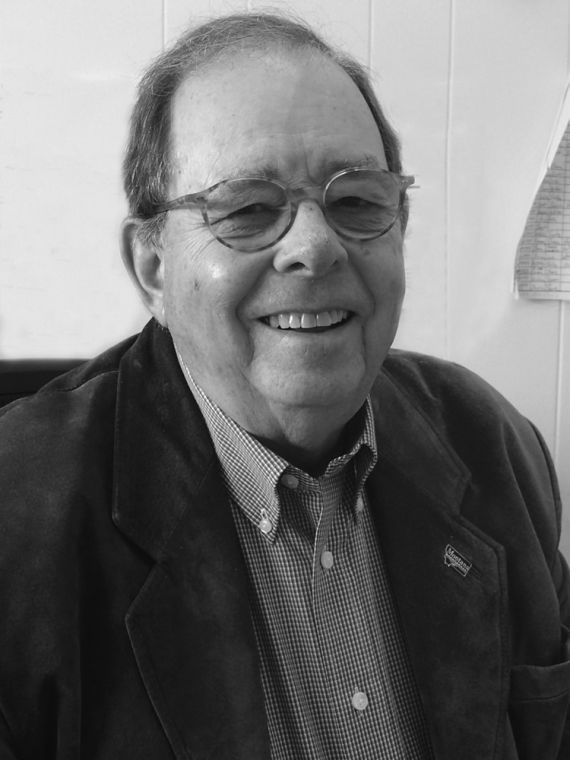
Jim Fall
When an e-mail from John Johns popped up in my inbox around noon Friday, I was not terribly surprised.
Johns was an old Army buddy from my days at Fort Bragg — in the U.S. Army Special Warfare School, a small, but significant, unit within the XVIII Airborne Corps.
We were, for the most part, a pretty tight-knit group of young soldiers.
Vitauts Vitolins, Dave Hoffman, John M. Smart, John Boni, and me.
We were all college graduates.
We were all draftees.
Except for John Johns.
Both Jack Smart and I were married, and both couples lived in apartments off post.
The other three lived in the barracks and played all the games privates and E-4s were required to play while serving in a “peacetime” Army, in a unit closely allied with the 7th Special Forces Group, Airborne.
Vitey, Hoffie, and Boni, and two or three others, spent lots of time off post with us, and the Smarts, and with Max and Barbara Schaible, eating civilian food — and even drinking a little civilian beer.
Johns was, officially, Capt. John H. Johns, an instructor in psychological operations and unconventional warfare in the Special Warfare School, and the leader of our contingent that reported for duty daily on the second floor of a converted barracks on Ft. Bragg’s Smoke Bomb Hill.
Vitolins, from Detroit, was a displaced Latvian whose father had been a high-ranking officer in the Latvian army before his country was nearly obliterated during World War II. He came to America as a youngster with his parents. They, like so many in the news today, were refugees — displaced persons.
Through the years, I have kept in closest touch with Bob — Americanized from his middle name, Roberts — and his wife, Mary. He was a Civil Service special investigator and Mary a teacher. They are our daughter, Susie’s, godparents. Vitey was in Missoula when I had open heart surgery — and I was in Detroit when he followed suit.
As civilians, Hoffman worked with the State and Labor departments in Denver; Smart, in higher education in California; and Boni as a television writer in Los Angeles and Canada.
Then-Capt. Johns, a University of Alabama graduate now retired after ultimately serving on assignment in the Pentagon, continues to be a respected national voice on American foreign policy.
Once, while living in northwest Missouri after our Army days, Jan and I visited him while he was in the Command and General Staff College at Fort Leavenworth. We were also guests of his and his wife’s in suburban Washington, D.C., when we would be in the area for National Newspaper Association or Newspaper Association Managers’ conferences.
He was as interesting — and in a pleasant sort of way, as intimidating — then as he was when he was my “boss” at Fort Bragg. His attribute which I appreciated then, as much as now, is that he always treated me — us troops — with respect and, as much as possible given our setting, as equals.
The e-mail I received last week reiterated, and re-enforced that.
It was addressed to the five of us.
“Friends,” it began.
“As I move into the twilight of my life, I go back to some of the memorable associations of my career,” he said. “The five of you, who constituted the ‘Bragg Think Tank’ for me, always come to mind. It amazes me that the Army personnel system could have identified such talent.
“I have been very active in exchanging views on our foreign policy related to fighting insurgents who rely on terrorism as their main weapon and my bedrock of knowledge is the input of you five in the early 1960s when we were advocating the primary role of Psychological Operations rather than military force,” he continued.
“While the current national leadership pays lip service to the fact that the current war is a ‘war of ideas’ largely centered on religious beliefs, we can’t seem to come to grips on how to deal with it. The rhetoric of the presidential candidates leads me to believe we are well on our way to defining the conflict as a war based on religion — the Judeo-Christian West versus the Islamic World.
“If that occurs, Katie bar the door, as Samuel Huntington warned in his 1996 book, The Clash of Civilizations,” he concludes, advising us that a compilation of his views, coupled with those of two other strategists, is slated for immediate publication.
Working with Johns for two years was a most enlightening experience, in more ways than one.
One of our military assignments back in 1960-62, probably our primary assignment, really — although I will admit I did not realize the importance of it at the time — was the development of the evolving plans of our military to conduct — and combat — unconventional warfare, as we knew it at the time.
Aside from our role in developing operating procedures and manuals for conducting some then very new, and, frankly, not so very well received, concepts, we conducted several classes a year on tactics — tactics we were trying to get a handle on ourselves. Our students were primarily mid-grade officers from our own military and more than a dozen allied countries.
America was not “officially” involved in southeast Asia during those pre-Vietnam War days, but that part of the world drew a lot of our attention. Probably as much, if not more, than our more recognized Cold War adversary, whose forays into Cuba and saber-rattling involving Berlin actually were the reasons I spent an additional four months on active duty.
Much of the strategy we developed back then was based, in principle if not in actuality, on the activities that evolved surrounding the Hukabalap activities in the Philippine Islands.
The Huks began as opposition to the Japanese during World War II, and later became insurgents against the local government.
Captain Johns taught me something else, too, another tactic I have benefitted from ever since.
I owe my learning how “to catch a nap,” anytime, anywhere, to him, too.
Thank you, for that — and so much more, Brig. Gen John H. Johns, USA, Rtd.
I am truly honored to be a member of your cadre of friends.



