Flu vaccine well-matched for season
CENTERS FOR DISEASE CONTROL AND PREVENTION
2015 Influenza Reports
Influenza season began more than two months ago, but local health officials say getting vaccinated can still help keep you from getting sick for the remainder of the danger period, which could last through May of next year.
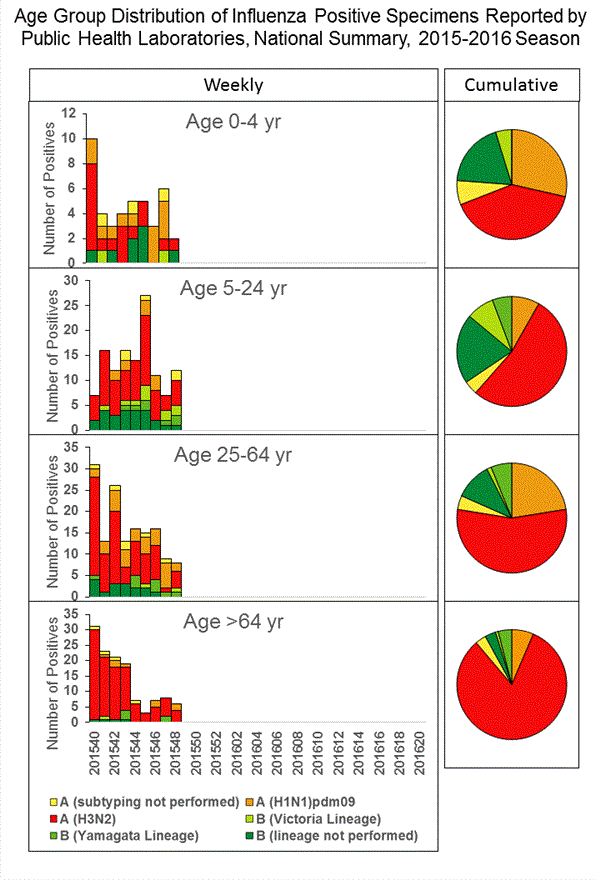
Flu activity usually peaks between December and February. According to the Weekly U.S. Influenza Surveillance Report, last week showed a slight increase in flu activity but numbers remained low overall.
Tabitha Frank, a public health nurse for the Nodaway County Health Center, said this year’s vaccine combination is proving effective in keeping the number of flu cases down.
“Viruses out there are well matched to the viruses in the vaccine,” Frank said.
Each year, labs around the world collect data about strains of influenza as part of the Global Influenza Surveillance and Response System. Scientists submit these data to five regional centers that collaborate with the World Health Organization in making recommendations on the composition of vaccines. These centers are located in China, the United States, Japan, Australia, and the United Kingdom.
However, “No vaccine is 100 percent guaranteed,” Frank said.
This is because scientists choose the strains included in the vaccine by making educated guesses. Before one flu season ends, vaccine manufacturers receive information that allows them to begin production for the following autumn. Viruses in the vaccine change from year to year, though in some years a strain may remain in the mix.
Traditional flu vaccines, known as trivalent vaccines, protect against three different flu viruses, and quadrivalent vaccines protect against four. This year for the Northern Hemisphere, the A viruses in the trivalent vaccine come from the United States and Switzerland, and the B virus comes from Thailand. Last year, all the viruses recommended for use came from the United States.
The quadrivalent vaccine also protects against a B virus from Australia.
Some people doubt the effectiveness of the vaccine, or say they know of people who have gotten sick right after receiving it.
But Frank said there is a common misunderstanding about vaccines causing flu. If someone becomes ill shortly after getting the vaccine, it is likely because they were exposed to the virus before building antibodies to it.
Influenza viruses are killed before they are incorporated into the vaccine, and building immunity from the shot takes two weeks.
People wary of shots, Frank said, should consider that getting vaccinated not only be protects those immunized, it also helps others whose age or medical condition places them at higher risk for severe symptoms of influenza A or B.
“By getting it, you’re helping people who can’t get the flu shot,” Frank said.
According to the Centers for Disease Control and Prevention, people at high risk for developing flu-related complications include adults older than 65, pregnant women, children under 2, nursing homes residents, and Native Americans.
People with medical conditions such as asthma, weakened immune systems, metabolic disorders, and morbid obesity also have a high risk of complications related to flu.
“Prevention is key,” Frank said. “That’s really what public health is all about.”
The CDC recommends that all people older than 6 months receive the vaccine annually.
Because many flu vaccines are manufactured by growing the viruses in eggs, Frank said people with egg allergies should consult their doctors about the shot. Those with egg allergies usually can receive the shot but should be monitored. Vaccines grown in cell cultures can be an option as well.
People who cannot tolerate the thought of an injection should ask their doctor about receiving the vaccine in a nasal spray.
The Nodaway County Health Center, located at 2416 S. Main St. in Maryville, provides flu shots, as do healthcare professionals at the Hy-Vee, Walgreens, and Wal-Mart pharmacies and SSM Health Medical Group.