Couple walks daily on bit of WWII history
TONY BROWN/DAILY FORUM
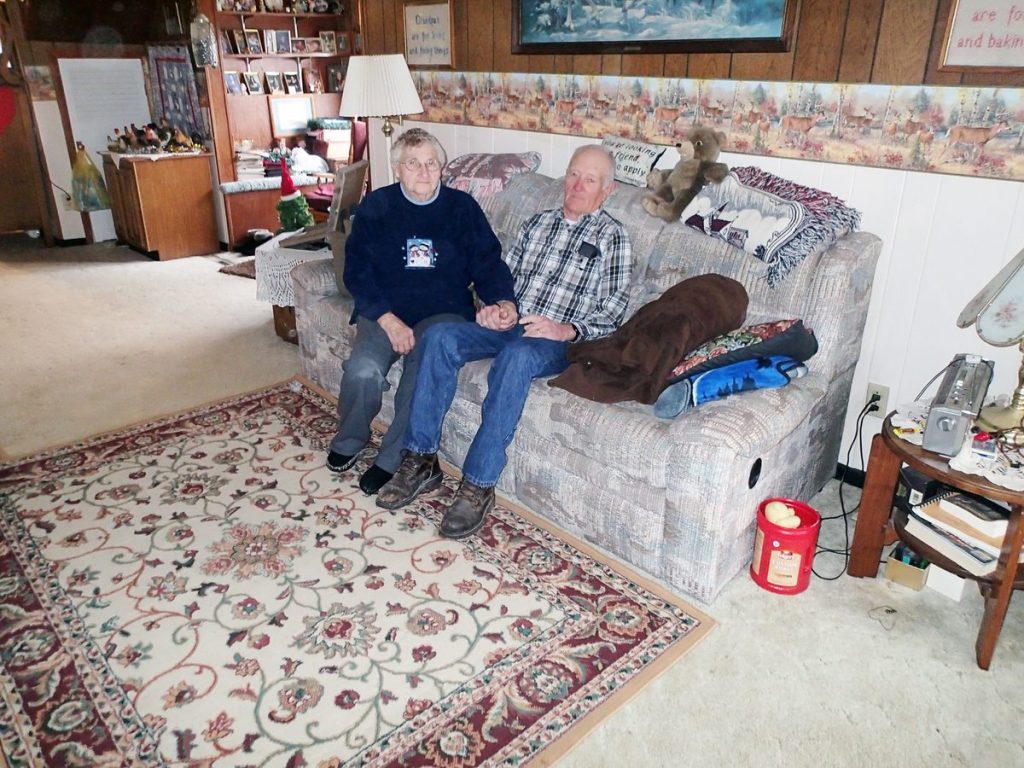
Pat and W.D. Driskell are shown sitting in their Maryville living room, the floor of which was constructed using lumber panels from a shelter once used to house German, Italian, and Japanese prisoners of war during World War II.
Earlier this month the Daily Forum published an Associated Press “Member Exchange” feature by St. Joseph News-Press reporter and columnist Ken Newton that made mention of a long-demolished World War II prisoner of War camp in Clarinda, Iowa, about 35 miles north of Maryville.
Turns out that by a decades-long and very circuitous route a small part of that camp made its way to Nodaway County and ended up as flooring in a home belonging to a U.S. Army veteran and his wife.
W.D. and Pat Driskell raised eight children in the century-old farmhouse at 814 S. Saunders Street in Maryville. When they first bought the place back in the late 1960s, the residence was a simple, gabled structure consisting of four main rooms, two on the ground floor and two more above.
With their large family, the Driskells soon decided they needed more room and purchased a couple of 12-foot by 24-foot sections of old maple flooring from the monks at Conception Abbey. The lumber had been part of what W.D. described as a “bunkhouse” used by abbey employees.
The bunkhouse, he said he was told, was originally one of the shelters used to house first German, and then Italian and Japanese, prisoners of war at the Clarinda camp and was acquired by the abbey after the war ended.
So for the past 45 years or so the two panels have served as the floor of the Driskells’ spacious living room, which W.D. added on to the front of the original house. At the same time, he also acquired a half-dozen wooden trusses from the same shelter that still support part of the residence’s pitched roof.
Now 81, W.D. is the sort of guy who doesn’t like to throw useful things away. A retired electrician who for a time worked on the Northwest Missouri State University maintenance staff, he also served in the 1970s as the parks and recreation director for the City of Maryville.
Suffice to say, he’s handy with tools, and that a good bit of the Driskells’ snug, comfortable home was scavenged from elsewhere. The wide, hardwood basement steps were taken from a 19th-century residence in St. Joseph, and other fixtures and features came from an odd assortment of depots, commercial buildings, and old houses.
As for the living room floor, the maple boards that lie beneath the carpeting may well be one of the last remnants — outside of some POW exhibits at the Nodaway Valley Historical Museum in Clarinda — of the sprawling camp erected on the outskirts of the Page County seat in the mid-1940s.
According to articles published by The Gazette newspaper of Cedar Rapids and the Des Moines Register, the floor that the Driskells walk across every day was taken from one of 60 barracks constructed in 1943 to house 3,000 prisoners. The first occupants, German soldiers, were followed by Italian and Japanese toward the end of the war.
According to Newton, the prisoners were set to work in Page and Fremont counties detasseling corn at a time when many American farmers and field workers were serving overseas. Other prisoners were dispatched to Jackson and Ray counties in Missouri where they harvested potatoes.
POWs from the camp were also sent to Nebraska City and Hamburg, Iowa, to help combat flooding and clean up damage left behind by the high water.
TONY BROWN/DAILY FORUM
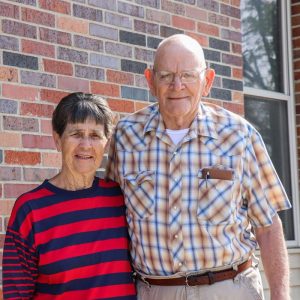
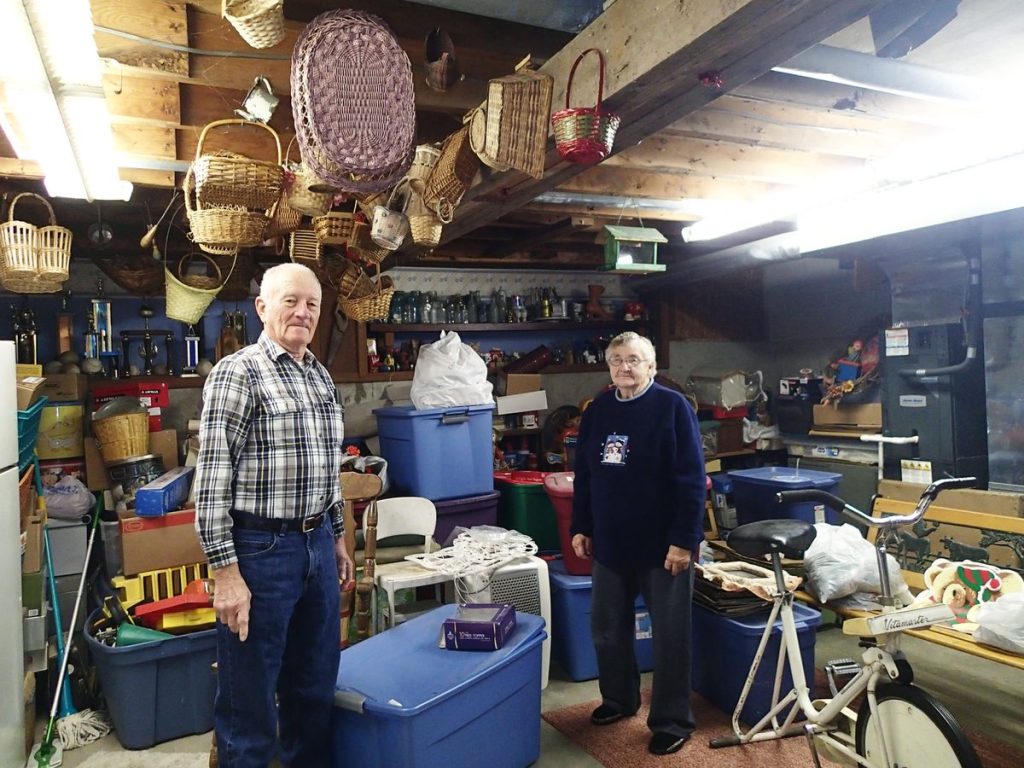
Retired electrician W.D. Driskell and his wife, Pat, stand in the basement of their Maryville home, parts of which were constructed using material from various buildings W.D. worked on or salvaged over the years. The floorboards above their heads were formerly part of a shelter used to house prisoners of war at a large camp erected in Clarinda, Iowa, in 1943.