St. Nicholas Day encourages charity during holiday season
Tony Brown
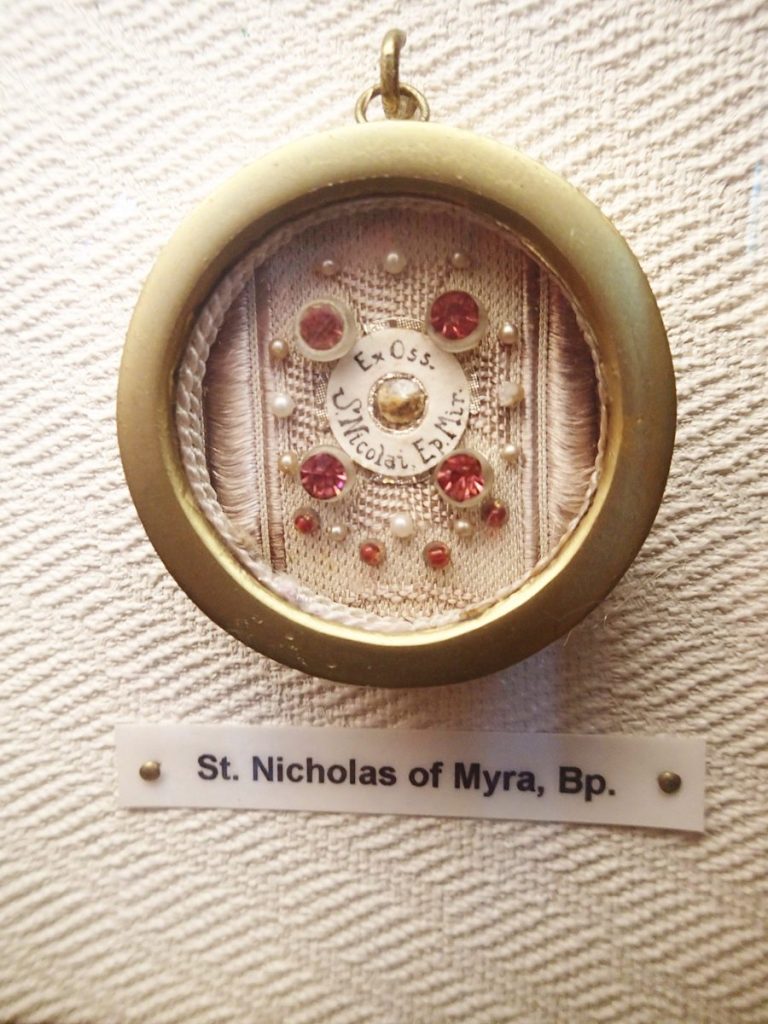
This relic of St. Nicholas of Myra is housed in the Heritage Room and Relic Chapel at Clyde Monastery. The Benedictine Sisters of Perpetual Adoration received these bone fragments of the famous saint after World War I.
Long before Coca-Cola immortalized the modern vision of Santa Claus in its Christmas campaign of 1931, the big, jolly old elf was known less for his soda consumption and toy giving and more for his kindness to the poor.
The Santa known in the United States today grew from a myriad of winter traditions. In Germanic culture, the one-eyed and bearded god Odin judged the good and the bad. Sinterklaas of the Netherlands and Belgium gave presents to children, and Father Christmas of England represented joy and merrymaking. The Slavic equivalent predates Santa, wears a blue robe, and goes by the name of Ded Moroz, who is a snow wizard.
The historical St. Nicholas of Myra has influenced all of these characters in some way. St. Nicholas lived as a bishop in the 4th century in what is now Turkey. Christians in the Western hemisphere observe Dec. 6 as the saint’s feast day.
Lore about St. Nicholas makes it difficult to separate fact from fiction. Myths credit the man with healing butchered children, expelling demons, healing lame hands, and providing three bags of gold as dowries for poor, unmarried women to keep them from being sold as slaves or sex workers.
Dawn Annette Mills, who is the prioress general of the Sisters of Perpetual Adoration in Clyde, said she finds the latter the most plausible story.
“Tradition says that, in secret, he threw three bags of gold into the window for their dowries, and so that’s where Santa Claus bringing gifts to the house during the night for children comes in,” Mills said. “Some of the other legends are so miraculous. I do believe in a God that is capable of all things, so I’m not telling people they can’t believe in it; but I find the bags of gold easier to believe.”
The monastery in Clyde houses relics of this patron saint of sailors and children.
“Most of our relics came to us after World War I when there were so many churches in Europe that were seriously damaged,” Mills said.
If the devastated churches could not be rebuilt, European parishioners sent the relics to the sisters at the monastery in part for thanks but also for safekeeping.
“A hundred years ago, they figured it would be harder for things to happen here,” Mills said.
Mills said the sisters at the monastery know the relics are pieces of bone but not which bones. The relics do have official documents authenticating their origins.
According to the Rev. Martin De Meulenaere of St. Gregory Barbarigo Catholic Church, oral tradition embellished the folklore around St. Nicholas. Lessons from the man’s life, he said, still ring true.
“Really, the stories came from the ways [the saints] manifest God’s love through them and the way they shared that with others,” De Meulenaere said.
Gift giving at Christmastime grew from this tradition, but De Meulenaere said the church should be countercultural and think about more than the superficial and commercial aspects of the holiday. De Meulenaere said stories about St. Nicholas providing for widows and orphans remind people what the holiday should encourage.
“Nicholas was known for his charity, and for giving to those who did not have anything,” De Meulenaere said. “That’s really what the gospel is about.”
Areas in the United States populated by those of German ancestry still celebrate St. Nicholas Day by putting their shoes outside a door Dec. 5 for the saint to fill with candy and small gifts.
St. Gregory’s School Principal Susan Martin said St. Nicholas visits the school annually. Because the holiday takes place over the weekend, students will place their gym shoes outside their classrooms and find out if they’ve had any visitors while they’ve been home.
To get the students ready for the holiday, teachers read different accounts about the saint’s life.
“We focus on how he always cared for the children and the poor, even though the authors are doing their own take on it,” Martin said.
Miller said St. Nicholas visits the monastery yearly as well, placing goodies in the sisters’ shoes when they’re sleeping at night.
“I’m telling you right now, St. Nicholas is big into chocolate,” Miller said.
Miller attributed the longtime tradition to the first sisters of the monastery at Clyde coming from German-speaking Switzerland 140 years ago. During Advent, eating sweets isn’t typical, Miller said. Taking a break for St. Nicholas Day is the exception.
Public Domain
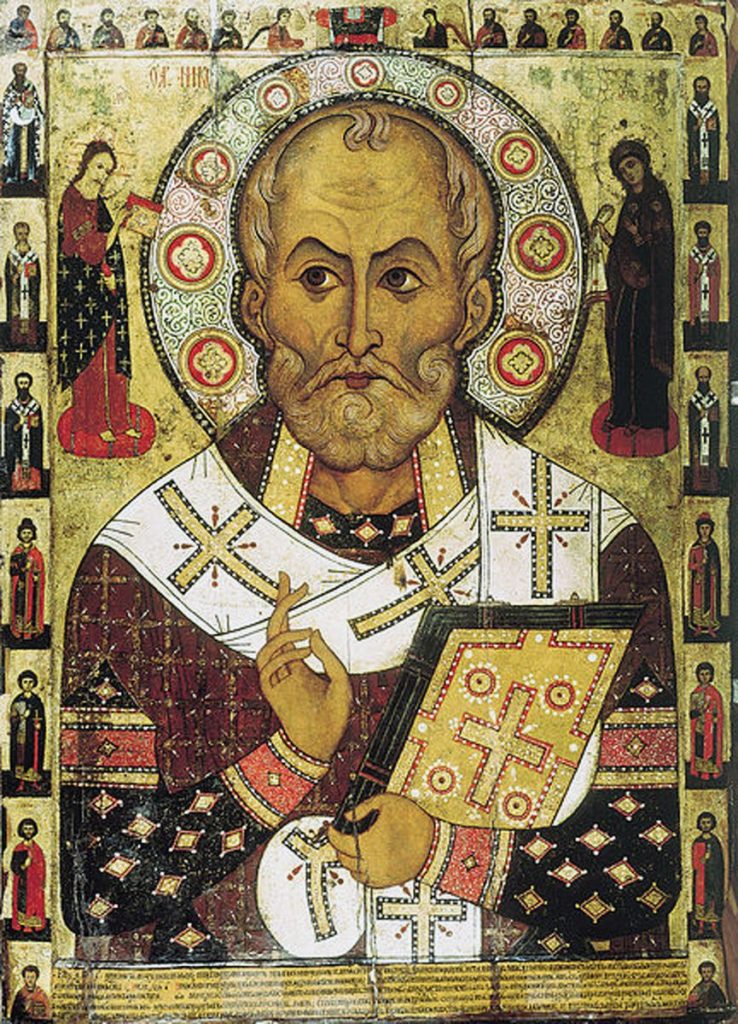
A Russian icon dated from 1294 marks the early recognition of St. Nicholas, who lived in the 4th century in what is now Turkey. Many Christians in the Eastern Hemisphere honor St. Nicholas Day on Dec. 19.