Longer Advent offers path back to spirit of Christmas
TONY BROWN/DAILY FORUM
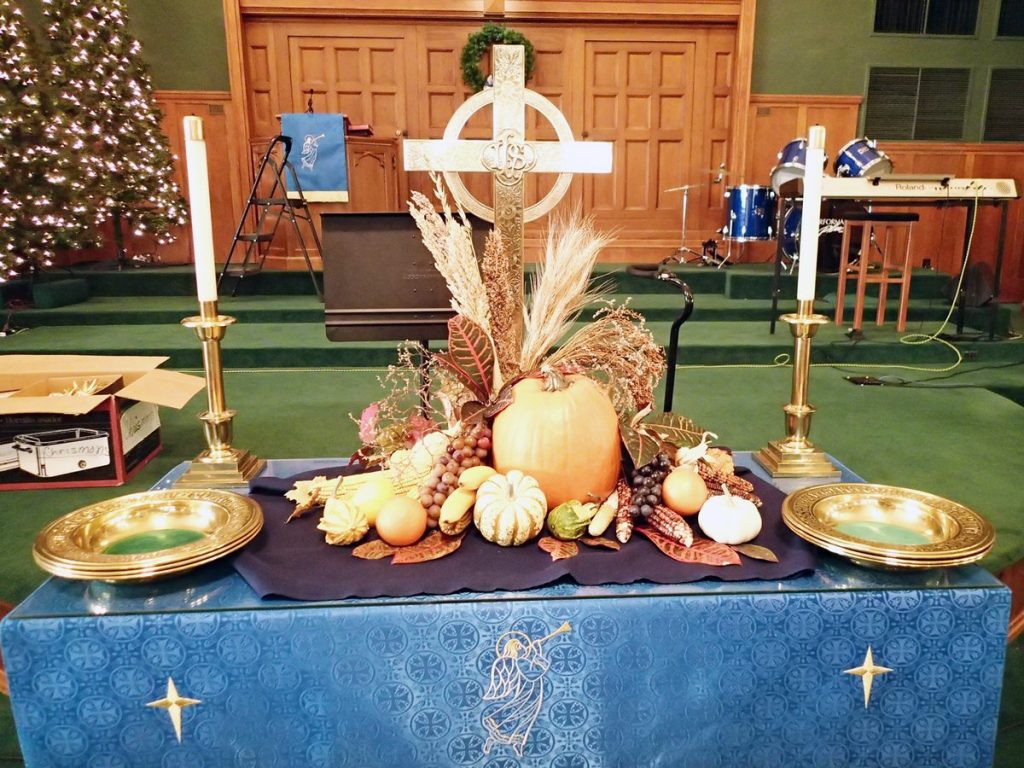
Though the altar was still decorated for the fall harvest season last week, the sanctuary at the First United Methodist Church of Maryville has also been showing Christmas colors during an extended seven-week Advent celebration, which reflects a worship tradition going back to at least the 13th century.
For those unfamiliar with the tradition, Advent is a season observed in many Western Christian churches as a time of expectant waiting and preparation prior to the celebration of the Nativity of Jesus on Christmas Day.
The term is an anglicized version of the Latin word “adventus,” meaning “coming,” and the celebration has been around since at least the fifth century.
But in the United States, depending on who you ask, Advent calendars as we know them have been around since about 1900, and this more recent practice appears to be linked with what has evolved into the holiday shopping season.
At some point, little chocolate treats began finding their way into the hands of children with the number of treats standing for the number of days until Christmas.
At about the same time, Christmas merchandise began to appear on store shelves earlier and earlier: at first around Thanksgiving, and now before Halloween has even come and gone.
According to Rev. Scott Moon, pastor of First United Methodist Church of Maryville, somewhere along the line the season of Advent got lost in the shuffle.
“It’s gotten to the point where by the time Advent starts most families have already spent half of their Christmas shopping budget,” Moon said. “The Christmas culture that started here in the United States has made its way around the world. Even non-Christians celebrate it, although not in any religious sense.”
Like many pastors, Moon has been thinking about this trend for a while, ultimately arriving at the realization that what was once a time of reflection leading up to the birth of Christ has turned into a month-long whirl of shopping, dining out, and partying.
What would it take, he pondered, to make Advent more meaningful and return the season to its spiritual roots?
Then, this fall, Moon found some comments posted on a United Methodist Church website that not only echoed his concerns but offered the beginnings of a solution. What if Advent were extended from its usual four weeks to seven?
A longer Advent, the thinking goes, would at least give this country’s annual shopping obsession something more spiritual to compete with.
“I’m trying it out this year,” Moon said. “There’s a need every year to celebrate Christmas to the utmost, and anything that helps make Christmas more meaningful and relate it to peoples’ lives is worth considering.”
The United Methodist Church of Maryville entered the Advent season in early November.
“I think it’s been well-received,” Moon said. “People don’t seem to have the same attitude about extending Advent as they do about having to listen to Christmas carols in the stores for so long.”
Moon explained that during the extended Advent season, the Sunday scripture readings remain the same, and the Advent wreath was brought into the church at the usual time. The main difference is in how the “O” antiphons are used.
Antiphons are brief responses a choir or congregation sings after a reading, usually a psalm. The “O” antiphons have traditionally been reserved for the last seven days of Advent leading up to Christmas Eve. They also form the basis of a popular Advent hymn.
“The song that always comes to mind is ‘O Come, O Come Emmanuel,’” Moon said. “It’s a song many people relate to Advent.”
Every verse of the hymn starts with the word “O,” and calls on the Lord to come to the aid of his people while using different name of God to describe various divine attributes, names like Wisdom, Root of Jesse, and Key of David.
“The text of the song is ancient and comes from a poem that was written over a thousand years ago,” Moon said. “With the extended seven-week Advent we’re trying this year, instead of saving the antiphons for the last days of the season, we use one every Sunday.”
As it turns out, though, it really is true that there’s nothing new under the sun. The fact is that seven weeks was the standard length of the Advent season until around the 13th century. But by the time of the Protestant Reformation in the 16th century few people recalled that Advent had once been longer.
Moon believes that traditions matter, but also believes they should be meaningful. In an age when Christian worship takes many forms, he said, a fresh approach to Advent is a way of helping people keep the true meaning of Christmas alive.
“Going back to seven weeks of Advent is a form of worship that’s called ‘ancient-modern,’ but I just call it old-time religion,” Moons said with a smile, “although it does seem to appeal to the Millennials.”
When asked what more he thought the church could do to reclaim Christmas from the shopping malls, Moon said it was important to “differentiate the party and gift-receiving aspects from the Christmas observance, which is something we need to be better at. That’s what the seven weeks is about — making sure Jesus doesn’t get left out.”
Moon is quick to add, however, that he sees nothing wrong with giving and receiving gifts.
“The many sentimental things around Christmas are important, too,” he said. “They are about bringing joy and the gift of life — renewed life — and about receiving generosity.”

TONY BROWN/DAILY FORUM
The Rev. Scott Moon, pastor of the First United Church of Maryville, is shown in his office during an interview about his church’s move toward a longer Advent season, a time of spiritual preparation leading up to the celebration of the Nativity of Jesus on Christmas Day.
TONY BROWN/DAILY FORUM
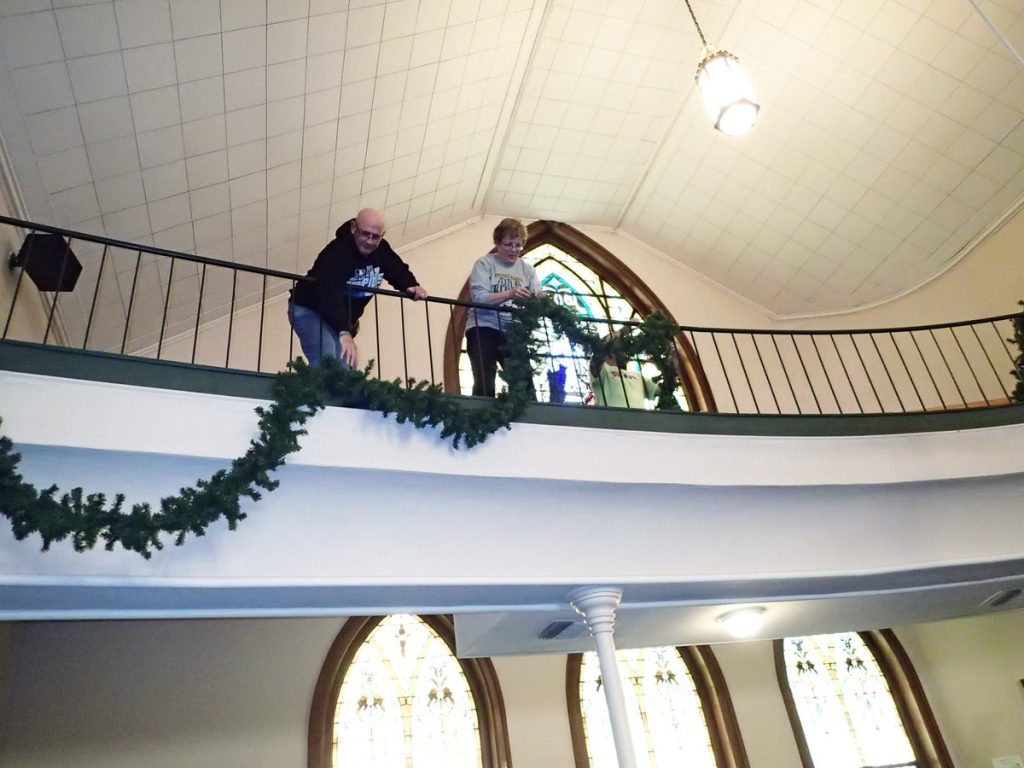
First United Methodist Church of Maryville members Jeff Ridenour, left, Deb Garrett, and Ryan Losh hang greenery over the sanctuary balcony earlier this month in preparation for the Christmas worship season, or Advent, which the church extended this year from four weeks to seven.