Weather watchers urge winter preparedness
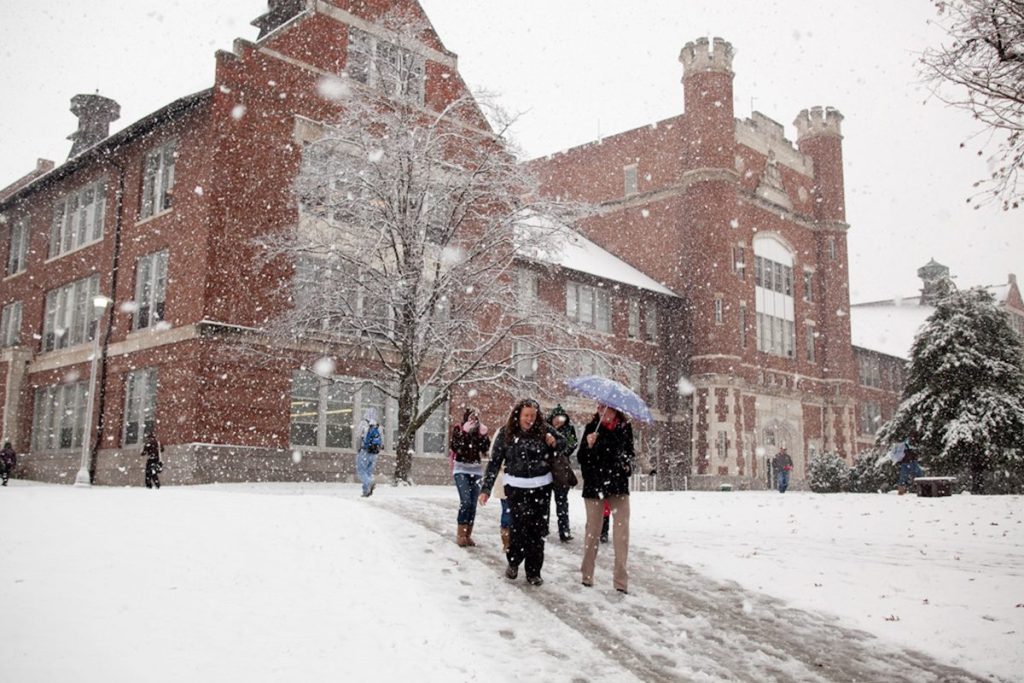
NORTHWEST MISSOURI STATE UNIVERSITY PHOTO
Don’t let the unseasonably mild November weather fool you. Winter is on the way, and local emergency managers and government agencies are urging area residents to “celebrate” Winter Weather Awareness Day this week by preparing for cold-weather hazards and reviewing safety precautions.
MARYVILLE, Mo. — Northwest Missouri State University is joining forces with the National Weather Service, the Missouri Department of Health and Senior Services, the Missouri State Emergency Management Agency, and local emergency managers to promote winter awareness and safety in the Maryville area.
Despite an unseasonably mild November, this is, after all, northwest Missouri, and snow, ice, and cold will almost certainly arrive in short order.
In order to help folks get ready for Old Man Winter, the campus, along with the agencies listed above, are urging people to “celebrate” Winter Weather Awareness Day this Wednesday by preparing for cold-weather hazards and reviewing winter safety rules.
Those hazards include frostbite and hypothermia, conditions that make excessive cold one of the leading weather-related causes of death in the United States.
To help families and individuals deal with winter weather, local emergency management experts and first responders are offering the following tips:
• Dress for the conditions. Wear several layers of warm, lightweight clothing. Layers can be removed to prevent perspiring and subsequent chills. Outer garments should be tightly woven, waterproof, and hooded. For hands, mittens, snug at the wrists, offer better protection than fingered gloves.
• Make a plan. Have an emergency plan in place, and review it before bad weather arrives. Whether at home or traveling, determine how you will communicate, and with whom, if trouble arises.
• Update your address book. Add emergency contacts, current work and school numbers, and information for emergency services. Designate an out-of-state or out-of-area contact in the event family members cannot communicate locally.
• Build a kit. Make a preparedness kit or review your existing kit with winter weather in mind. Kits might contain bottled water; high-calorie, non-perishable food items; a battery-powered radio; flashlights; extra batteries; and a first aid kit.
Make a winter car kit to keep in the trunk of your vehicle. Such kits typically contain a sleeping bag or blanket, high-calorie food items, a first aid kit, a raincoat, gloves, a spare radio with batteries, jumper cables, flares, a shovel, and sand to give tires traction.
When severe winter weather arrives, it is also important to keep updated on weather forecasts and understand the difference between watches and warnings issued by emergency managers.
A winter storm watch indicates that severe winter weather may affect your area within 12-48 hours, while a winter storm warning means that severe, possibly life-threatening winter weather is in the immediate area or expected within a short time.
Other weather notices can include ice storm warnings, which are issued for ice accumulations of a quarter-inch or more, and blizzard warnings, which predict sustained winds or frequent gusts in excess of 35 mph along with snowfall.
Additional precautions to keep in mind when preparing for winter weather include stocking up on food, including items that don’t have to be cooked if the power goes out.
Families who have infants at home, or people in need of prescriptions and special care, should be sure to stock up on food, diapers, medicine, and other essential supplies.
Emergency managers also urge caution when using fireplaces, stoves, and space heaters. Proper ventilation is essential to avoid a deadly build-up of carbon monoxide. Keep flammable materials away from space heaters, and do not overload electrical circuits.
Finally, take it easy when shoveling snow by hand. This chore is tough work for anyone not in good physical condition, and snow shoveling-related heart attacks are a major cause of death during and after winter storms.