Local teen wins ‘distracted driving’ essay competition

OLYMPUS DIGITAL CAMERA
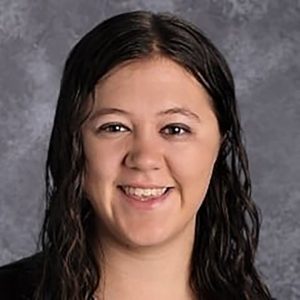
Mond Schuler, 13, a seventh-grader at Maryville Middle School, is the statewide middle school division winner of the third annual It Can Wait (no texting while driving) essay contest sponsored by the Missouri Press Association and AT&T.
The high school division winner is Sol Kim, 18, a senior from Liberty (Mo.) High School.
Schuler and Kim will each receive $500 in prize money in addition to a tour of the University of Missouri School of Journalism. The winners will be recognized Nov. 17 during ceremonies in Columbia that will include attendance by MPA and AT&T representatives and Maryville Daily Forum Executive Editor Jim Fall.
Mond is the daughter of Craig and Tatiya Schuler, who own and operate the Simply Siam restaurant in downtown Maryville. Her essay was entered in the state contest after being submitted to the Daily Forum, an MPA member.
“On behalf of the Missouri Press Association and its member newspapers, I wish to thank AT&T for this partnership aimed at saving lives on our roadways,” said Jim Robertson, MPA president and managing editor of the Columbia Daily Tribune. “The essays are excellent and sobering, urging all drivers to avoid texting while driving.”
“Our goal is to share and reinforce this simple message — keep your eyes on the road, not on your phone,” said John Sondag, president of AT&T Missouri. “While many tragedies are out of our control, the ones caused by smartphone driving distractions are completely preventable. … By working together, we can help change behavior and make our Missouri roadways safer for everyone.”
According to a joint AT&T/MPA release, texting while driving is a factor in more than 200,000 vehicle accidents each year.
Each day in the United States, at least nine people are killed and more than 1,153 injured in crashes involving a distracted driver, Sondag said.
The release also cited research showing that seven out of 10 motorists have used or continue to use smartphones while driving, and that such activities as texting and emailing are the most prevalent.
Other common smartphone behaviors behind the wheel include accessing social media, especially Facebook and Twitter, and using a variety of apps.
Despite knowing the risks of texting while driving, 43 percent of teens admit to doing so. However, 90 percent of school-age drivers say they would stop using phones while driving if a friend in the car asked them to do so. Seventy-eight percent say they would be unlikely to text and drive if friends told them it was unwise.
In addition to the essay contest, AT&T and MPA are encouraging young drivers to go to ItCanWait.com and take an online pledge not to use cellphones while operating a motor vehicle.
“We’ve seen how dangerous texting while driving can be, and now we are seeing it with other smartphone activities that people are doing while driving,” said MPS Executive Director Doug Crews. “We want to do our part to help raise awareness and stop this dangerous behavior.
“By hosting the It Can Wait editorial contest with AT&T and our local member papers, the Missouri Press Association hopes to provide students with a meaningful learning experience and help make our Missouri roads safer by reinforcing the message ‘Keep your eyes on the road, not on your phone.’”
Mond Schuler moved to Maryville while still in elementary school when her parents decided to open their business here. She said she decided to write an It Can Wait essay after hearing about the contest from Ashley Anderson, her seventh-grade language arts teacher.
In addition to language arts, Schuler is also enrolled this semester in mathematics, science, and band, where she plays clarinet. In her spare time she also enjoys playing guitar and piano.
To prepare for composing the essay, Schuler said she went to the It Can Wait website and read winning examples from previous years before returning to the Internet to research facts about distracted driving.
Her essay appears in this edition of the Maryville Daily Forum.
***
“It Can Wait”
By Mond Schuler
EDITOR’S NOTE: Mond Schuler, Maryville, is the middle-school division winner of this year’s statewide It Can Wait contest, in which young writers composed brief essays about the dangers and consequences associated with using smartphones while driving. Her essay appears here.
You’re lounging in your car, cruising through the vacant street when all of a sudden your phone dings, signifying a message from your friend. Ultimately, you decide to answer the text, and right when you take your eyes off the road to read the urgent message, you had no idea a car was coming your way.
You’ve crashed. Glass is shattered everywhere, the airbag juts from the steering wheel and the impact knocked you off your seat.
Now, let’s say all you had was a bloody wound on your forehead and scratches on your arms. The only major thing you don’t notice is the other driver you crashed into. He or she is presumably injured, possibly dead, and this catastrophe happened in seconds when you decided to reach for the phone.
This situation is nothing to LOL about, mostly when there was a fatal risk between you and the other driver. Studies have shown that about 424,000 people were injured and 3,152 were killed in car accidents involving distracted drivers. These statistics are proof that people would rather answer a text by risking their lives and the lives of other people around them.
People need to know: texting can wait.
It’s unbelievable how far technology has advanced in the last few decades. Nowadays, people can text, call or Facetime on their mobile phone whenever and wherever they want, but using your cell phone while driving is a disaster waiting to happen.
Text messaging requires visual, manual and cognitive deliberation from drivers; texting takes your attention away from your primary objective. Are you willing to risk your life to answer a text? What if you had someone in the car with you? What about the other driver you crashed into?
Obviously, the answer to the above questions is “no,” but one bad judgment can be the difference between life and death.
Now, let’s consider more about the other driver. This person had a life, a family, friends and probably a boyfriend or girlfriend. What if they never saw their loved ones again? What if they had a severe injury that paralyzed their entire body? All of these horrific possibilities are from texting and driving.
So, do you want to change the world? Of course you do, and it all starts with one simple task. Take the It Can Wait pledge to keep your eyes on the road, not on the phone, at ItCanWait.com. Wait, it gets better — there’s a free app for your phone to silence any incoming calls or text messages so you can drive safely through not so vacant streets.