Council tours sewer plant as deadline nears
TONY BROWN/DAILY FORUM
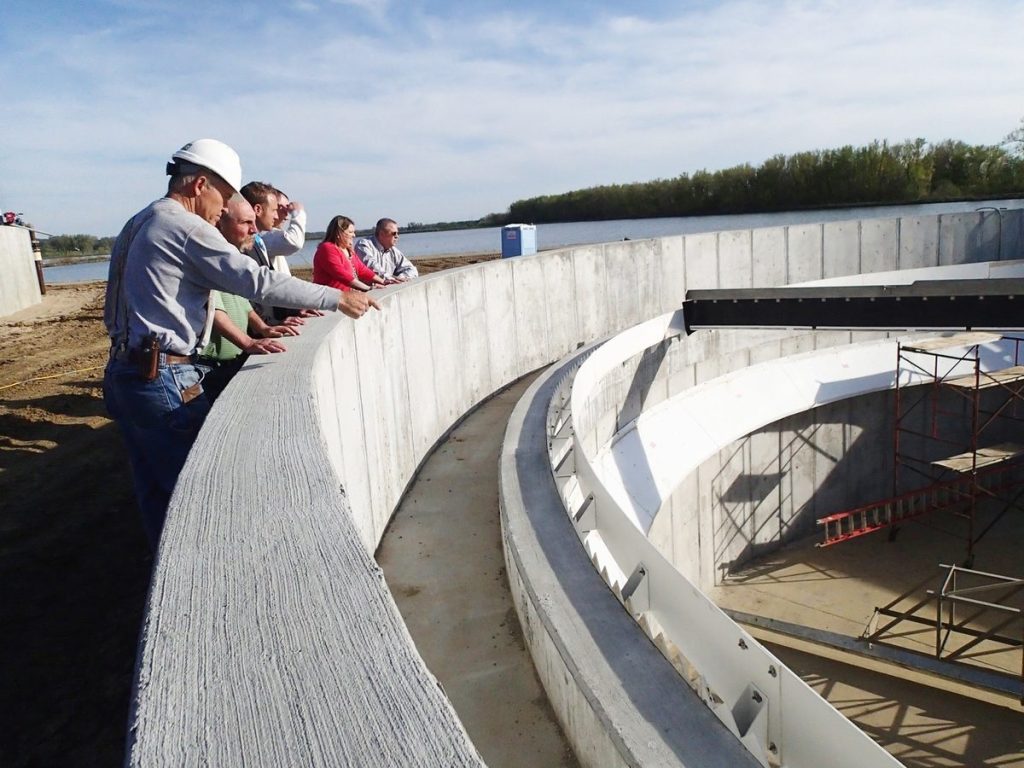
Larry Rosanbalm of Dave Ross Construction, left, gestures toward the inside of one of two massive clarifier tanks at the new municipal wastewater treatment plant under construction east of town. Also pictured are City Councilman Jerry Riggs, City Manager Greg McDanel, City Councilman Jason McDowell, Human Resources Manager Amy Strough and Public Safety Director Keith Wood.
With construction proceeding apace and the clock ticking on a July 1 deadline for completion of Maryville’s new $13.7 million wastewater treatment plant, members of the City Council toured the facility Monday, walking among massive concrete structures that will soon be used to cleanse 1.5 million gallons of sewage every 24 hours.
The tour began in the “headworks” building, which includes, among other facilities, an electrical control room and a large “step screener” designed to remove solid objects from effluent as it first enters the plant. This can include everything from diapers and face wipes to plastics and rags that could possibly block or damage equipment further down the line.
Public Works Director C.E. Goodall, who helped lead the tour along with Larry Rosanbalm and Russ Spry of Dave Ross Construction, the general contractor, said other headworks operations include laboratory testing used to monitor suspended solids and dissolved oxygen levels, operations he described as essential to ensuring effluent is being properly treated.
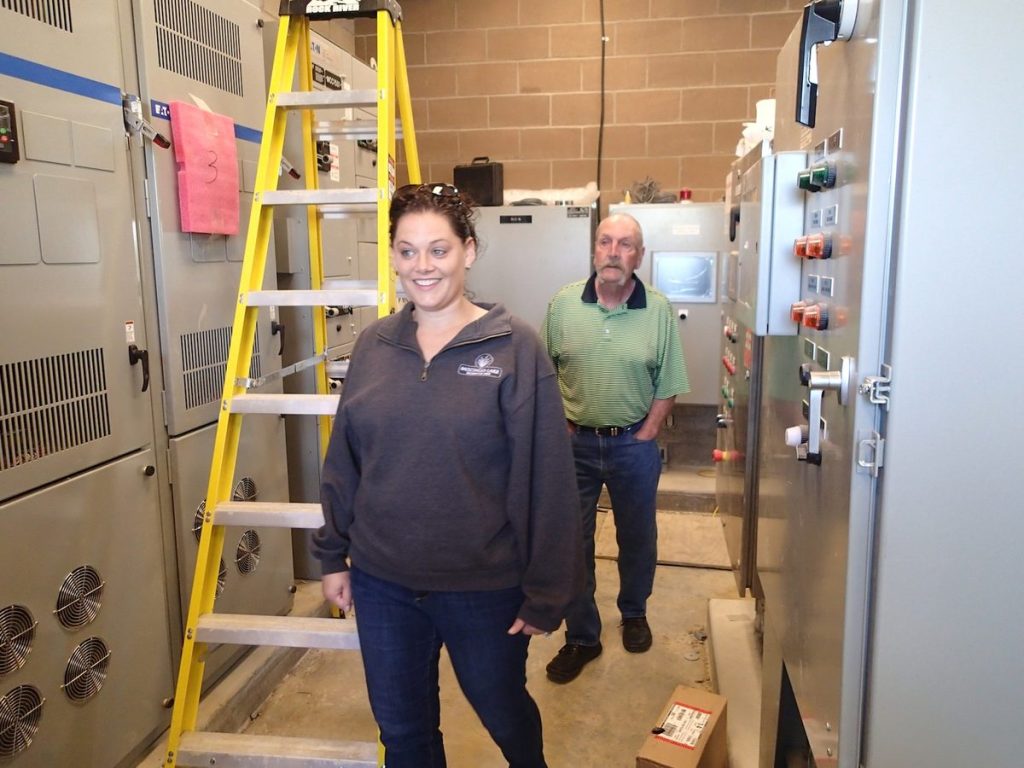
Though it doesn’t appear especially dramatic — just a couple of rows of tall metal cabinets outfitted with switches and lights — the electrical control room is the heart of facility and symbolizes the key difference between the new “mechanical plant” and the city’s current lagoon-based treatment system.
For years Maryville has treated sewage simply by pumping it into a series of aerated lagoons until natural processes render human waste into an inert sludge that sinks to the bottom. The relatively clean water is them piped into the nearby One Hundred and Two River.
But beginning this summer, under orders from both state and federal environmental agencies, Maryville will give Mother Nature a strong helping hand.
A key component in the system calls for a critical biomass of bacteria that will feed on the waste, transforming ammonia into nitrogen. But instead of lagoons, this process will take place in a large concrete aeration basin that will force oxygen through contaminated liquid, speeding the biological and chemical reactions that transform it back into clean water.
The facility also has two massive clarifier tanks equipped with metal arms that churn through sewage in order to remove particulates and suspended solids.
Altogether, Rosanbalm said, the structures contain 6,000 cubic yards of concrete.
Toward the end of the process, the nearly clean effluent is exposed to ultraviolet light, a technique designed to kill microorganisms that Goodall said has largely replaced chlorination in modern sewage treatment systems.
The problem with chlorination, he explained, is that chlorine is itself a pollutant, so after the chemical is added to kill off undesirable organisms it has to be removed again before the water is released back into the environment.
Unlike the lagoon system, all of these steps require a great deal of electricity, and City Manager Greg McDanel told council members during the tour that the new plant will add between $120,000 and $130,000 to the city’s annual utility bill.
In order to fund that expense, the council has already approved a series of sewer and water rate increases designed to cover increased power costs and help service the debt on the bonds used to finance plant construction.
Goodall said the “much larger expense” for treating each gallon of effluent is why it is crucial for the city to get a handle on so-called “inflow and infiltration,” the flow of storm water run-off into the sanitary sewer system.
He said Maryville is currently spending about $300,000 a year to ferret out and repair leaks, cracks and breaks in the system, an effort that will likely continue for some time.
But while the plant will cost more money to operate, it won’t require additional staff. People Service Inc., the vendor that provides technicians for Maryville’s drinking water purification plant, has agreed to staff the sewer plant as well, and says it can do so with the half-dozen employees currently assigned here.
Once up and running, Goodall said the facility will make a significant difference in terms of the purity level of the water released back into the river. And indeed, that is precisely what the construction mandate handed down by the state and federal departments of natural resources intended to accomplish.
“The water that goes into the river will be cleaner than the (drinking) water we pull from Mozingo Lake to treat,” Goodall said.
As for the old lagoons, they will still have a role to play even though no longer serving as the city’s primary sewage treatment mechanism.
Two of the lagoons will act as overflow reservoirs for the large volume of effluent expected following heavy rains, and two more will be used for sludge control.
TONY BROWN/DAILY FORUM
Maryville Mayor Renee Riedel and City Councilman Jerry Riggs walk through the electrical control room at the city’s new wastewater treatment plant. Powering the mechanical plant — as opposed to the existing lagoon system — will cost the city between $120,000 and $130,000 a year.
TONY BROWN/DAILY FORUM
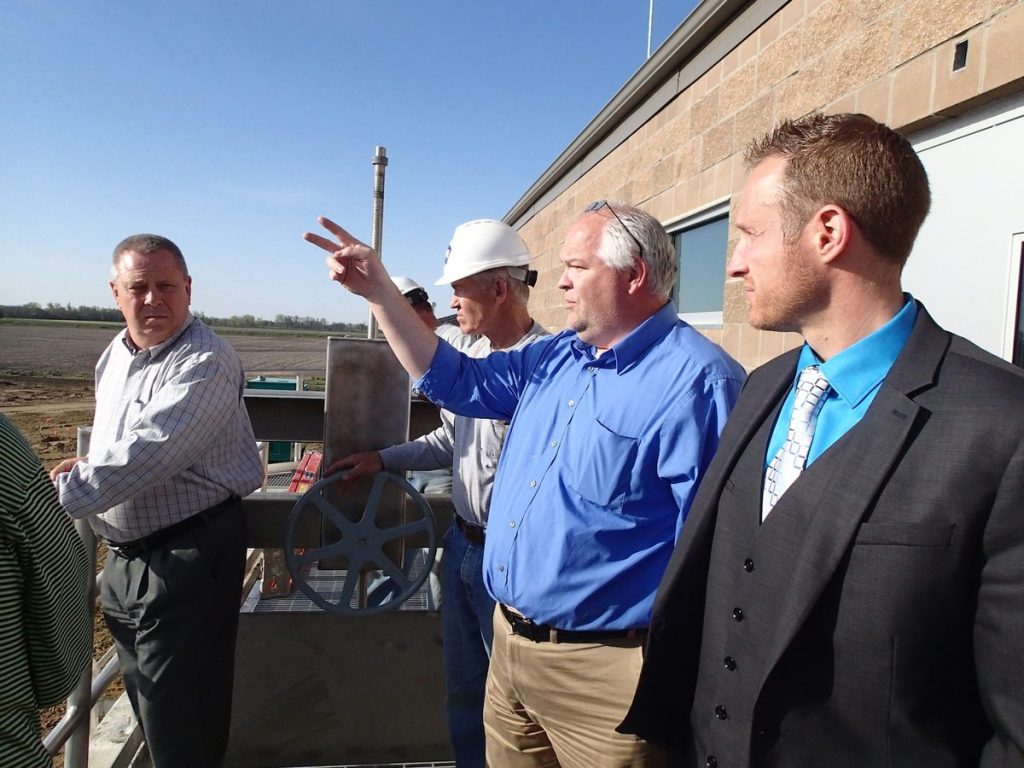
Standing on an elevated deck outside the “headworks” building, Public Works Director C.E. Goodall talks about the processes that will be used to purify the city’s sewage effluent after a new $13.7 million treatment plant goes online later this summer.
TONY BROWN/DAILY FORUM
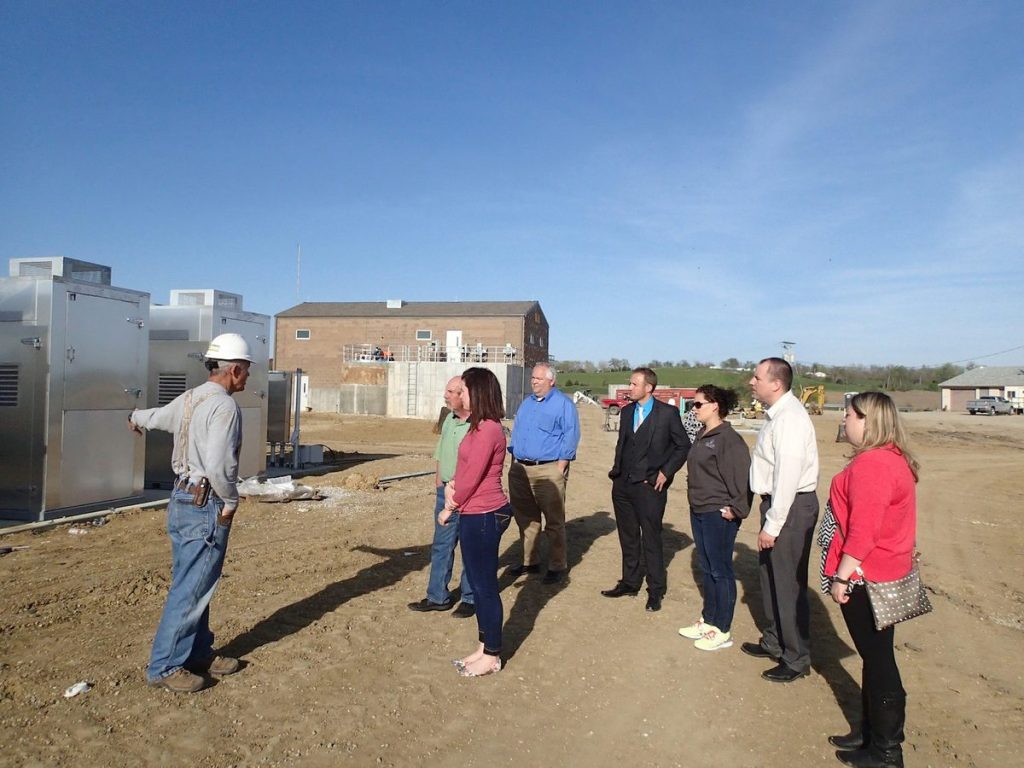
Larry Rosanbalm of Dave Ross Construction, in hard hat, explains to a group of city officials how a critical biomass of microorganisms will devour human waste flowing through the new municipal wastewater treatment plant. Pictured from left are council members Jerry Riggs and Rachael Martin, Public Works Director C.E. Goodall, City Manager Greg McDanel, Mayor Renee Riedel, Councilman Jason McDowell and Human Resources Manager Amy Strough.