
Shelter, city seek more common ground
TONY BROWN/DAILY FORUM
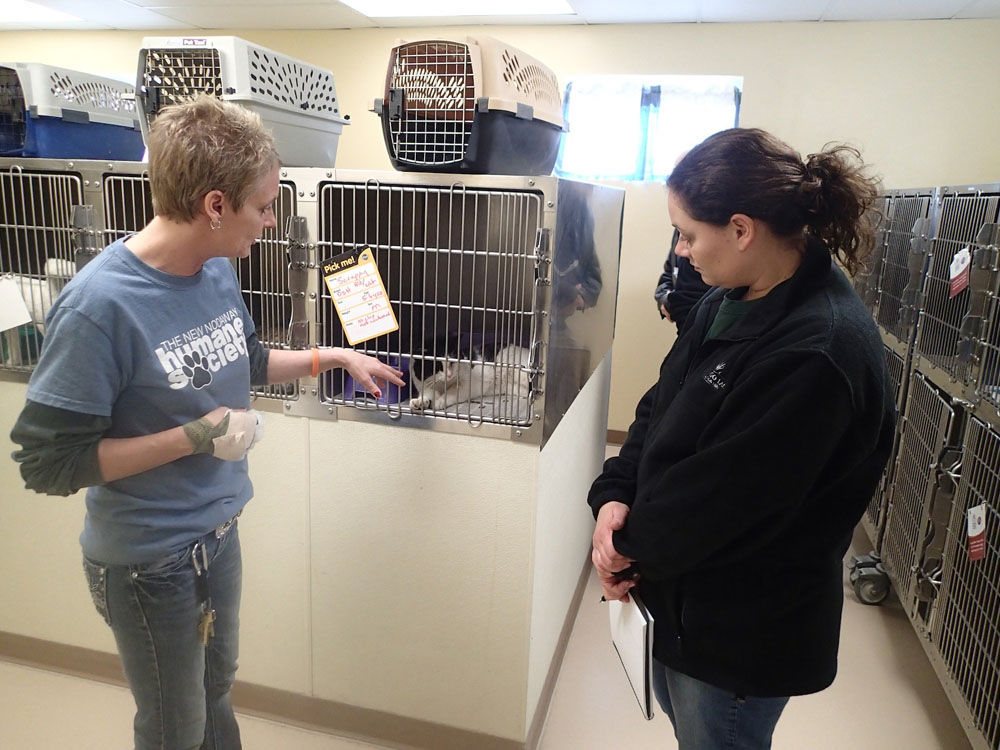
Maryville Mayor Renee Riedel, left, is introduced to “Scrappy” the cat by New Nodaway Humane Society animal shelter clinic manager Heidi Burns. Society officials are crediting cooperative adoption programs and improved care with a significant decline in the number of animals housed at the shelter, which they say has become one of the region’s model “no kill” facilities.
With animal numbers down dramatically and a somewhat improved financial situation, the New Nodaway Humane Society animal shelter is working with city of Maryville officials with an eye toward broadening cooperation between the two entities.
Mayor Renee Riedel and Assistant City Manager Ryan Heiland toured the shelter Wednesday afternoon along with New Nodaway board members Doug Sutton and Ray Courter.
The visit included presentations by shelter staff with regard to animal check-in, maintenance and adoption procedures along with a discussion about facility needs and society initiatives, such as Puppies For Parole, a program in which dogs receive basic obedience training from prisoners at the Maryville Treatment Center.
Society program manager Jelyna Rives said about 50 dogs have graduated from the eight-week program, now in its third year, and that virtually all of the animals have been adopted.
Sutton said such efforts have enabled the shelter to cut its dog population nearly in half, from approximately 70 animals to 30 or fewer, even though the numbers will likely start moving up with the onset of spring weather.
The number of cats at the shelter has also fallen significantly, from a high of more than 100 to only 27 animals as of Wednesday.
Among programs contributing most significantly to the decline in numbers, Sutton said, are adoption agreements with Petco and PetSmart that allow the society to provide animals for adoption directly from pet stores operated by those companies in St. Joseph.
Rives said both stores have cages set up to house cats from the Maryville shelter that can be adopted by customers. The shops also host monthly dog adoption events and pay the society a fee for providing the animals.
Similar adoption events take place each month at the Orscheln Farm & Home store in Maryville.
Contributing to the society’s improved bottom line this year is an in-kind grant through Hill’s Pet Nutrition Inc. that provides a 66-percent-below-retail discount on Science Diet pet food.
Riedel said her visit to the shelter grew out of City Council budget discussions this summer that included conversations about the shelter’s function as an animal control resource.
The city of Maryville currently provides the shelter with an annual $82,000 subsidy, an amount that covers less than half of the facility’s $220,000 operating budget, much of which comes from charitable donations.
In addition to the subsidy, Maryville also mows the shelter grounds and provided the society with an aging Mozingo Lake Recreation Park maintenance truck for use as an animal control vehicle.
The shelter also derives some income from animal control agreements with such communities as Hopkins, Pickering and Skidmore and this year received a $2,000 appropriation from the Nodaway County Commission.
Riedel said Wednesday one of her goals in talking with Sutton and Courter was to learn more about the shelter before meeting with the commission in hopes of convincing its members to increase shelter funding in light of what she see as the operation’s importance to the county as a whole.
During their conversation with the mayor and Heiland, Sutton and Courter both said they were looking for ways to build on the shelter’s current relationship with City Hall, perhaps by using municipal government as an “umbrella” through which to obtain advantageous terms on liability and property insurance.
The board members also asked if the city could help out in such areas as signage and Internet presence.
Another topic, which has been raised by both the shelter board and the council a number of times in the past, was the dismal record of Maryville dog owners in licensing their animals, which is required under city ordinance.
Courter estimated that about 2,000 dogs are kept as pets in Maryville, yet the shelter, which is empowered by the city to sell tags, licenses only about 100 animals a year. The tags cost $5 for dogs that have been spayed or neutered and $25 for unaltered animals.
During the tour, shelter clinic manager Heidi Burns, briefed the two city officials on veterinary and general care procedures she said have improved the appearance and health of shelter animals and contributed to the rising adoption rate.
Assuming there are no serious medical issues, preparing a cat or dog for adoption costs a little less than $90, Burns said, a total that includes sterilization and shots. She added that the daily cost of keeping an animal at the shelter is $5 a day for dogs and $3 a day for cats.




