Life coaches offer path to health, wealth
TONY BROWN/DAILY FORUM
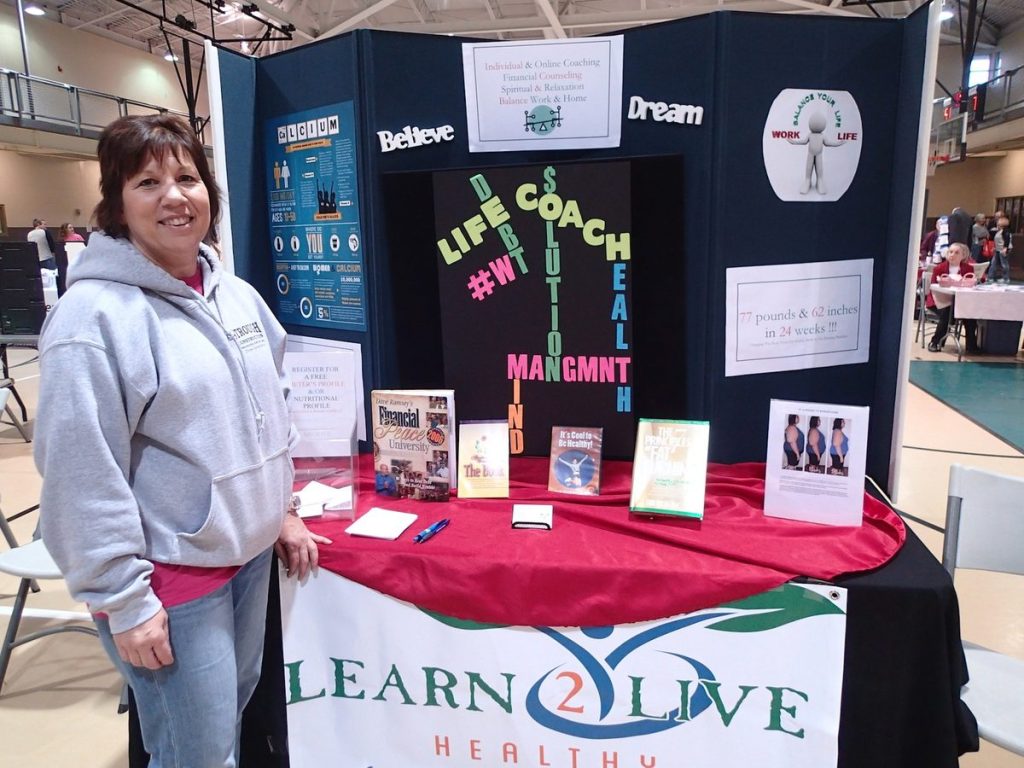
Life coach Joyce Harris stands beside the Learn 2 Live Healthy display at Saturday’s Health and Fitness Fair at the Maryville Community Center. Learn 2 Live offers advice and counseling to people seeking to improve their lives in terms of physical well-being and financial independence.
Joyce Harris knows there are things in your life that just aren’t working, and she wants you to get your act together and take it on the road.
Harris, a semi-retired registered obstetrics nurse, along with Dr. Vince Shelby, a chiropractor who also serves as Nodaway County coroner, are partners in Learn 2 Live Healthy, a local “life coach” consulting firm.
Founded about five months ago, the business offers strategies designed to help people set up a blueprint for improving their lives and reaching their goals — goals that include everything from losing 40 or 50 pounds to achieving financial independence.
Harris, a former Nodaway County Health Department nurse who once served as the obstetrics director at Community Hospital in Fairfax, spent Saturday morning greeting potential customers at the Learn 2 Live Healthy booth during the annual St. Francis Hospital Health and Fitness Fair at the Maryville Community Center.
She said she joined with Shelby to form the business because both partners during the course of their careers have routinely dealt with patients who were failing to live up to their full potential because of poor lifestyle choices.
According to Harris, life coaching, which economists estimate has grown into a $10 billion-a-year industry, is really just a matter of getting people to think in a serious, systematic way about where they want to go and what they need to do in order to get there.
“We ask people to list their goals and dreams in life, and then help them come up with a plan of action,” Harris said, adding that Learn 2 Live primarily focuses on the importance of “total wellness” and “finding the balance in life.”
That’s why, she said, the business stresses both physical and fiscal health.
“Everybody needs to work,” Harris said, “but you need to have a little fun too. You need to stay healthy and enjoy your family and friends.”
While losing weight, eating healthy and saving money for retirement are concerns typically associated with the over-40 set, Harris said she wishes more young people would consider life coaching during the critical years in which they complete their education, leave home and launch careers.
“There are so many young people who don’t think about their future and what they need to do to be ready for retirement,” Harris said. “I feel so fortunate that I came from a family where I was taught to prepare for the future. That’s why I was able to retire at 50. It’s great to get up in the morning and go do something because you enjoy it and not have to punch that clock for 40 hours a week.”
When a client signs on with Learn 2 Live, Harris said, the first thing they are asked to do is list all of things they dislike about their life on the left-hand side of a sheet of paper. On the other side, they are told to list “what would fix that.”
After the customer’s initial input, Harris and Shelby spend the next 12 weeks working with the client in order to come up with a plan that amounts to a highway toward happiness. For a one-time fee of $130, customers also receive a journal in which to record their progress.
Popularized in the 1970s, and once the exclusive domain of celebrities and fast-track executives, life coaching has only recently evolved into a mainstream service industry for ordinary folks. But Harris said it is just those eight-to-five working people who need the advice her business has to offer.
“People don’t communicate like they used to,” she said. “They text each other. They don’t have conversations.”
In other words, log off of Facebook, walk a few yards down the street, and have coffee with your neighbor.
According to Harris, the path to self-actualization passes through forgotten terrain that includes physical exercise, shared family meals, less time in front of a computer, sound financial planning — and a little common sense.
“I can’t believe some of the things people eat,” she said. “We don’t understand the nutritional value of food. It’s not that you can’t eat out. You can go to a restaurant and get a very healthy meal. It’s all about the choices you make.”
Living a better life also requires a little selfishness. Too often, Harris said, Midwesterners are taught from birth to think only of others, to give and love and sacrifice at the cost of one’s personal fulfillment.
“People don’t take care of themselves,” she said. “It’s really important to have that 15 minutes a day when you can just reflect on you. You can’t give everything just to your job or to other people.”
Asked for her best advice with regard to getting one’s life back on track, Harris said the key is to learn from the success of others.
“Find someone to be a mentor,” she said. “Then do what they do, become their friend. Find people who are going in the direction in life that you want to go and go there.”
TONY BROWN/DAILY FORUM
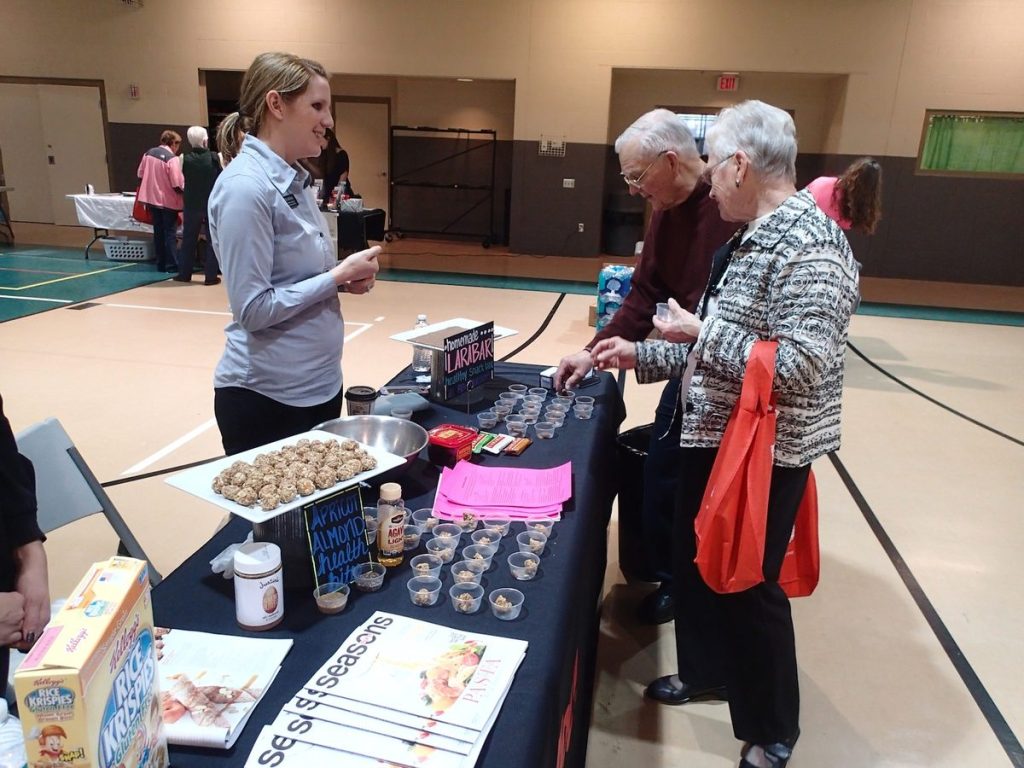
Hy-Vee supermarket dietitian Deanna Bowers dispenses healthy snacks to a couple attending Saturday’s Health and Fitness Fair at the Maryville Community Center.

TONY BROWN/DAILY FORUM
The diabetes education booth at Saturday’s Health and Fitness Fair included this display illustrating the amount of sugar — 70 pounds worth — consumed by someone who drinks a non-diet 24-ounce soda once a day for a year.