Play it safe, stay well this summer
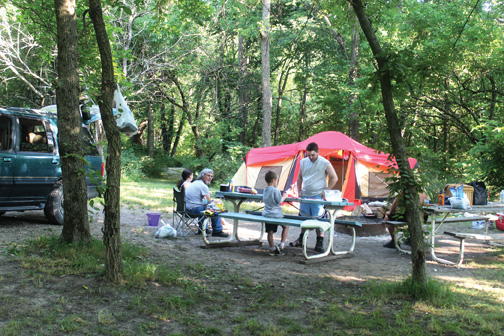
CITY OF MARYVILLE PHOTO
Summertime creates opportunities for a wealth of outdoor activities from boating to bicycling to camping. But warm weather also brings dangers associated with everything from disease-bearing insects to spoiled food. Paying attention to good summer health and safety practices can help keep your family out of the emergency room and on the go, like this group of campers at Mozingo Lake Recreation Park.
MARYVILLE, Mo. — Summer is a time for friends, family, vacations and outdoor fun — from roasting hot dogs around a campfire to hiking, biking and swimming.
But the sunny season also offers its share of risks to health and well-being, most of which can be greatly reduced by doing a little planning and taking a few basic precautions.
Dr. Terry Symonds, a family medicine practitioner and emergency room physician at St. Francis Hospital & Health Services, offers these tips for staying safe so that nothing gets in the way of your lazy, hazy, crazy summer days and nights.
Eat wisely
“Every year we see many vacations and trips derailed by food-borne illnesses,” Symonds said. “Many of these illnesses are easily preventable.”
So, whether you’re hosting a barbecue or camping out, here is some food safety advice to keep in mind:
• Pack foods that need to stay cold separately from beverages. A beverage cooler will be opened frequently, allowing foods like potato salad and raw meats to warm up.
• Don’t let food sit out longer than two hours — one hour if the temperature rises to 90 or above.
• Serve cooked meats and hot dishes while they are still hot. Not all bacteria can be killed with a quick reheat on the grill or in the microwave. Keep this in mind when serving brats and burgers.
• Don’t reuse serving plates and utensils.
• Wash hands frequently wash your hands, even if you’re not preparing the food. This will help limit the spread of any bacteria or viruses.
Drink responsibly
High-risk alcohol consumption, such as binge drinking, can be particularly dangerous during the summer, Symonds warned.
“Excessive alcohol combined with summer activities leads to some of the greatest tragedies we see every year in the Emergency Department,” he said. “The heat with alcohol leads to excessive dehydration and accentuates the altering effects of alcohol.”
Because alcohol impairs judgment, drinkers often don’t realize they’re in trouble until it’s too late, and Symonds said that many boating and swimming accidents simply wouldn’t happen if alcohol were not involved.
“There is no harm in enjoying a beer on a summer day, but binge drinking and summer activities are a bad combination,” he said.
Swim smart
When it comes to beating the heat, many people head for the pool or swim in area lakes and rivers. But while water activities are a great way to have fun while beating the heat, they can also be dangerous.
“No one is drown-proof,” Symonds said. “Most drowning is actually silent. It’s not like the movies. People are not splashing, screaming or yelling. This is why it is so important to actively supervise kids around the water.”
By active supervision, Symonds said he means closely watching and being engaged with children as they play in and around the water. Reading a book or talking on the phone can be distracting and delay your ability to act quickly in an emergency. Ideally, you should be in the water with your kids and within arm’s reach.
Prevention is a big part of water safety, so start swimming lessons early. For very young children, it’s important to start with basic safety rules, like no running on the pool deck and not swimming alone.
Beware of bites
As the weather warms up, so does insect activity. Mosquitoes, ticks and fleas can all carry serious illnesses such as West Nile Virus and Lyme Disease.
To prevent these illnesses — and the bites that transmit them — grab that bottle of insect repellant. Repellents containing the chemical compound known as DEET are acknowledged as being the most effective, especially if you’re headed for the woods.
Look or a repellent that contains 10 to 30 percent DEET concentration. The higher the concentration, the longer the repellant should last.
Another popular active ingredient is permethrin, which is sometimes used to pre-treat insect-repellent clothing. Whether or not you decide to invest in such garments, Symonds said that spraying repellent onto your clothes is always a good idea.
Proper clothing used in conjunction with a quality repellent is especially important with regard to avoiding tick bites. The less exposed skin you offer, the less likely it is you’ll end up with an imbedded tick.
“Make ending the day with a ‘tick check’ of everyone in the family a part of your routine,” Symonds said. “A tick found and removed within 24 hours is not likely to transmit disease or other infections.”
Start your tick check immediately after coming indoors. Remove clothing and shake it out to catch any ticks that may have hitched a ride on sleeves, collars or shoes. Help other family members check themselves thoroughly, including behind ears and in hair, then shower or bathe.
If you do find an embedded tick on a family member or pet, don’t panic.
“The best way to remove a tick is with tweezers,” Symonds said. “Grasp the tick as close to the skin as possible and pull straight up.”
This procedure is likely to pull the tick out intact, but if part of the tick remains embedded, call your doctor for advice on removing it or to schedule an appointment.
Bicycle safely
The number one safety rule? Wear a helmet.
“It doesn’t take much, you just have to hit the right spot at the right time and you can have a severe brain injury,” Symonds said. “Helmets reduce the risk of severe brain injury by upwards of 80 to 90 percent, so it’s really very important.”
When you start out for the summer, make sure your kids’ helmets fit properly. The helmet should be snug and not move around on their head much.
And helmets aren’t just for children.
“Parents, we’re the examples,” Symonds said. “When we get on a bike, when we ride those things they like to ride, we should be wearing helmets too.”
Celebrate the 4th wisely
Fourth of July festivities are just around the corner, which means the sound of fireworks will soon fill the air.
“It’s quite common for ER doctors to see injuries, especially with children, from ‘safe’ or ‘simple’ fireworks like sparklers,” Symonds said. “Everyone thinks these pose no danger, but in reality they can cause serious injuries.”
The Consumer Protection and Safety Commission reports that, on average, 200 people end up in the emergency room every day with fireworks-related injuries during the month around July 4. Sparklers cause the highest number of injuries.
To keep your family out of the emergency room this summer, follow these five tips for fireworks safety:
• Never allow children to play with or ignite fireworks
• Never try to re-light or pick up fireworks that have not ignited fully.
• Keep a bucket of water or a garden hose handy in case of fire or other mishap.
• Make sure fireworks are legal in your area before buying our using them.
• Light fireworks one at a time, then move back quickly.
Don’t play with fire
For many families, summer means camping, hiking, fishing and a nightly campfire.
Nothing quite beats telling stories and making s’mores while sitting around a fire beneath a star-filled sky, but where there is smoke and flame there is also danger.
Symonds suggests the following tips whenever fire-building becomes one of your summer activities.
• Never leave children unsupervised around a campfire.
• Younger children should be given a fire boundary in order to keep them a safe distance from flames and flying sparks.
• Always have water, a fire extinguisher or loose dirt close at hand so the fire can be extinguished quickly.
• Teach the “stop, drop and roll” method for extinguishing clothing or blankets that accidentally catch fire.