Lettuce Dream team tours hydroponic farms
SUBMITTED PHOTO
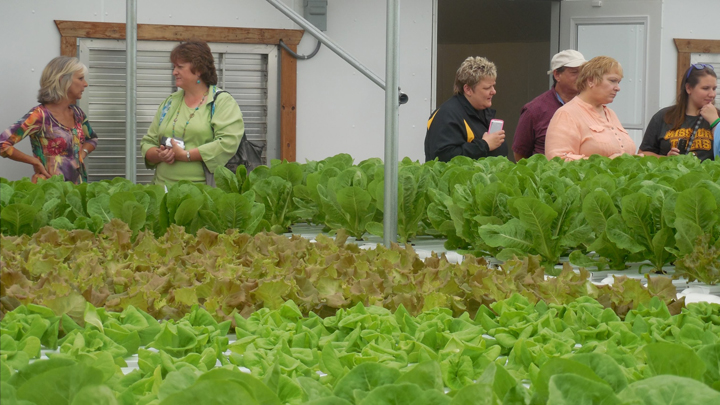
Carla Springer (far left), farm manager at Five Oaks Farm, discusses the operation with Diane Francis of Lettuce Dream, while Jackie Allenbrand (third from left) with Lettuce Dream listens to one of the tour speakers. Five Oaks Farm harvests more than 10,000 heads of lettuce each year.
Members of Lettuce Dream, a local non-profit corporation still in planning stages, visited hydroponic produce farms in southern Missouri last week. The tours gave them insight into running their own hydroponic lettuce greenhouse while also providing jobs to individuals with cognitive and developmental disabilities.
The Farmers Market of the Ozarks hosted their group and others for tours of two hydroponic farms just north of Branson.
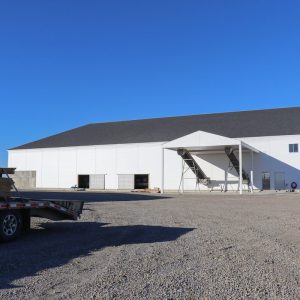
The Quickley Produce Farm located in Galena, Mo. includes greenhouses and a storage and packing facility. The Quickley family sells various types of tomatoes, cucumbers and peppers to local restaurants and grocery stores and donates produce to Harvest on Wheels, a local food-providing charity.
Five Oaks Farm is a commercial lettuce operation located in Forsyth, Mo. Owners Tim and Robin Collier have hydroponic greenhouses that house 10 different varieties of lettuces. They provide produce for hospitals, restaurants and businesses to have fresh lettuce. Each month, Five Oaks harvests more than 10,000 heads of lettuce each year.
Diane Francis, chairwoman of Lettuce Dream, said the tour has given them guidance and ideas for the business aspect of this organization.
“The tour was very insightful and full of educational information regarding greenhouses and hydroponic farming,” Francis said. “We will really try to incorporate a lot of what we have learned from these two farms into our own greenhouse production.”
To grow hydroponic lettuce, employees plant the lettuce seeds in a water and nutrient absorbing base made from lava rock, called rock wool. The base has holes throughout that each holds one seed. The trays are then placed in the greenhouse nursery to germinate.
Once they have sprouted and reached a certain size, the plants are transported into one of the dozens of lettuce channels or “gullies.” Small hoses run water and nutrients like iron, magnesium and others, through the gullies. Whatever isn’t used is recycled back through the gullies.
According to the speakers at Five Oaks Farm, this method of growing produce allows for consumers to know exactly what goes into their produce. Hydroponic farming is a very efficient way of producing farm produce, like lettuce, because it uses less space, five to 10 percent less water, and fewer input products, but produces high yields.
The greenhouse owners focus on cleanliness, organization and sanitization in order to keep their product as pure as possible. Other key components they keep a close eye on are temperature control, pH levels of the water, well-kept records, and top-of-the-line equipment.
“It’s important that as few hands touch it as possible,” said Carla Springer, farm manager at Five Oaks. “We’ve learned that it does make a difference. We’ve never touched the lettuce we grow here.”
For that reason, all employees who move seeds and plants use gloves at all times.
The lettuce takes 30 to 45 days to be fully grown during the summer. The greatest obstacle they see is growing lettuce plants in the winter, due to the length of day and a smaller amount of light.
During the winter, they plant 2,000 seeds weekly. Throughout the rest of the year, they plant about 6,000 seeds weekly.
Five Oaks Farm currently has three greenhouses, but the Colliers plan to expand to around 10 in the years to come. Lettuce Dream is currently searching for land that will allow them to expand as business grows.
Hydroponically grown lettuce is a bit more expensive per head, but their customers appear to be willing to pay it. They say the waste is less and the taste is superior.
“Chefs comment that they have less waste,” Springer said. “They typically throw away 30 percent of a head of lettuce grown in soil, but with this, only the root end is cut off.”
The success and demand that these farms have seen since they began has been an inspiration to the local Lettuce Dream organization.
Local citizens began Lettuce Dream to offer employment to individuals with cognitive and developmental disabilities in a greenhouse to provide hydroponic lettuce and possibly other produce in the future.
While still in fundraising and planning stages, the organization plans to build its own hydroponic greenhouse as early as next spring. The lettuce they grow will provide produce to local restaurants, stores and customers.
“This concept would allow us to provide local lettuce 365 days a year to businesses and customers,” Francis said. “But the best part of all this is that we will also provide jobs that will teach those with disabilities like autism the skills and tasks they need to allow them to integrate into society in other jobs.”
To incorporate those with disabilities into their workplace, Lettuce Dream will work with another hydroponics operation called Arthur and Friends in Newton, N.J., which has done this successfully.
Francis said Maryville is a great location for something like this because Northwest Missouri State University offers a variety of benefits.
“This is a perfect fit for us to work with Northwest’s horticulture and agriculture departments,” she said. “And those going through the elementary and secondary education programs could use this to learn to work with those with disabilities.”
Francis is still applying for grants, as the initial set-up costs can be pretty high.
“It’s said that the initial costs can be recovered in 18 months to two years,” Francis said. “But we believe the community’s support will help us accomplish that very quickly.”
Lettuce Dream members were able to participate in the Ozarks Farm tour because of funding provided by the Heartland Foundation. Heartland Foundation, Heartland Health and North Kansas City Hospital have provided their support through Healthy Partnerships, committed to the health of residents in northwest Missouri.
For more information about Lettuce Dream, visit www.lettucedream.org or call (660) 562-0249.