Top 10 Nodaway County stories of 2020
FORUM FILE PHOTO
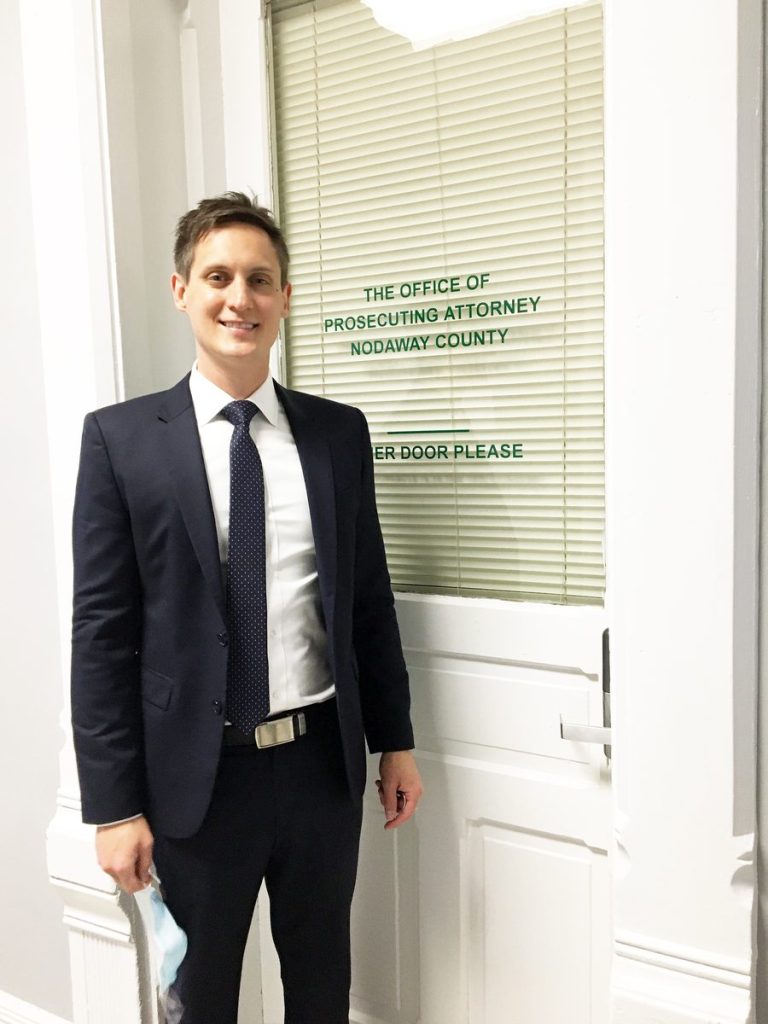
No. 10 – New Nodaway County Prosecutor Caleb Phillips is shown at his office in September after being sworn in at the Nodaway County Courthouse in Maryville.
MARYVILLE, Mo. — It’s not hard to guess what tops this year’s Forum Top 10 list, but it is, in many ways, staggering to see just how many monumental stories happened in Maryville’s corner of northwest Missouri since Jan. 1.
What follows is a list of the top 10 most important stories of 2020 that were covered in The Maryville Forum this year, roughly ordered by the number of views received on MaryvilleForum.com.
In most years, this would include mostly one-off events and stories. But this year, so many of the stories that have dominated readers’ lives have been ongoing. To reflect that, the list condenses several of the stories that topped the list of most-read articles into topics — for example, several of the articles with the most views were about the city’s water issues, so those have all been condensed into one category.
Without further ado, it’s time to relive Maryville’s biggest moments of 2020:
10 – New judge, prosecutor
On April 2, Associate Circuit Judge Doug Thomson was named to the Missouri Court of Appeals, Western District, setting off a domino effect in the Nodaway County legal system. Thomson was elected to the bench in 2014.
On June 12, prosecuting attorney Robert Rice, who had served in the post since 2011, was appointed to Thomson’s old spot as the associate judge for the 4th District. And on Aug. 12, Caleb Phillips, a law clerk to federal judge Roseann Ketchmark at the time and an Albany native, was named Nodaway County’s new prosecuting attorney — only the county’s third prosecutor since 1981.
9 – Mosaic closes Child Care and Education Center
On May 7, Maryville parents were shocked to learn that Mosaic Medical Center – Maryville would shut down its child care center in August, turning the facility into an outpatient therapy unit.
A press release from the hospital blamed an unforeseen operating loss and the state’s suspension of a grant program that was slated to pay for a large portion of the center’s activities.
The move came as a shock and disappointment to many who had made the facility a reality. The $3 million project that came to fruition in 2018 was funded through a $1 million community development block grant from the state, neighborhood assistance tax credits and mostly through private donations. The upkeep of the facility became Mosaic’s responsibility when it took over from SSM Health St. Francis Hospital in 2019 with the purchase of the hospital.
Some community leaders continue to work to find alternatives, including a state-funded expansion at Northwest Missouri State University announced in November that will increase capacity for its early child care program.
8 – MPS building opens, Wood retires
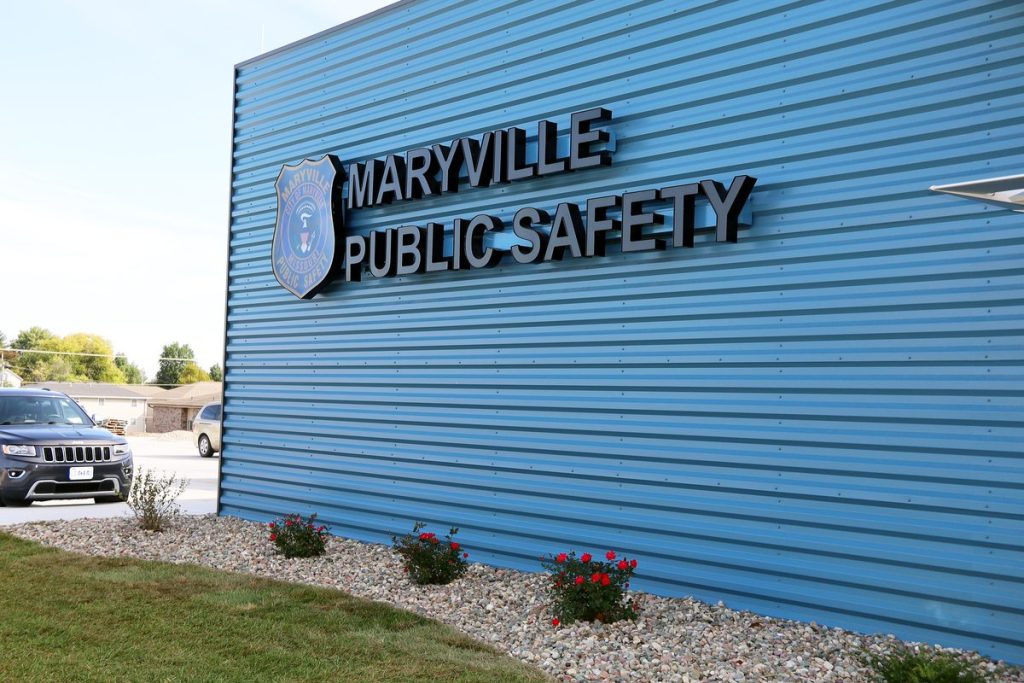
On Oct. 1, a new era in Maryville law enforcement and emergency services opened its doors, fulfilling the promise made to voters when they approved a capital improvement sales tax for the new, modern facility in 2017. On top of that, a new, combined 911 dispatch operations center — Northwest Regional Communications — fulfilled a much older goal, streamlining response to calls across the county after decades of deliberation on how to make it happen.
When all was said and done, the new building, which replaced Maryville Public Safety’s former headquarters in an old grocery store from the 1970s, came in on time and under budget, boasting state-of-the-art facilities for police and firefighters.
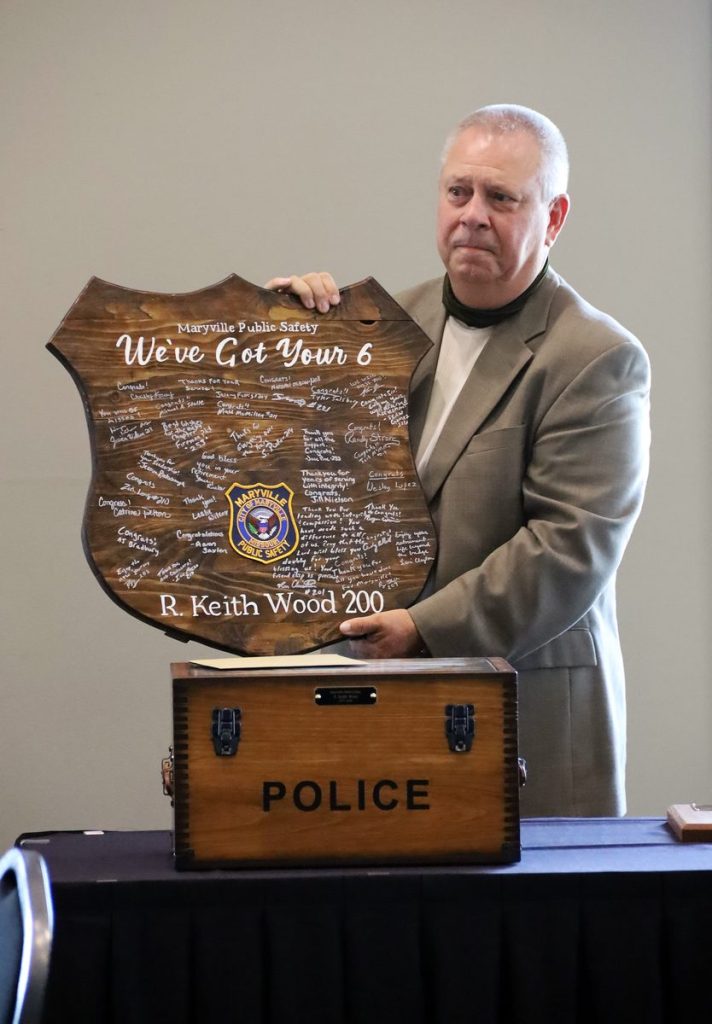
And to drive home what a new era it is, the building’s namesake, Keith Wood, who pushed hard for both the new building and the combined 911 operations, retired in August after 43 years in law enforcement and 31 in Maryville.
7 – Hundreds attend peaceful protest in Downtown Maryville
During a summer of protest across the country in response to the death of George Floyd at the knee of a Minneapolis police officer, Maryville was no different.
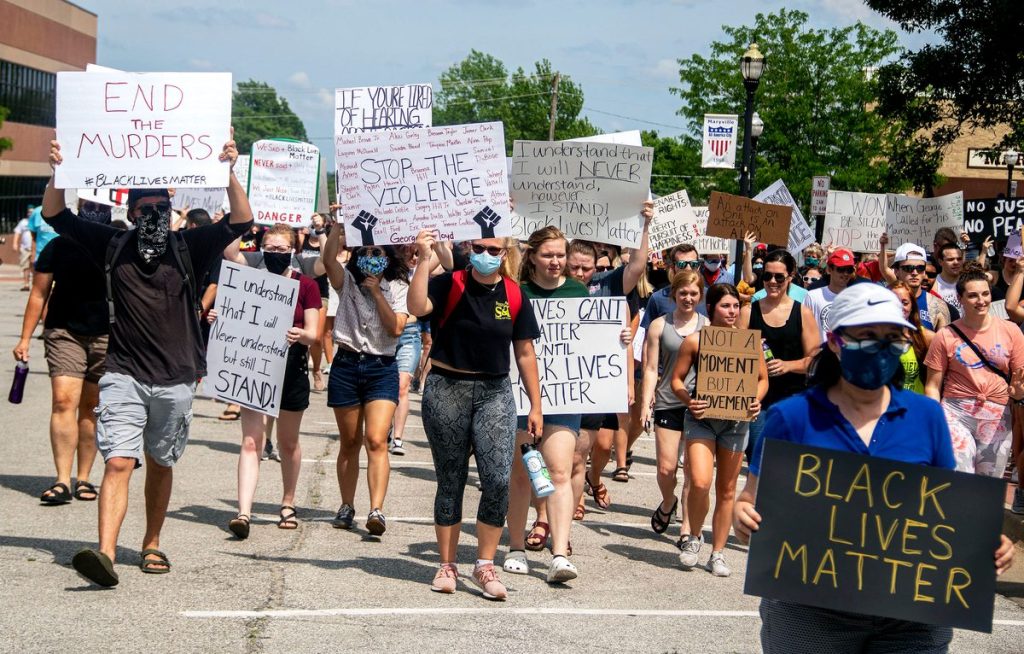
More than 300 peaceful demonstrators circled the Nodaway County Courthouse on June 6 to protest Floyd’s death and the deaths of other Black people at the hands of police. For 8 minutes and 46 seconds — the time Floyd spent with an officer’s knee pinning his neck to the ground before he died — protesters chanted and marched around the square, followed by speeches about the experiences of Black Maryville residents in a town that is 90 percent white.
“Read those experiences. Be angry at those experiences,” said Cayla Vertreese, a Northwest student who helped organize the event. “Fight to end those experiences.”
Floyd’s death and the reaction around the country and in Maryville prompted local law enforcement authorities — many of whom attended June’s protest — to re-evaluate their own policies, and Northwest Missouri State University spent the summer consulting with students to come up with new diversity initiatives and changes to existing practices.
6 – Deaths of Daisy and Melinda Coleman
On August 4, Melinda Coleman shared that her daughter, Daisy, 23, had died by suicide. Four months later, Melinda Coleman took her own life.
The deaths of Daisy and Melinda are inextricably linked to Maryville after Daisy’s 2012 accusation that she and a friend were raped, and the national media attention on Maryville — much of it negative — that followed during the case and after the release of the Netflix documentary “Audrie and Daisy” in 2016.
Daisy’s death in particular hit hard for many of the people — especially survivors of sexual assault — across the country whom she inspired through her story, the documentary and her advocacy work at SafeBAE, an organization she co-founded to assist survivors and help end sexual assaults in middle and high schools.
5 – Election 2020
The national election season was long and tense, as were the days spent counting ballots after Americans had gone to the polls but did not know who the next president would be as quickly as had become usual prior to the pandemic
At the local level, election officials faced many of the same challenges, and surmounted them with flying colors, pulling off an unprecedented election that by all measures was done as efficiently as possible.
The races themselves broke overwhelmingly Republican at the local level, including the ouster of longtime Public Administrator Diane Thomsen in favor of Republican Dee O’Riley, and the re-election of Sheriff Randy Strong in a rematch of 2016 with Democratic challenger Darren White.
The sheriff’s race in particular was heated, with attacks by White on Strong’s record failing to resonate with voters, along with a controversy over comments he made regarding the death of Daisy Coleman in which he questioned whether Coleman had faked her death and if it had been timed to affect his election chances.
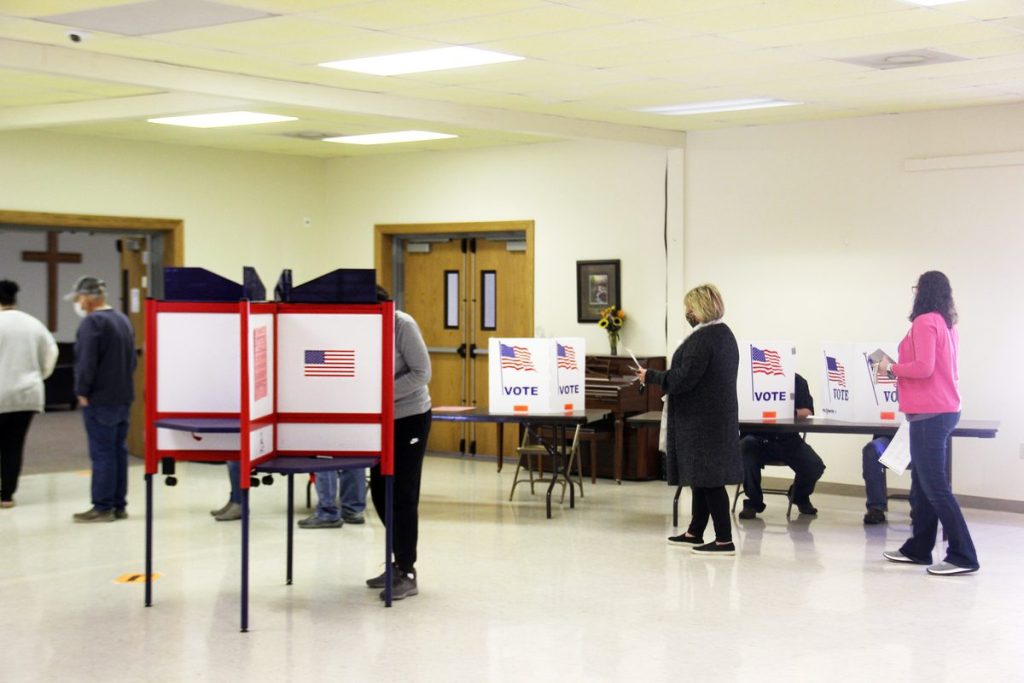
Ultimately, more than 9,900 Nodaway County residents cast a vote in November — more than 76 percent of registered voters — and more than 2,000 of them did so through mail-in or absentee ballots.
4 – The water
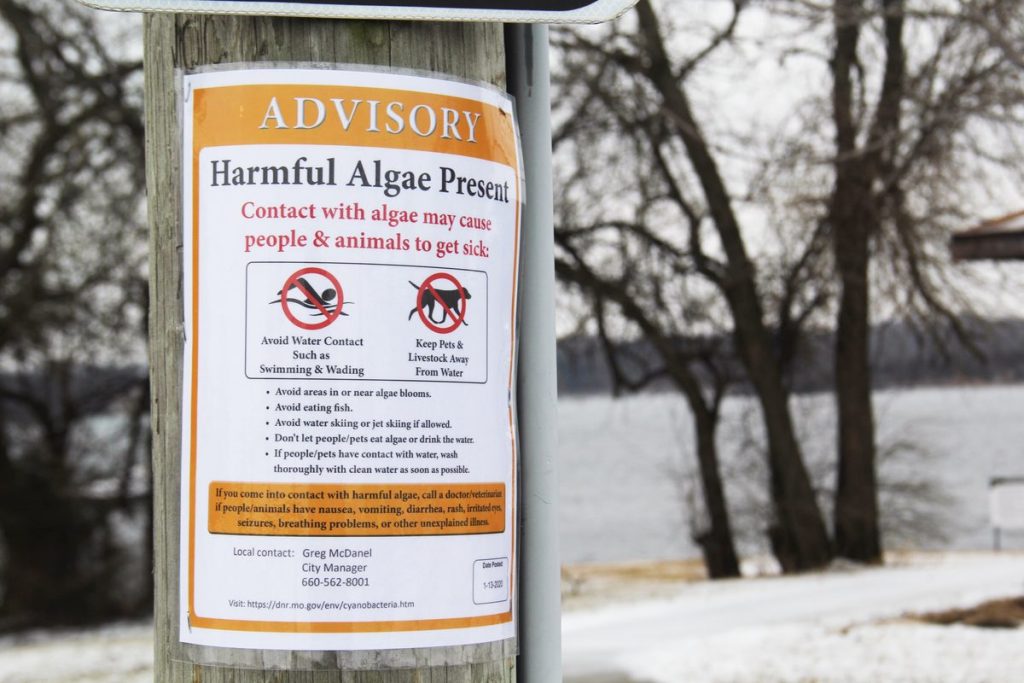
Although occasional taste and odor issues had cropped up over the past three years, the issue didn’t reach full-blown crisis levels until January, when a cyanobacteria bloom on Mozingo Lake prompted the city and the Missouri Department of Natural Resources to close the lake to human contact.
Throughout the crisis, the water piped to customers’ homes has remained safe to drink, bathe in and do whatever else needs to be done with water. But it hasn’t always smelled or tasted like, well, water.
In a year without a global pandemic, the water situation would unquestionably have been the top story of 2020, as city officials shifted into high gear over the past several months to come up with comprehensive solutions to the problems that have plagued the water treatment system from the source water at the lake to the outdated filtration systems that haven’t been able to keep up.
Earlier this month, in a well-attended City Council meeting, city officials indicated that the sweeping solutions will likely mean increased focus on preventing nutrient runoff into Mozingo Lake, and an entirely new water treatment facility.
“I think it’s important to note … that it’s going to take time, not only from an engineering standpoint, but from a financial standpoint and from a planning standpoint, to get to where we need to be in order to have a new system that lasts the next 30 or 40 or 50 years,” said City Council member Tye Parsons at the Dec. 14 meeting. “And that it’s not a problem that we walked into overnight, and it’s not a problem that will be solved overnight.”
3 – COVID-19: Schools
The last three stories on this Top 10 list are occupied by the biggest event that has dominated the globe in 2020: COVID-19. Nearly half of the most-read stories on The Forum’s website this year relate to the pandemic, and nearly 200 local items have appeared on MaryvilleForum.com about COVID-19. The outsized effect of coronavirus on daily life is simply too large to justify just one spot on this list.
So we begin with the effect on schools at No. 3.
On March 11, Northwest Missouri State University, like many across the state and nation, told its students to stay home after spring break, delaying the resumption of in-person classes until March 23. The next day, after Gov. Mike Parson declared a state of emergency, Northwest moved the rest of the semester’s classes online, and later that month, closed campus to the public.
K-12 schools faced a similar timeline. On March 13, Nodaway County schools said they were planning to forge ahead as scheduled. Just three days later, all schools in the county had announced they were shutting down, and the Nodaway County Commission ordered schools closed through the end of April. On April 9, Parson announced that the state’s schools would remain closed for the rest of the semester.
By the tail end of March, the focus had shifted to providing food to students who had previously relied on schools for their meals, and most districts had begun programs to hand out meals — many for free. In the classroom — which was now online — teachers and students began to adjust on the fly to a new world of Zoom and Google Classroom.
In July and August, schools and universities began issuing their re-entry plans, and in-person classes resumed, bringing on the challenges of scheduling, teaching and learning around quarantines. Although superintendents, led by a group of northwest Missouri administrators, successfully petitioned the state to change its close contact rules for K-12 students, the impact of COVID-19 remained difficult to track locally as only Maryville R-II provided regular public updates of the situation in its district. All other districts in the county refused requests from The Forum to do so, citing student privacy concerns.
Among other effects, schools at every level have been accelerated into a more digital world. Could it be the end of snow days forever? Could more and more content be moved online? Will there be more options for rural connectivity in the future in general? Just a few of many questions schools face going forward.
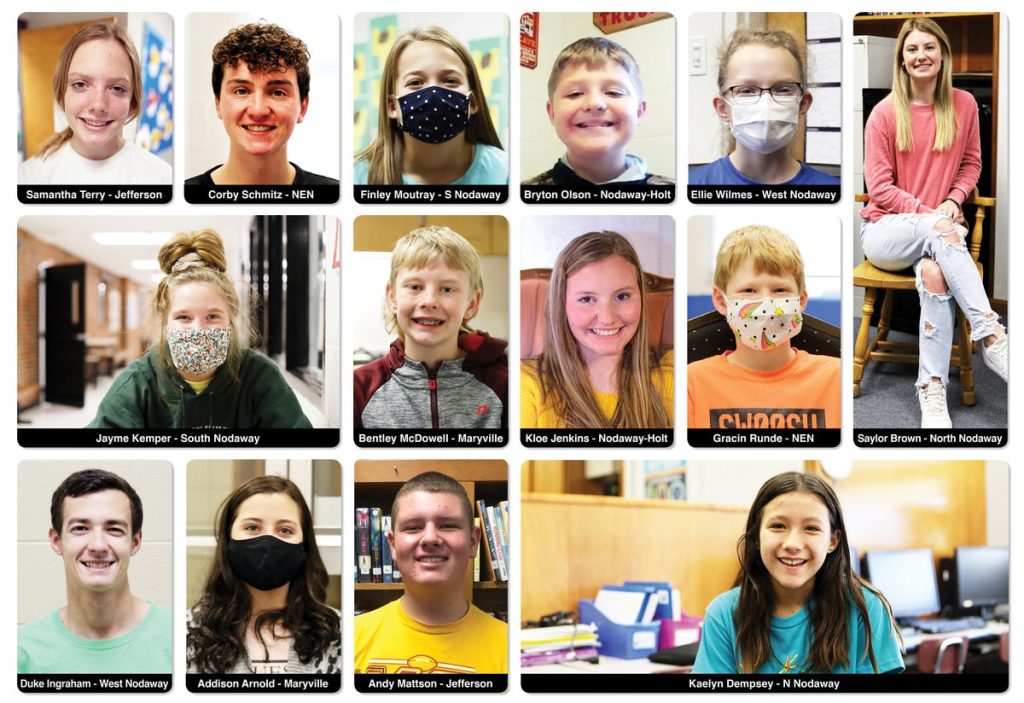
Earlier this month, students from across the county shared their stories with The Forum of how they have coped with the new educational landscape.
2 – COVID-19: Mitigation
Since before the county saw its first confirmed case of COVID-19 on April 2, community leaders in business, health care, government and virtually every other walk of life have been working to figure out the best way to balance stopping the spread of the virus with continuing to live everyday life. Now, many of those changes have themselves become features of everyday life that might not disappear even when the virus becomes more manageable.
That started with the closing of schools in March, and with several other businesses and organizations beginning to change procedures as terms like “social distancing” entered the lexicon. With a continuous lack of state-mandated guidelines, local officials were left to make decisions on their own about what was best for their communities, often without information they felt they needed.
April elections were moved to June along with the tax filing deadline, the Nodaway County Fair was canceled and the city declared a state of emergency on March 19, setting the stage for more measures to be implemented later.
On April 1, a two-week shelter-in-place order took effect and was later extended by the governor to May 3, shutting down non-essential businesses and organizations. Stores like Walmart and Hy-Vee began nationwide rollouts of new in-store measures like plastic dividers at registers, social distancing recommendations and reduced hours — all common sights now, but new ones at the time.
And in mid-April, the CDC issued its first guidance recommending the use of face coverings.
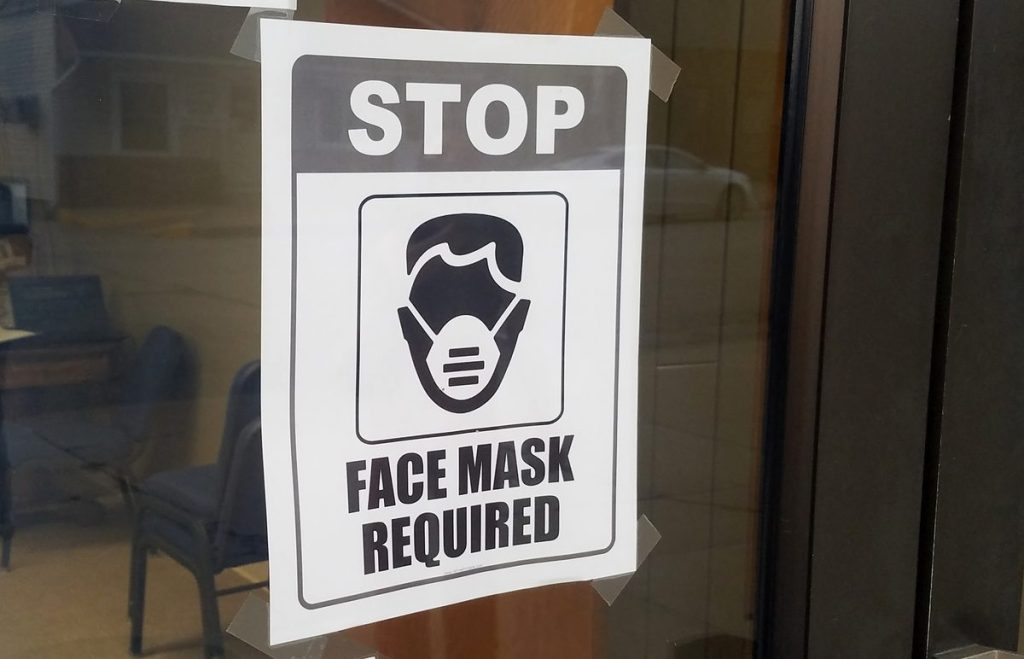
By summer, businesses began to reopen as case numbers rose, and in July, the City Council approved the mask mandate that has remained in effect.
Over the next few months, debates raged over different mitigation measures as Maryville city officials continued to outpace other local governments. In addition to moving most City Hall workers to remote when possible, suspending water cutoffs for a time, extending the mask mandate through the end of January and imploring county health officials to take similar steps countywide, city officials have remained the most active in the area in adjusting COVID-19 protocols. The latest steps included an order to follow state guidelines to match measures to local infection statistics.
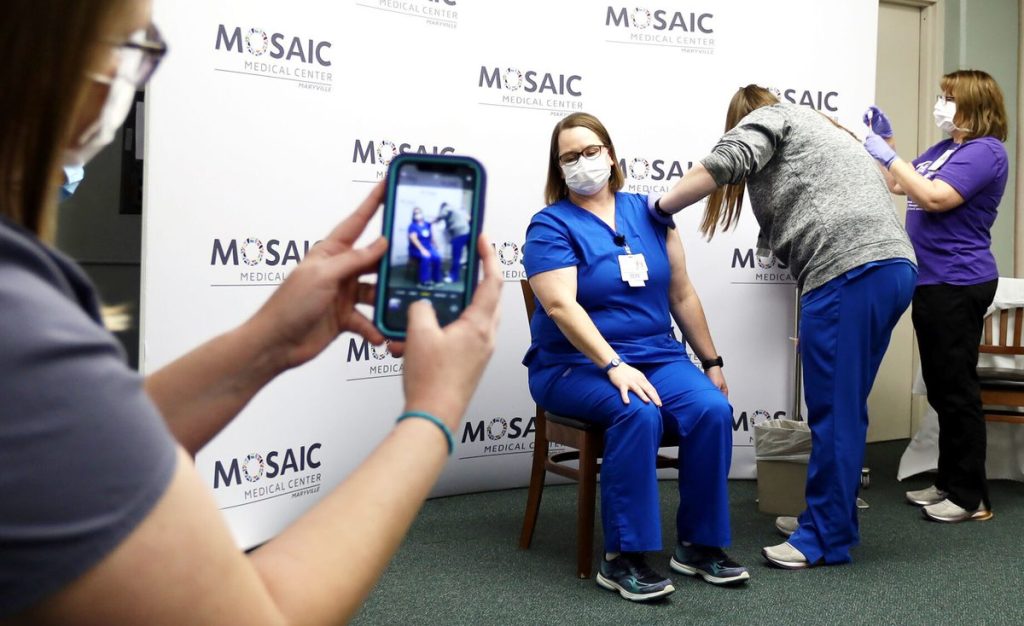
1 – COVID-19 in Nodaway County
The overall No. 1 top story this year is, of course, the COVID-19 pandemic. It is the kind of historic event that will leave an indelible mark and will change how a generation of the world’s population operates.
Here in Maryville, the pandemic has had no less an effect, and much of the next year, while hopefully seeing an eventual end to our current health crisis, will likely begin the process of evaluating what went right and wrong in the response to it, and in moving on.
In a rural corner of northwest Missouri, the virus took its time coming to Maryville, with the first documented case not confirmed until April 2. The cases came gradually after that, and Northwest Missouri State University worked with local health officials to create the indispensable and essential public service that is the online Nodaway County COVID-19 dashboard.
As testing started to increase, so did the cases, topping out at 88 active cases on July 29 during that initial wave. It wasn’t until students at Northwest returned in August when the numbers began to skyrocket for the first time. Record highs in late August and in early September reached 275 active cases, but dropped back down into a trough that lasted until mid-October.
Then, numbers steadily rose until the largest spike the county has seen so far, an unprecedented rise that week of more than 300 active cases and didn’t fall back down to the early October levels until just a couple of weeks ago.
So far, more than 1 in 9 Nodaway County residents have contracted COVID-19 at some point, and 19 have died due to the virus.
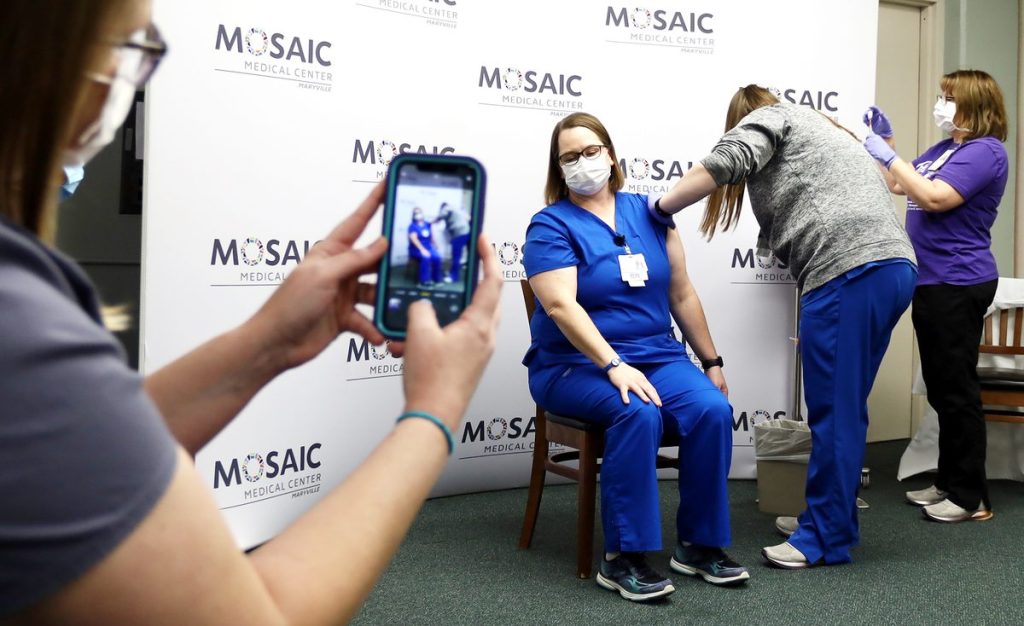
As vaccine rollouts have begun locally, the far-reaching effects of the pandemic likely still won’t be known for several years.

FORUM FILE PHOTO
No. 9 – Dawson Snodderley, 3, hands Pradnya Patet, SSM Health Child Care Center manager, a plastic banana while Addison McGary, 2, and Finn Sapp, 4, watch during an August 2018 morning. The center closed in August 2020.
FORUM FILE PHOTO
No. 8 – The R. Keith Wood Public Safety Facility opened on Sept. 30. Its namesake, former MPS Director Keith Wood, retired in August after 43 years in law enforcement — 31 in Maryville.
FORUM FILE PHOTO
Former Maryville Public Safety Director Keith Wood holds a large shield with well wishes from members of the department during his retirement reception held Monday at the Mozingo Event Center in August.
FORUM FILE PHOTO
No. 7 – More than 300 people attended a peaceful protest in Maryville on June 6, one of many demonstrations across the country after the death of George Floyd.
FORUM FILE PHOTO
No. 5 – More than 9,900 Nodaway County residents went to the polls on Nov. 3.
FORUM FILE PHOTO
No. 4 – The city’s water issues moved front and center after Mozingo Lake was declared unsafe for human contact in January because of a cyanobacteria bloom.
FORUM FILE PHOTOS
No. 3 – In a two-part series this month, students from across Nodaway County told their stories to The Forum of how they have coped with the COVID-19 pandemic.
FORUM FILE PHOTO
No. 2 – The Maryville City Council first implemented a mask mandate in July that has been extended through Jan. 31.
FORUM FILE PHOTO
No. 1 – Eight months after the first case of COVID-19 was confirmed in Maryville, the first vaccines were administered at Mosaic Medical Center – Maryville to health care workers on the front lines. At a press event on Dec. 22, Misty Millions, LPN, takes a photo of fellow nurse Andrea Sandusky-Ury, RN, BSN, as she readies to receive her first dose of the COVID-19 vaccine from nurse Brooke Wolf and Dr. Sally Bomar, who was the first in the county to receive the vaccine.