
Capitol Report: House and Senate give approval to spending plan
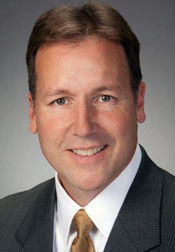
State Rep. Allen Andrews
Members of the House and Senate gave final approval to a balanced state spending plan for the upcoming fiscal year that begins July 1. The House and Senate had each approved versions of the budget since returning to the Capitol on April 27, but were able to conference to reach agreement on an operating budget that was approved by the constitutional deadline of Friday, May 8.
Lawmakers had returned to the Capitol with the knowledge that the state’s economy was declining because of the COVID-19 pandemic. Data released Thursday shows April revenue collections for the current year have dropped more than 54 percent compared to April of last year. While much of this is due to the tax filing deadline being moved from April to July, the state overall has seen a revenue drop of 6 percent for the current year compared to the same time in 2019. The state budget director compared the state’s revenue decline to a faucet being turned off.
Because of the drop in revenues, budget crafters in both chambers had to look for substantial cost savings to bring the spending plan into balance. Budget leaders worked together to determine that approximately $700 million would need to be trimmed from the proposed budget offered by the governor in January. The House and Senate opted to take the bulk of those savings by eliminating new decision items that had been recommended before the pandemic. This approach allowed lawmakers to balance the budget with a minimal impact to existing state services.
The final version of the FY 2021 state spending plan keeps funding for K-12 education almost entirely preserved at its current funding level in the Fiscal Year 2020 budget. Colleges and universities also have a path to avoid spending cuts if federal funds related to the pandemic are triggered as expected this summer. Budget negotiators also prioritized additional dollars to ensure stable funding for the state’s community colleges.
The budget approved by both chambers also provides additional spending flexibility for the governor if federal funds become available. The plan authorizes up to an additional $2 billion in spending authority for K-12 public schools should additional federal funds become available to support education. Additionally, it authorizes another $54.6 million in funding from the federal CARES Act for emergency education relief funds. The funds can be used for K-12 education, higher education, or any combination of the two the governor may choose. The budget also includes another $304 million in spending authority for the governor for public two-year and four-year institutions should federal funds become available to support them.
Other important items in the budget include:
• $1.25 billion in federal funds and 200 FTEs for the State Emergency Management Agency (SEMA) to provide support and assistance to state and local government agencies responding to the COVID-19 crisis.
• $31.5 million in new federal funds to help the Department of Labor & Industrial Relations (DOLIR) through its Division of Employment Security to provide timely assistance to those impacted by COVID-19.
• $22.1 million in federal funds to DOLIR for “Shared Work” benefits and managing the department’s COVID-19 related expenses.
• $11.4 million in federal funds to the Department of Public Safety to distribute Coronavirus Emergency Supplemental Funding (CESF) grants to fight COVID-19.
• $23.6 million in federal funds to the Department of Mental Health to provide statewide crisis counseling, suicide prevention and telehealth services.
• $13.3 million to the Department of Health and Senior Services to address coronavirus preparedness and response.
• $185 million for child nutrition and food assistance programs.
• $33 million for meals and services for senior citizens through the Area Agencies on Aging.
• $4 million for the Small Rural Hospital Improvement Program.
• $1.5 million to the Nursing Facility Quality Care Fund to improve nursing homes.
• $18 million for the Low-Income Home Energy Assistance Program, which provides utility assistance for low-income Missourians.
• $2 million in new federal funds to increase Missouri’s low-income weatherization program.
• $12 million to increase access to broadband internet in underserved areas.
• $8 million increase to reimburse counties for housing prisoners in jails.
• $18.5 million of tourism funding for cooperative programs and advertising.
• $2 million to fund the Fast Track Scholarship for degree-seeking adults who qualify.
In total, the General Assembly has appropriated $35,291,459,657:
$10,011,743,473 in General Revenue
$14,757,315,949 in Federal Funds
$10,522,400,235 in Other Funds
The appropriations bills that make up the FY 2021 state operating budget now move to the governor’s desk to be signed into law.
Representative Allen Andrews, District 1, Missouri State Capitol, Room 407, 201 West Capitol Avenue, Jefferson City, MO 65101; Telephone: 573-751-9465; [email protected]
Allen Andrews is the First District State Representative.



