Maryville prepares for water treatment analysis
CITY OF MARYVILLE
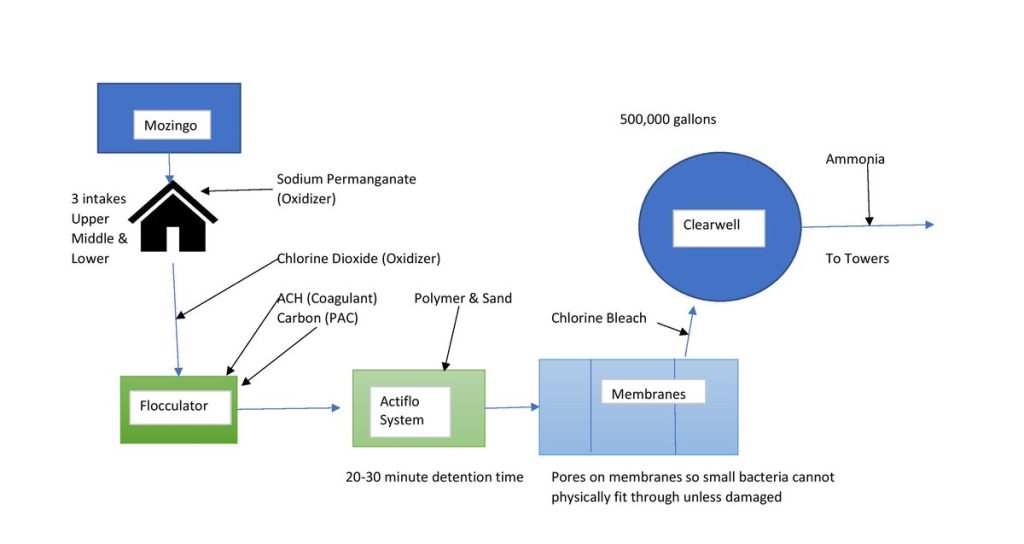
This diagram, included with the request for qualifications issued by the city of Maryville, shows how source water at Mozingo Lake is treated after it makes its way through a 3-mile, 16-inch pipe to the water treatment plant.
MARYVILLE, Mo. — The city of Maryville will work through options to decide the future of the water treatment process, but first, city officials need to know what options are on the table.
A request for qualifications sent out last week by the city will solicit engineering firms interested in analyzing the issues the city has faced in addressing cyanobacteria blooms on Mozingo Lake, and what improvements and infrastructure may be needed to address those issues going forward.
According to the RFQ, the city is open to any and all potential solutions, large and small, ranging from alternative chemical treatments to a completely new water treatment plant.
The firm selected will analyze what combination of options will be most effective to eliminate the blooms and the associated taste and odor issues in drinking water, and will give cost estimates and financial phasing plans to allow for maximum flexibility.
The RFQ asks for responses by April 7. After that, the city will choose a firm that will then begin the actual analysis, culminating in the options that will be presented to the City Council.
Most of the general options available to the city are already known: in previous council meetings, City Manager Greg McDanel has stressed a three-pronged approach that addresses issues with the aging water treatment plant, treatment of the water at Mozingo Lake and prevention measures in the surrounding watershed area. The analysis provided by the winning firm will provide more specific answers and costs for city officials to review.
Currently, the city’s drinking water remains safe to drink, but testing of the source water at Mozingo Lake has not yet produced two consecutive weeks of results below the threshold set by the Missouri Department of Natural Resources that is considered safe for consumption or contact. Consequently, warnings to stay out of the lake water remain posted.