
A View from the Country: Big money and democracy
A View from the Country: Big money and democracy
If the Russians are undermining America’s democracy from abroad, it is big money that is undermining American democracy from here at home.
The starting gun has already been shot to open the 2018 election cycle; indeed, the cycle began in late 2017. More even than candidates, it is money that is sprinting out of the starting gate.
The key targets are, of course, the national office holders: senate and house. But state races have attracted some pretty impressive dollars as well. While I’ll focus on the national candidates in Missouri, note that the race for the Missouri Senate in the St. Joseph district attracted over $1.4 million dollars just in the Republican primary.
Big donors and Political Action Committees (PACs) gave generously because the conservative wing of the party in particular wants to target state legislatures to affect the redistricting that will take place while these senators will be in office in 2020.
The Center for Responsive Politics sponsors an on-line report on campaign financing. It particularly is interested in “Dark Money,” which is monies given to politicians from nonprofit organizations (social welfare interests, unions, trade associations) who are supposed to give money for issues only.
The Dark groups are called that because they do not have to disclose where their monies come from. So, billionaires, large corporations, unions, and a bevy of issue-oriented groups pour money into these PACs without fear of being exposed as donors.
You can imagine the possibilities for mischief with this type of hidden motive monies being lavished on candidates eager for campaign cash. Some families give ungodly amounts of money to these groups. In the 2016 races the Steyer family gave $57.2 million to try and affect the elections, the Adeline family $47 million, the Susan family $34.5 million, Michael Bloomberg $20 million and George Soros $17.7 million.
Most of this money went to Republican candidates, but lots went to Democrats as well. What do you buy with $57 million? Combined, these billionaires keep giving to candidates to affect their own interests and ideals. Some we know, some we don’t.
Individuals like you and I can’t compete with this kind of cash. But we try to combine all our donations to at least give the “poorer” candidates a fighting chance.
In Missouri for the 2018 campaign cycle Senator Claire McCaskill will face an avalanche of Republican/conservative money. They have targeted her as vulnerable. She is not without resources, however. Open Secrets reports funds raised up to July. The total is $22.4 million. She has spent as of July $15.8 million.
Small individual contributions make up about 28 percent of her contributions while large individual contributions are 51 percent. PACs make up only half of a percent, this is important since her Republican opponent will depend heavily on outside PAC monies.
Josh Hawley just finished his nomination battle having raised $5.3 million. This will balloon now that he is the official candidate. But he is well behind the level of money raised in 2016 by Sen. Roy Blunt who had well over $5 million six months before the primaries.
We’ll need to watch for up to date campaign reports on monies raised and spent. But you can already feel the heat of the dollars flowing into the two campaigns. You can’t watch TV without seeing ads sponsored by PACs on behalf of the two candidates. And almost none of the sponsors of the ads are identifiable by most folks since they are PACs that we know little about unless we do extensive research. “Americans for Prosperity?” Who’s against that? But who are these folks?
Fasten your seatbelt, it’s going to be a bumpy ride.
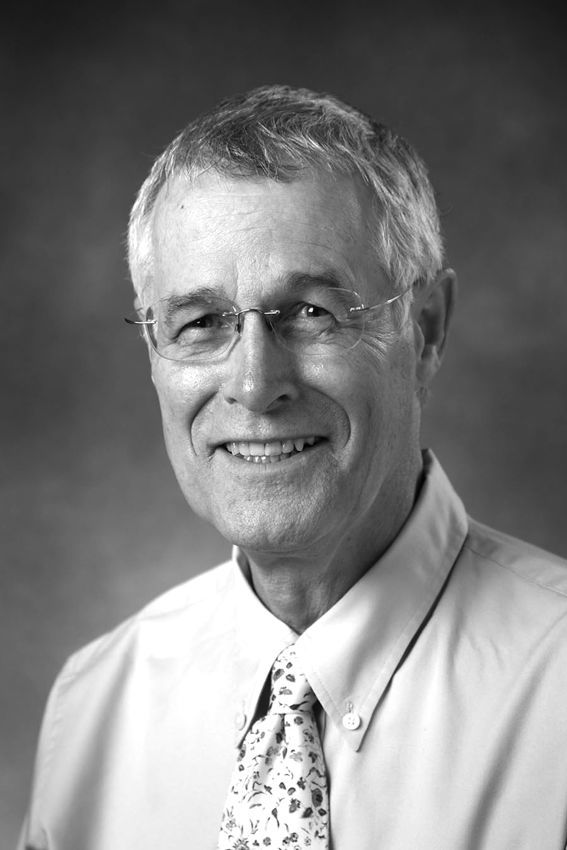
Richard Fulton is an emeritus professor of political science.



