Rain too late to aid stricken corn crop
TONY BROWN/THE FORUM
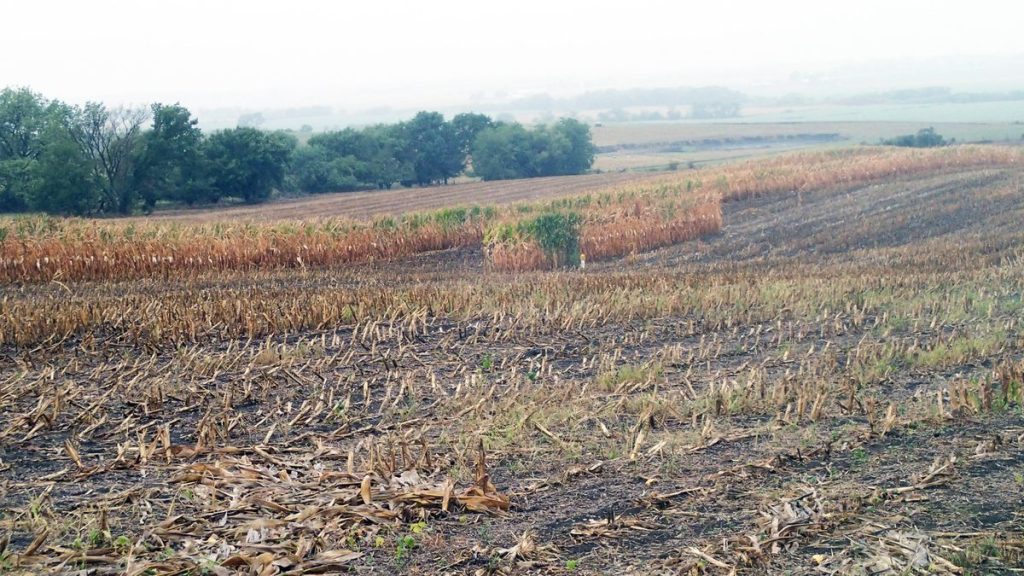
It’s only August, and the heart of harvest season is still more than a month away, but the driest growing season in several years means many area producers are already harvesting stunted corn in order to cut up and ferment the stalks for use as livestock feed.
MARYVILLE, Mo. — With rain on Tuesday and precipitation in the forecast through much of this week, northwest Missouri farmers finally got something of a break during one of the driest growing seasons in recent memory — though for most it was more of a heartbreak.
The problem is that the moisture simply came too late.
Wayne Flanary, an agronomy specialist with the University of Missouri Extension office in Oregon (Mo.), said recently the rain will do little to rescue a decimated corn crop that has many producers facing projected yields of only 5 to 50 bushels an acre.
That compares to around 140 bushels in an average year and well over 200 bushels in seasons blessed with the right balance of sunshine and rain to produce a bumper crop.
“For most of the corn it’s too late,” Flanary said. “It might help a little for corn that was planted late, but there are fields that do not have any ears at all.
“It varies all the way up. It just depends on whether you got a rain or not.”
A lot of local farmers, especially in the southern three quarters of Nodaway County, are already harvesting corn in order to cut up and ferment the stalks for silage, a process that takes about six weeks.
Flanary said converting corn to silage is the best option for many farmers, since the dry summer has also resulted in a widespread hay shortage.
“If they can use corn as a way to feed livestock, that’s a good way of handling that.” he said.
On the soybean side of the ledger, Flanary said, late summer rains could increase seed size and weight. But, as with corn, the crop is essentially made.
“We’re not going to add more pods’ He said, “But these rains will help fuel the seeds that have started in those pods. Unfortunately there are fields where the plants have wilted, and that means they probably will not fill much further.”

Wayne Flanary