Gas tax initiative would fund patrol, highways
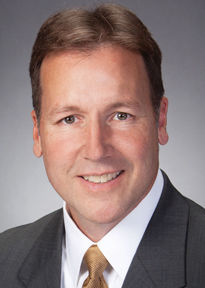
State Rep. Allen Andrews
MARYVILLE, Mo. — After a pair of Missouri motor fuels tax increases were rejected by voters in 2002 and 2014, the effort to raise the nation’s fourth-lowest pay-at-the-pump state gasoline levy will go back on the ballot in the Nov. 6 general election.
Acting on the last day of session this spring, lawmakers in Jefferson City agreed to a ballot proposal that, if approved by voters, will raise Missouri’s 17-cents-per-gallon motor fuels tax by 10 cents. The hike would be phased in at 2.5 cents a year over four years.
The measure, which is simply a ballot question and not a state law, does not have to be signed by the governor.
In an apparent effort to appeal to perceived citizen support for law enforcement, the bill splits anticipated proceeds from the tax between what would be a separate funding stream for the Missouri State Highway Patrol and a lesser amount of revenue allocated to local governments for road and bridge improvements.
Under the proposed measure, current state funding for the patrol would then be reallocated to the Missouri Department of Transportation.
The numbers vary depending on who is counting, but state Rep. Allen Andrews, whose 1st District includes Nodaway County and who voted in favor of the initiative, said his understanding is that the tax when fully implemented would generate nearly $290 million a year for the patrol along with $62 million for local transportation system upgrades.
Andrews said new revenue from the fuels tax hike would also free up an estimated $240 million for MoDOT highway projects statewide.
The north Missouri lawmaker said the ballot proposal was not his “most favorable choice” for boosting transportation funding, and that he would prefer a fuels tax increase that directly ups MoDOT revenues. However, voters have decisively rejected such proposals in the past.
Andrews added that during his two terms in office he has learned there is seldom such a thing as a perfect piece of legislation, and that compromise is often the best way to move issues forward.
“I would like to have seen this done in a little more direct way,” he said, “but I also see the importance of the Highway Patrol having a direct funding mechanism.”
Andrews acknowledged that independent funding for the patrol could lessen legislative control over the highway safety and law enforcement agency, but said he believes the organization has sound internal leadership and will spend its fuels tax dollars wisely.
“I’ve thought about that a lot (the wisdom of creating an independent funding stream,)” Andrews said, “and I’ve come to believe this is a good way to go forward. In dealing with the people in charge of the Highway Patrol and speaking with the troopers who are out there on the road, I have faith in them. From what I’ve seen, and the actions they take out there on the road, lack of oversight is not going to be an issue.”
Not all lawmakers agree.
“I have no problems with increasing the fuel tax for our roads, but this particular way of doing it, I just have some real concerns,” Sen. Jay Wasson, R-Nixa, was quoted as saying by the Kansas City Star. “(The) Highway Patrol receives money based on how well they’re performing, … but in this legislation, it appears we wouldn’t have control of Highway Patrol funding.”
The fuels tax ballot proposal was conceived by state lawmakers in response to a report compiled last year by a bipartisan legislative task force led by state Rep. Jeff Messenger, R-Republic.
In assembling its findings, the panel held a number of public hearings across the state, including a meeting in Maryville late last July.
During that session, Messenger claimed that Missouri has the seventh-largest highway system in the country, but ranks 47th in revenue per mile. He added that Missouri stands 12th nationwide in highway performance compared to dollars spent, despite being forced to maintain many more linear miles of state-owned roads, 33,873, than any of its neighbors.
The closest comparison is Kentucky, with 27,620 miles. But the other seven neighboring states are well below the 20,000-mile mark, and two, Nebraska and Iowa, have fewer than 10,000 miles of state-maintained highways.
Messenger said MoDOT has an annual budget of around $2.4 billion, with $1.5 billion coming from fuel taxes and other transportation-related state revenue and $911 million appropriated by the federal government.
Quoting figures from MoDOT’s 2017 “Citizen’s Guide to Transportation Funding,” Messenger said the average Missouri driver pays $30 a month in state and federal transportation taxes and fees and would have to pay another $16 a month to bridge what MoDOT claims is an $825 million gap in funding annual high-priority needs.
If approved, according to news reports, the fuels tax increase could mean motorists traveling in heavily congested areas in St. Louis would experience relief from bottlenecks such as Interstate 270 on the north side of the city, the aging Chain of Rocks Bridge and the intersection of interstates 70 and 64 (Highway 40) near Wentzville.
Other improvements on MoDOT’s major-projects wish list include replacement of the I-70 bridge at Rocheport west of Columbia.