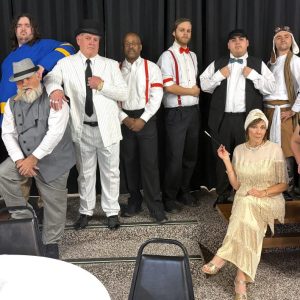
Celebrating women of Nodaway County’s past
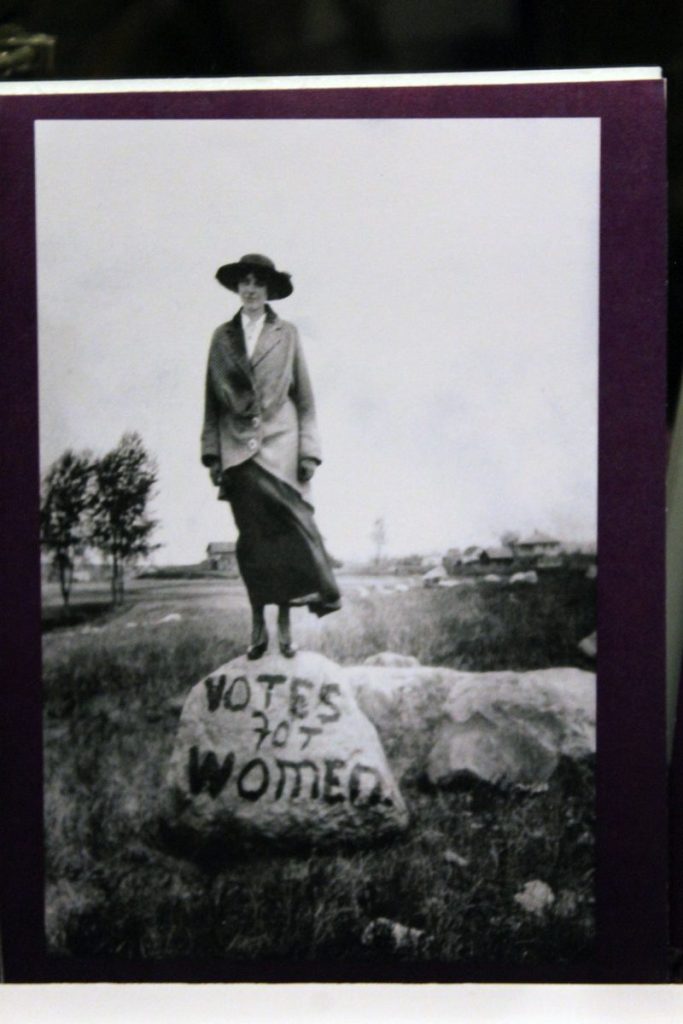
JESSIKA EIDSON/THE FORUM
A photo depicting Edith Davenport stands on a rock demanding votes for women at the Nodaway County Historical Society Museum. Davenport was part of the Missouri Ladies Military Band, but was unable to go to Washington D.C. because she was unable to march as a piano player.
NODAWAY COUNTY, Mo.— Women throughout history have played their parts in the background, struggling to gain equality while still working to better their communities. While they have played crucial parts in making our country great, their work is often overlooked or forgotten.
During Women’s History Month, The Maryville Forum wants to highlight the victories of the women in Nodaway County. The Forum wants to take a closer look at the women who made our county great, went on to achieve fame and maybe haven’t gotten the recognition they deserve.
Melissa Middleswart of the Nodaway County Historical Society Museum agreed that remembering the female side of our local history is important.
“I just think we all need to pay more attention to ALL of our history,” said Middleswart. “Women are half the people; we have made half the history. It just isn’t the kind that’s talked about, or wasn’t talked about. Now it’s much more so, but we’re still the underclass. I still get absolutely furious when I think of what women have been through all these years.”
Getting started with the Grahams
Women have impacted Nodaway County since very early in its existence, and that was evident by the naming of the capital city. Maryville was named after Mary Graham, an early settler of the area.
“It wasn’t even a town really when they came here,” Middleswart said. “So as time went on, they started calling it ‘The Village of Mary,’ ‘Mary’s Village’ and then Maryville.”
Graham and her husband Amos, for whom the town of Graham is named after, were very influential according to Middleswart. The couple owned a large portion of land and used it to help establish the first Baptist church and rent land to other settlers.
Middleswart mentioned that while Graham was very important to the town, she had some struggles, which were revealed in her will.
“At the end of it, she signs it with an X, and that means you can’t read or write,” Middleswart explained. “ I couldn’t believe it because she had all this property, and from everything we can tell in the historic records, she was very involved and collected her own rent. So how you would do that without very easily reading or writing, I can’t imagine, but she did.”
Elisabeth Howell and the Lazy Susan
In the late 1800s, Elisabeth Howell began inventing. The Nodaway County native patented her first invention, the self-waiting table, in 1891. This invention was the predecessor to the Lazy Susan.
According to Middleswart, this invention was created to fill a personal need in Howell’s life.
“She had a boarding house here in town, so it was a very practical invention for her, because when you have a boarding house, you’re feeding all these people,” Middleswart explained. “So you have a couple of Lazy Susans on the table, and the people eating can turn it around and get the food.”
Howell also created two other inventions, both of which were fashion-related. The accordion-plaiting machine was patented in 1890, and the garment stay was patented in 1894. While perhaps forgotten today, these inventions were remarkable at their time. Both were sold in department stores through the Howell Dress Stay Company, and even appeared at the World’s Fair in Chicago.
The nuns and the mounties
In 1894, Mother Mary Augustine Giesen and six nuns came to the Maryville area from Sister of St. Mary in St. Louis. The group of women formed the Sisters of St. Francis of Maryville and set to work ministering to the local community.
The nuns wanted to bring a medical ministry to the Northwest area and founded St. Francis Hospital which was originally located on First Street.
“First they built a house and had people in that house, and immediately they needed much more room and they added on to it,” Middleswart said. “All the nuns have always been important in town because that was a lot of our doctors and our hospitals.”
The sisters’ other notable contribution to the Nodaway community was the creation of Mount Alverno Academy. The all-girls catholic school and motherhouse of Mount Alverno was established in 1963 along Highway 136 just east of the One Hundred and Two River. While the school only was open for seven years, the memory of the mounties, as the girls called themselves, was long-lasting.
The nuns ventured back to St. Louis in the 1980s, but their work had a lasting effect on Nodaway County.
Prather’s Prize-Winning pony
Emma Holt Prather worked with her husband on Faustianan Stock Farm in Maryville. According to Middleswart, many women helped on farms throughout Nodaway County in its early days, a job many weren’t recognized for.
“Another thing that’s not talked about much, if women weren’t on the farm with the men, you would be a lot worse off,” Middleswart explained. “It’s every day work around here, but its important work too.”
Prather went beyond just helping out on the farm, however. She joined the business of breeding race horses, and in 1904 a horse of hers by the name of Elwood won the Kentucky Derby. This event made Prather the first woman to ever have bred a Kentucky Derby-winning horse.
Alma Nash goes to Washington
Alma Nash loved music throughout her life, and it was music that took her and her students to big places in the early 1900s.
“I think she just loved music and that was pretty much her whole life from the beginning of her young years,” Middleswart said. “She had played in orchestras clear across the U.S. Then she would come back home, and she would play at the Empire, and then had her music school and built that up.”
Nash was a respected musician in Nodaway County, having studied several instruments and creating her own music school. It has been estimated that Nash taught more than 4,000 students during her life.
The most notable of Nash’s classes was the one she took with her to perform at the Women Suffrage Procession on March 3, 1913. The procession, which took place the day prior to President Woodrow Wilson’s inauguration, involved 5,000 women who marched up Pennsylvania Avenue with nearly half a million spectators at the event.
The Missouri Ladies Military Band followed Nash down the historic avenue, marching along with their instruments. Middleswart said this concept was uncommon at the time.
“When they found out about this parade, the girls here somehow learned about it, they were interested enough that they wrote off and asked if they could be one of the bands in the parade, and in that time period women did not march,” Middleswart explained. “You were a band, but you were not a marching band; that was very rare.”
It was in 1919, six years following the March and one year before the addition of the 19th Amendment, women in Missouri were given the right to vote. One story about a member of Nash’s band, Maye Shipps Corrough, depicts that upon hearing this news, she jumped onto a counter and began shouting and dancing.
The First Lady of Opera
Sarah Caldwell was another musical prodigy born in Maryville. This notable music director spent her formative years in Nodaway County before moving on to larger cities like Boston and New York.
“She grew up here until she was about 14,” Middleswart explained. “Then her mother had remarried and they left and went somewhere else.”
Caldwell went on to start the Boston Opera Group, now known as the Opera Company of Boston, in 1957. She continued her career in New York when she became the first female conductor of the Metropolitan Opera.
Caldwell received several honors and much recognition throughout her career. Several of her plays and pieces were broadcast on PBS, and in 1996 she was presented the National Medal of Arts by then-president, Bill Clinton.
“The First Lady of Opera” did come back to her hometown in 1977 when she performed with the St. Louis Philharmonic Orchestra at the Lamkin Gym.
Women in Nodaway County
Women in Nodaway County have been like women across the country. They’ve stood behind their families and worked alongside their communities. Some have done great things in their hometown, and some have done great things in the world.
“I just think women’s history is important for all of us, because if there weren’t women in the world, where would we all be? In a lot worse shape,” Middleswart said.
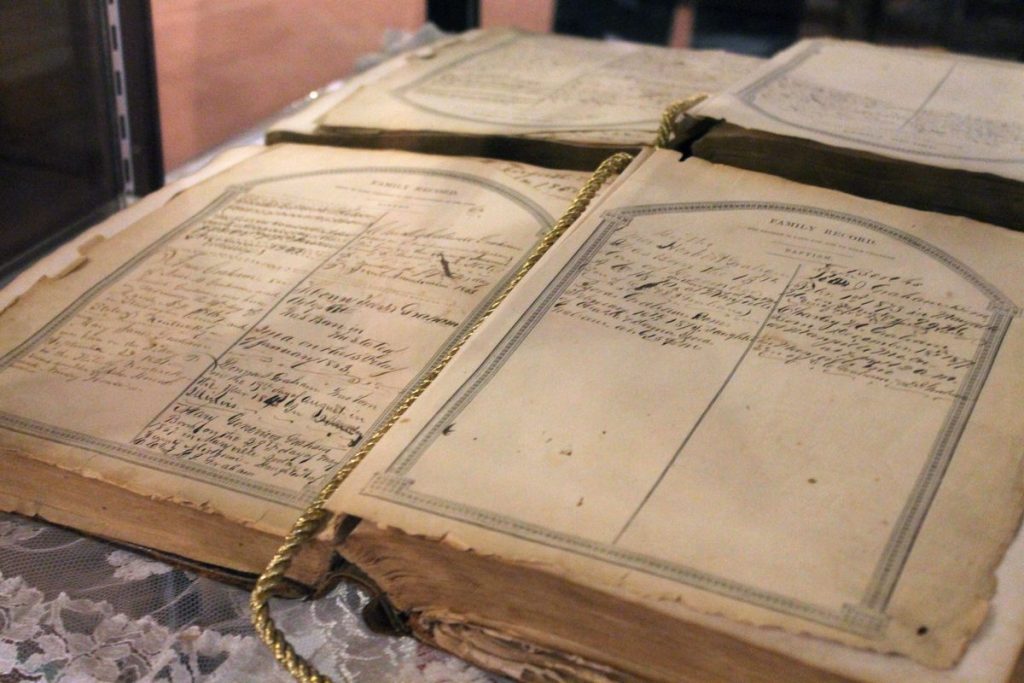
JESSIKA EIDSON/THE FORUM
A family bible belonging to the Grahams is on display at the Nodaway County Historical Society Museum. The towns of Maryville and Graham were named after Mary and Amos Graham.
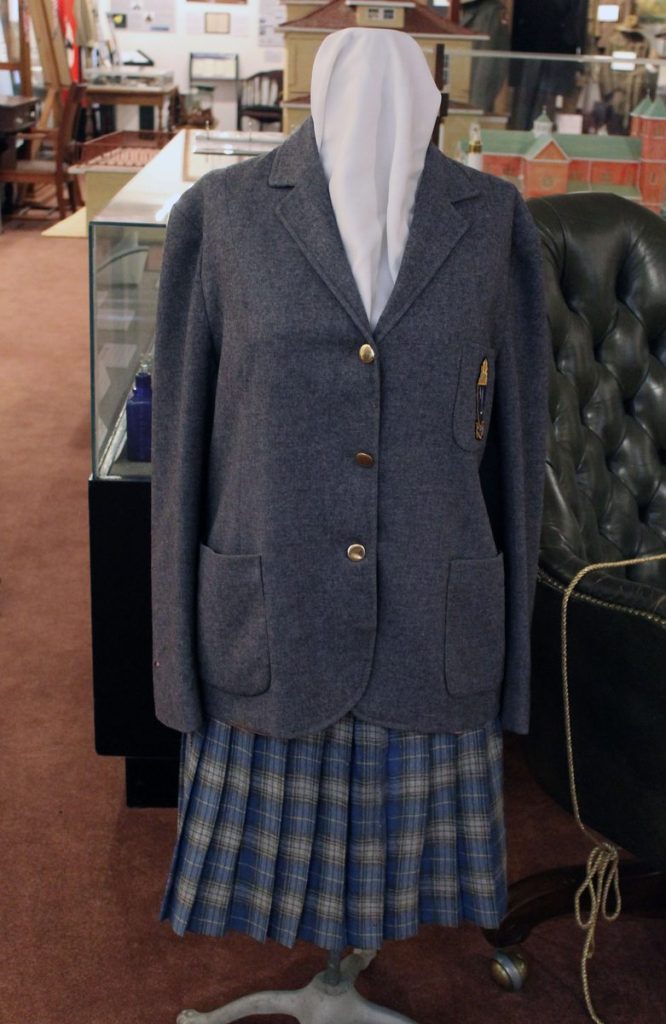
JESSIKA EIDSON/THE FORUM
A girl’s uniform from Mount Alverna Academy is preserved at the Nodaway County Historical Society Museum. The students of the academy often referred to themselves as the mounties.
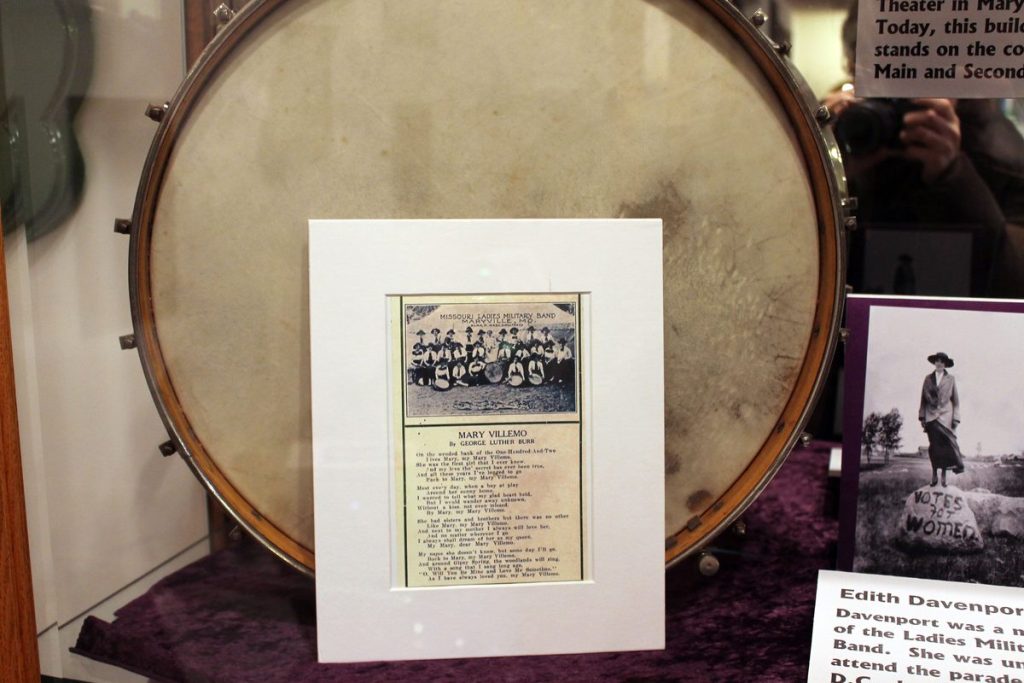
JESSIKA EIDSON/THE FORUM
Alma Nash’s drum sits on display at the Nodaway County Historical Society Museum. Nash played many instruments throughout her life.
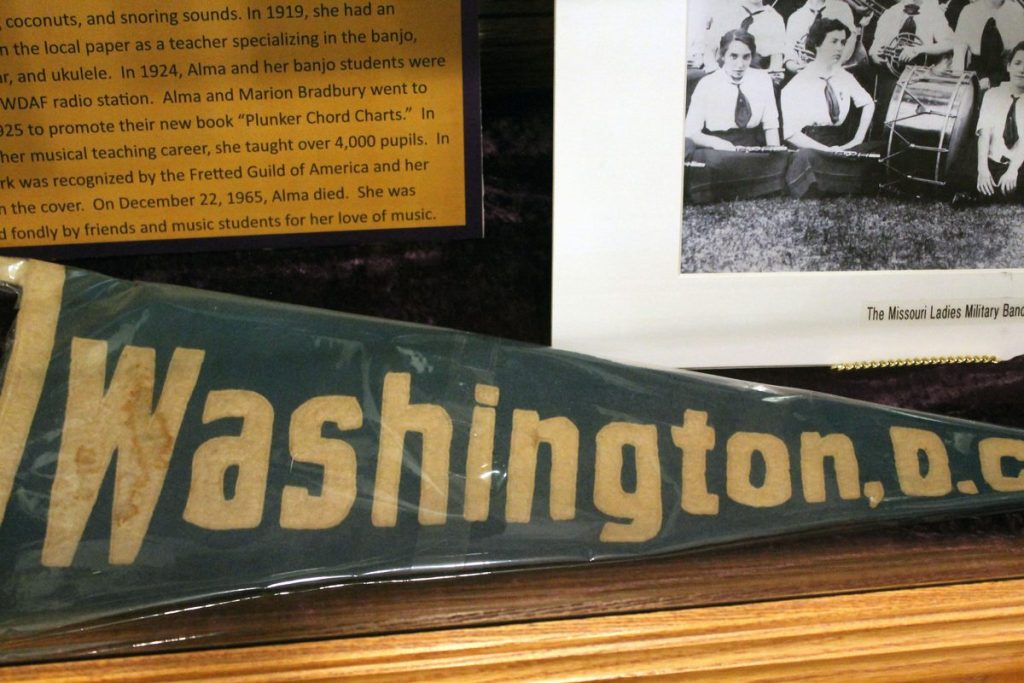
JESSIKA EIDSON/THE FORUM
A flag from the Woman Suffrage Procession is preserved at the Nodaway County Historical Society Museum. Over 5,000 women marched on Washington D.C. during the procession.
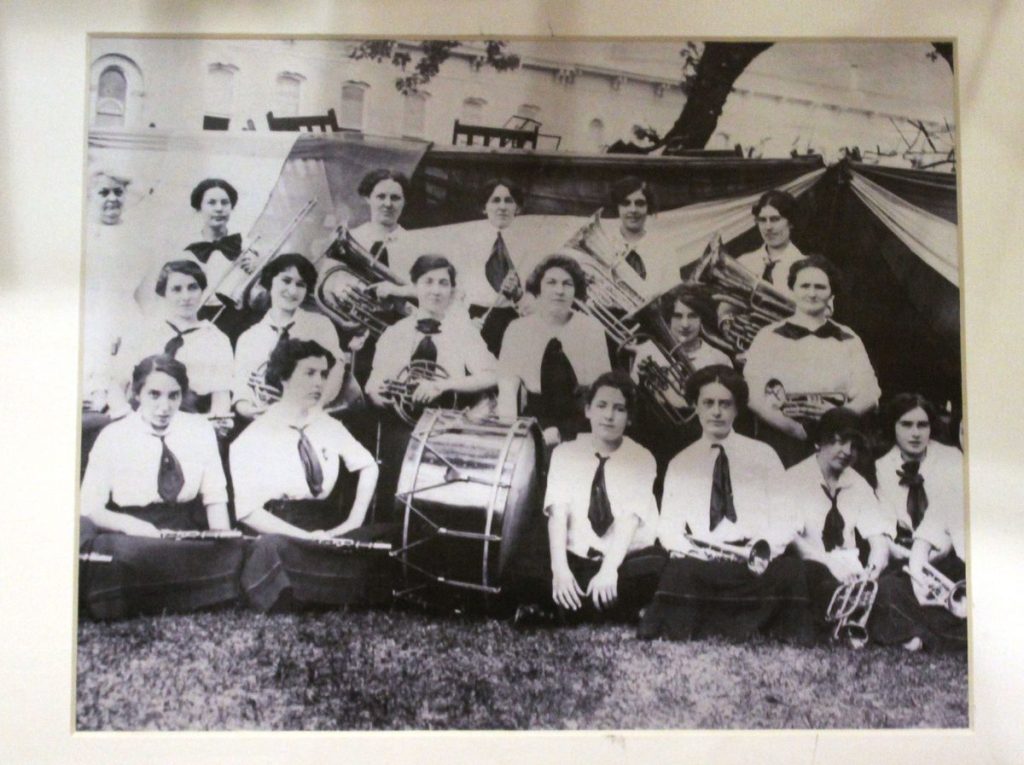
JESSIKA EIDSON/THE FORUM
Alma Nash and her band pose for a photo preserved at the Nodaway County Historical Society Museum. The band consisted of Nash’s music students.
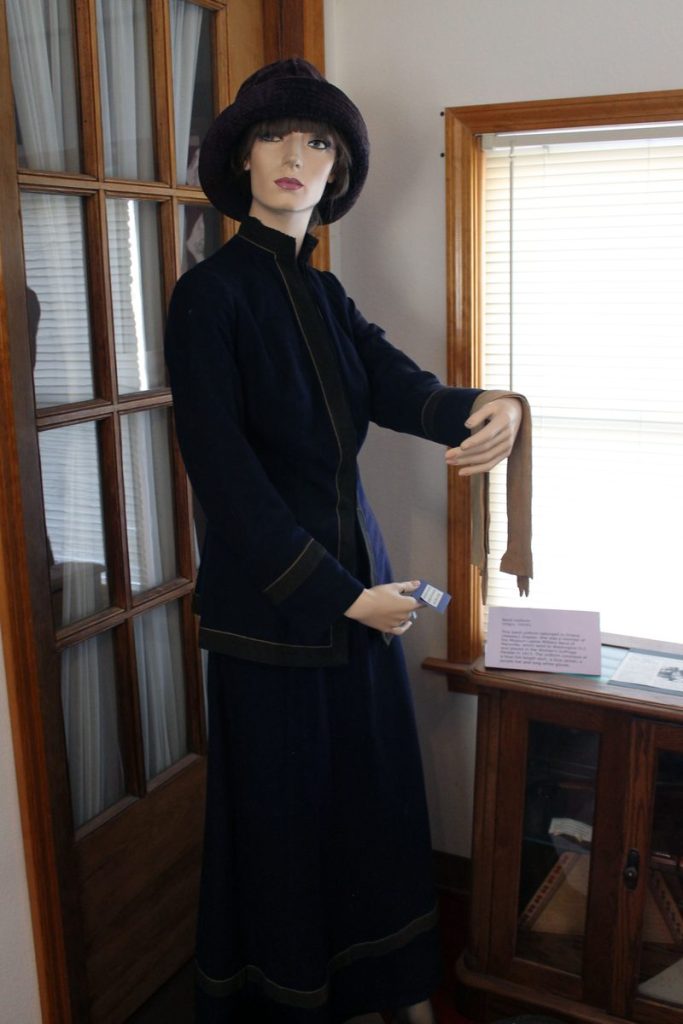
JESSIKA EIDSON/THE FORUM
A uniform for a player in the Missouri Ladies Military band sits on display at the Nodaway County Historical Society Museum. The players often mixed this uniform and a white uniform during performances.
JESSIKA EIDSON/THE FORUM
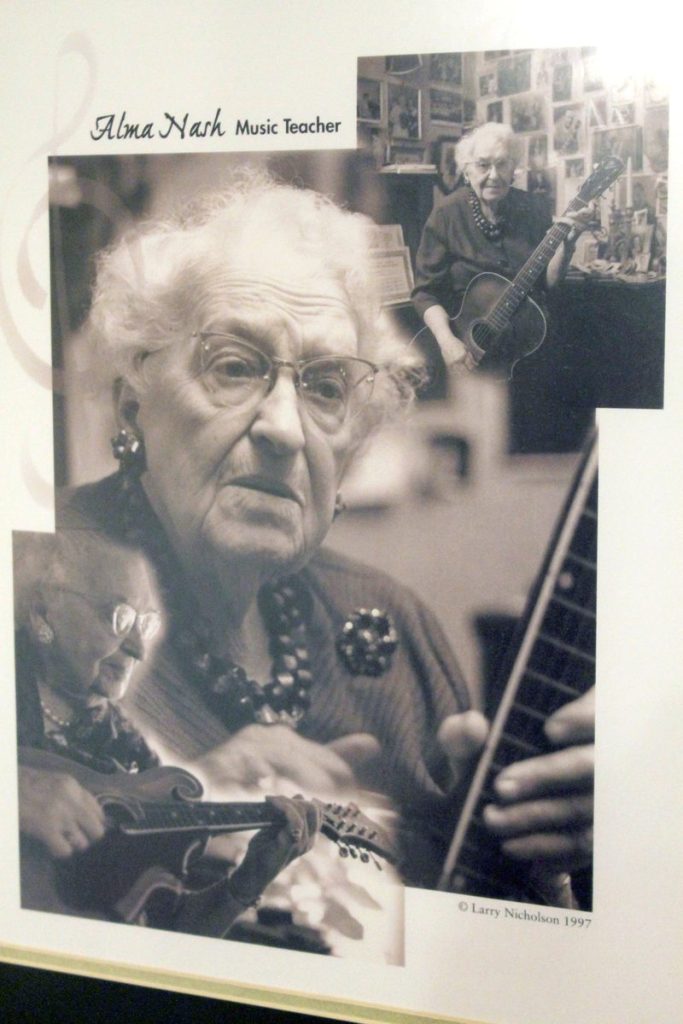
Alma Nash is featured later in life at the Nodaway County Historical Society Museum. Nash started a music school in Maryville and was estimated to teach over 4,000 students.
JESSIKA EIDSON/THE FORUM
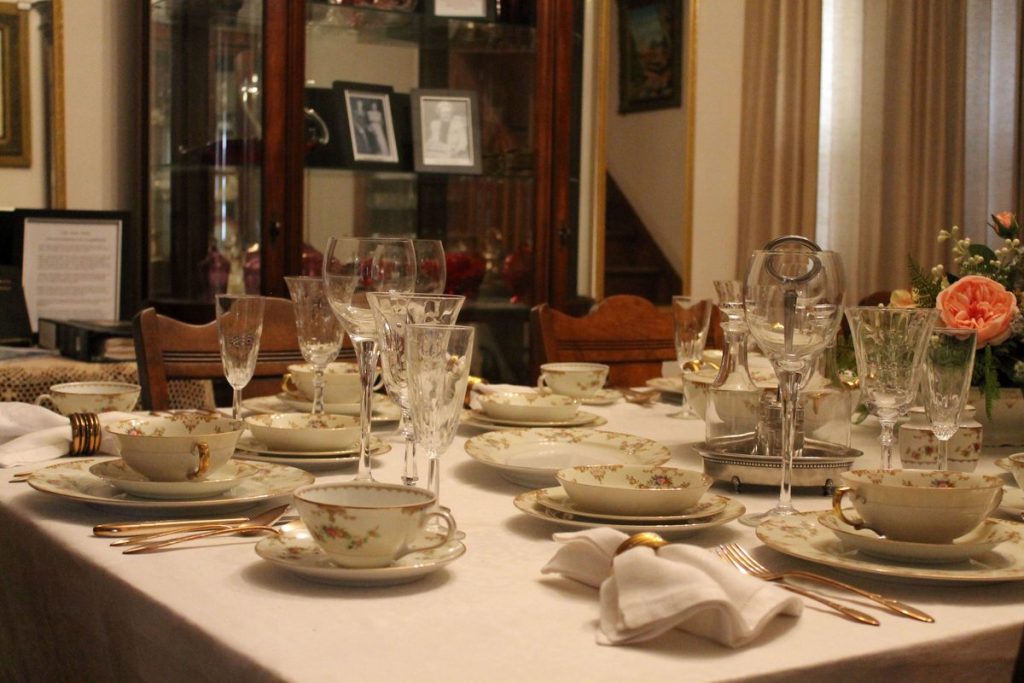
Glasses belonging to Mabel Cook are on display at the Nodaway County Historical Society Museum. Cook was the first home economics professor at Northwest.
JESSIKA EIDSON/THE FORUM
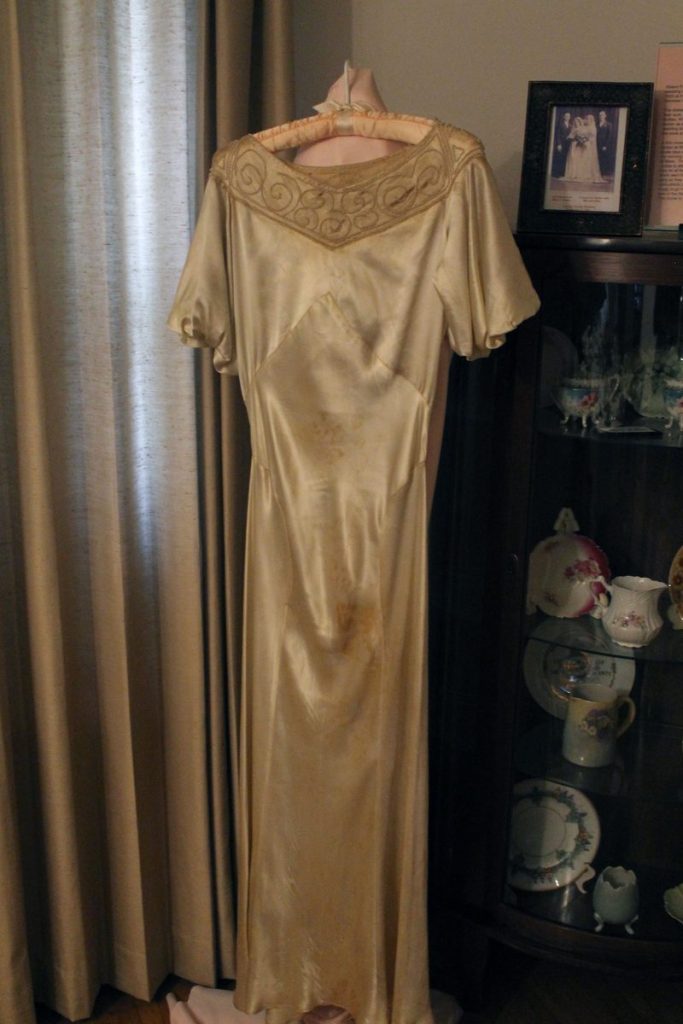
One of two identical wedding dresses belonging to Frances and Mary Walter is on display at the Nodaway County Historical Society Museum. Five brides wore the dress before it was retired.
JESSIKA EIDSON/THE FORUM
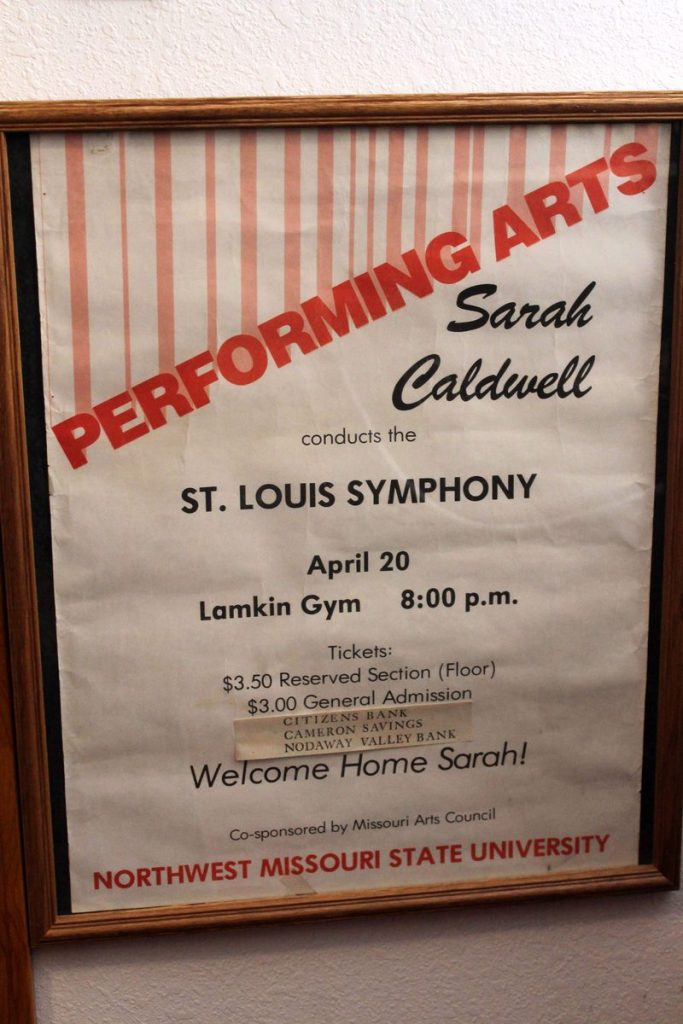
A poster for a performance by Sarah Caldwell is preserved at the Nodaway County Historical Society Museum. Caldwell performed with the St. Louis symphony in her hometown later in life.
JESSIKA EIDSON/THE FORUM
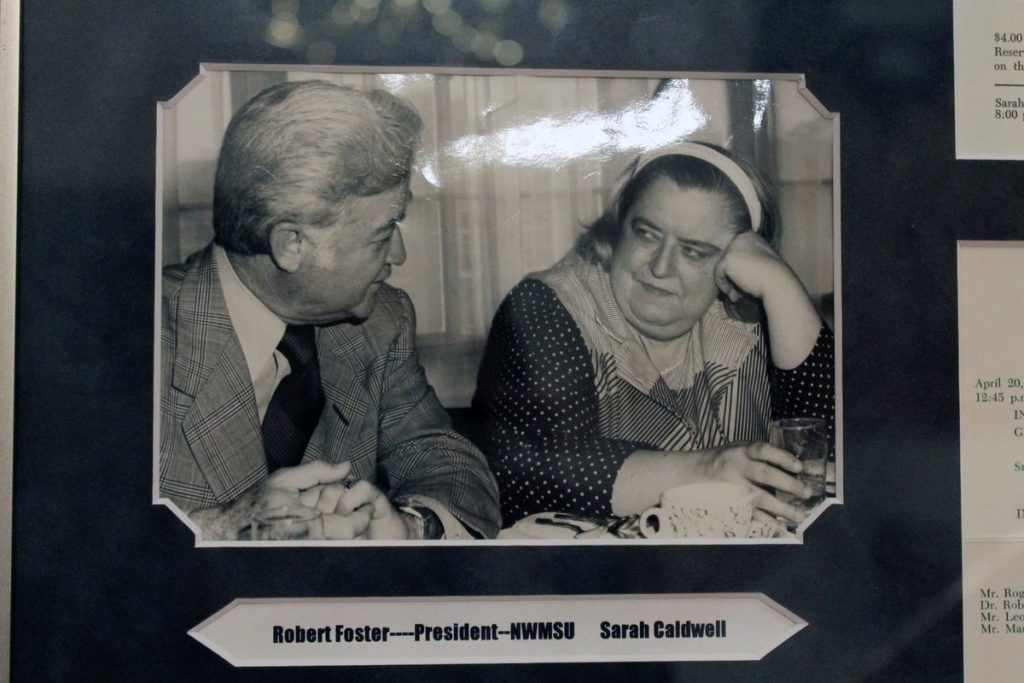
Sarah Caldwell and Northwest Missouri State president Robert Foster meet in a photo preserved at the Nodaway County Historical Society Museum. Caldwell was a Maryville native until she was about 14.
JESSIKA EIDSON/THE FORUM
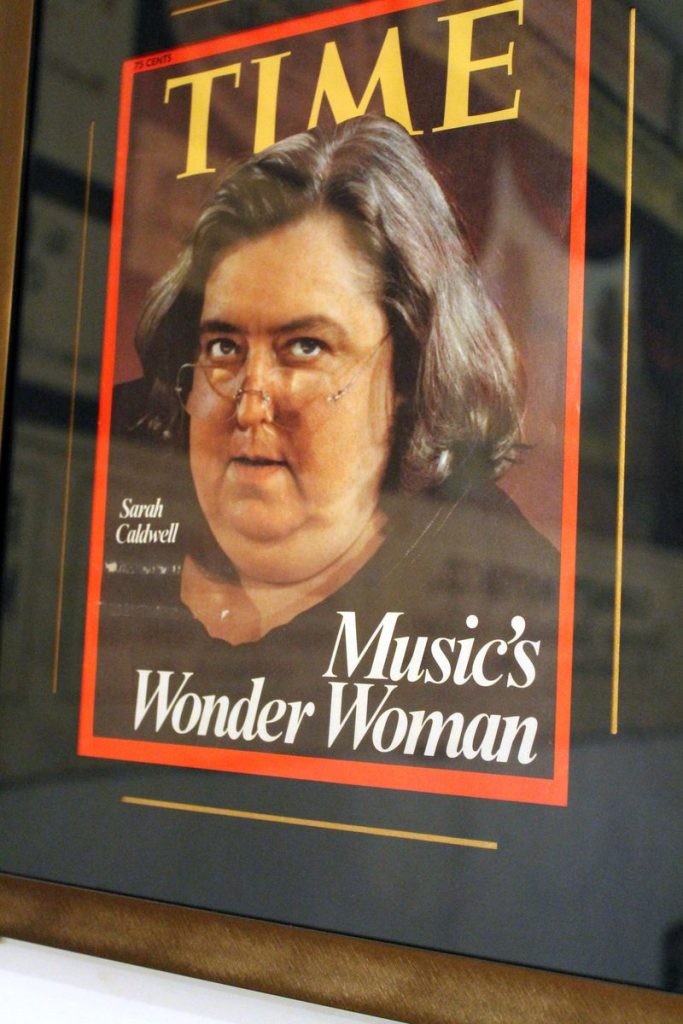
Sarah Caldwell is featured on the cover of Time magazine at the Nodaway County Historical Society Museum. Caldwell received many honors for her musical accomplishments.
JESSIKA EIDSON/THE FORUM
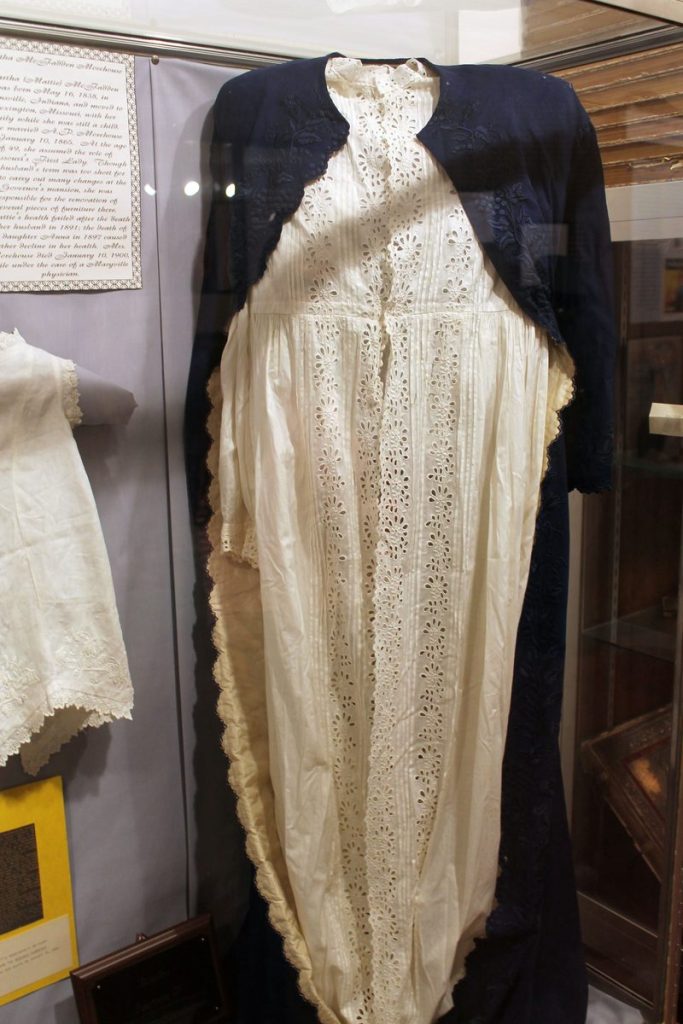
A dress worn by Governor Albert Morehouse’s wife is on display at the Nodaway County Historical Society Museum. Morehouse was one of two Missouri governors from Maryville.
JESSIKA EIDSON/THE FORUM
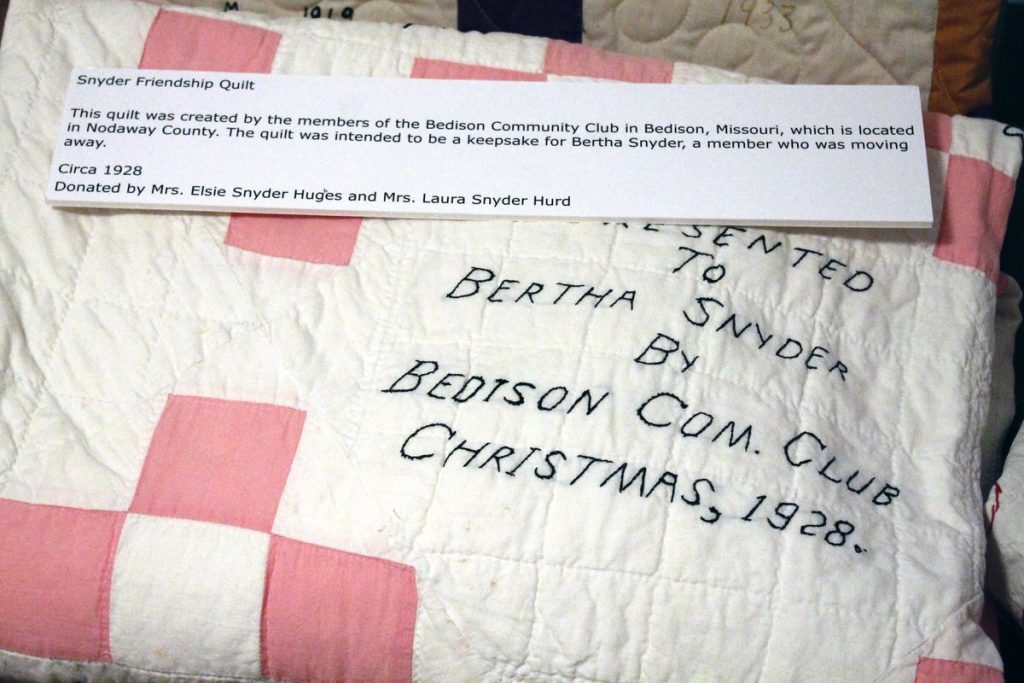
A friendship quilt made for Bertha Snyder is on display at the Nodaway County Historical Society Museum. Friendship quilts were a way for women to communicate in a unique way.