
Wealthy score with tax code
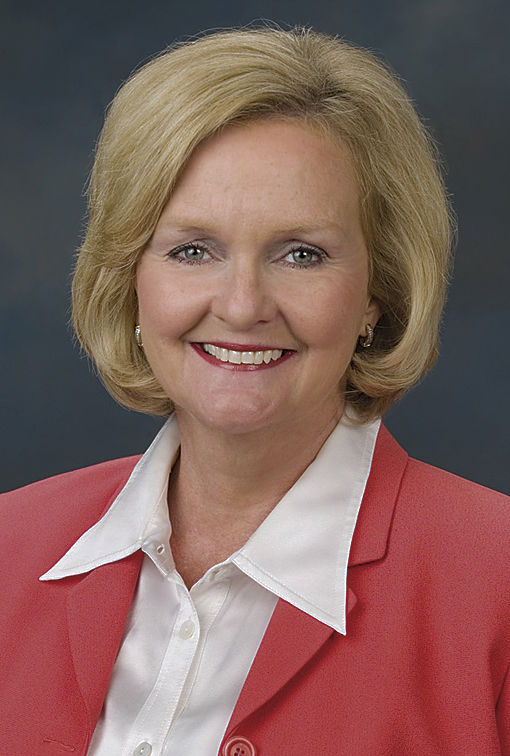
McCaskill-071307-18356- 0038
I wish things had been different in the recent tax debate in Congress. I was eager to negotiate with folks on both sides of the aisle to pass a real tax reform plan to give relief to Missouri’s working families, simplify the tax code, close loopholes exploited by the rich, and lower the corporate tax rate.
Unfortunately, that’s not what happened. Republican leaders in Congress instead wrote a bill behind closed doors that will further complicate the tax code, keep open those loopholes, deepen the national debt, and give the vast majority of benefits to millionaires and billionaires—all while working families get hurt.
Make no mistake: if you’re a middle class American, there’s a decent chance your taxes are going to go up because of the tax plan Congressional leaders recently forced through. That’s not my conclusion—it’s the conclusion of independent policy experts who’ve studied the legislation.
Mr. Anderson in his recent column seems to have this tax plan—a plan drafted behind closed doors, and passed in the middle of the night by Republican leaders before anyone could even read and fully understand it—confused with some other plan I haven’t seen.
I wanted to offer some help clarifying what actually is in the Republican-drafted plan.
Mr. Anderson seems to support tax reform focused on working people. I share that goal. Unfortunately, the tax plan passed by Congressional leaders is not focused on working people—the vast majority of benefits go to millionaires and billionaires, while working families get hurt.
Under this plan, companies can still deduct moving expenses when they move and ship American jobs overseas—but a family moving from Kansas to Missouri for work can no longer deduct their moving expenses.
And the tax cuts included for individuals are temporary, while the tax cuts included for corporations are permanent.
Under this plan, the relatively few millionaires and billionaires in our country (about a half-million taxpayers) will get $34 billion in tax cuts, averaging a $59,000 tax cut each. Meanwhile, the huge number of Americans earning less than $50,000 (about 90 million taxpayers) will get significantly less—$14 billion in tax cuts, averaging a $160 tax cut each. And a number of working families will actually see a tax increase, beginning next year.
Does that seem right?
Add that to the fact that leaders in Congress used their tax plan to undermine current healthcare law, meaning that millions of fewer Americans will have health insurance.
This tax plan is a bad deal for working people in Missouri.
Mr. Anderson claims that Democrats would not meet with Republicans to negotiate on tax reform. But I sat down personally with President Trump, and had meetings with his White House team, expressing my willingness to negotiate. In fact, this tax plan doesn’t live up to the commitment I got directly from President Trump, when he told me he wouldn’t support tax reform that benefited the very rich at the expense of the little guy.
Mr. Anderson takes issue with the national debt. I share that concern, which is why I’ve gone after wasteful spending throughout my time in the Senate. But the Republican tax plan adds $1.5 trillion to that debt. I, for one, don’t think we should stick our kids and grandkids with the bill for huge tax giveaways to rich Americans who don’t need that help.
Mr. Anderson says he doesn’t recall any recent tax reform ideas offered before this one. Let me refresh his memory: one of many bipartisan tax reform proposal was introduced in 2011 by two Senators, a Democratic and Republican, that would have protected Medicare or Social Security, while lowering the corporate rate, and providing some relief to working families. That bill, while not perfect, is a model for the kind of plan I’d be excited to support. A year later, former President Obama proposed lowering the corporate tax rate from 35 percent to 28 percent, while closing loopholes exploited by the rich to avoid paying the taxes they owe.
And in my nearly 50 public town halls across Missouri this year, I’ve talked often about my own support for cleaning out all of the little goodies for special interests in our tax code, and using the savings to deliver relief to working people and lower the corporate tax rate.
As for me, this “good ol’ girl senator” as Mr. Anderson referred to me, I’m going to keep my focus right where it should be—on Missouri’s middle class, working families, and small businesses.
Claire McCaskill was born in Rolla, and raised in Houston and Lebanon, Missouri



