
Doors remain open at Nodaway Senior Center
TONY BROWN/DAILY FORUM
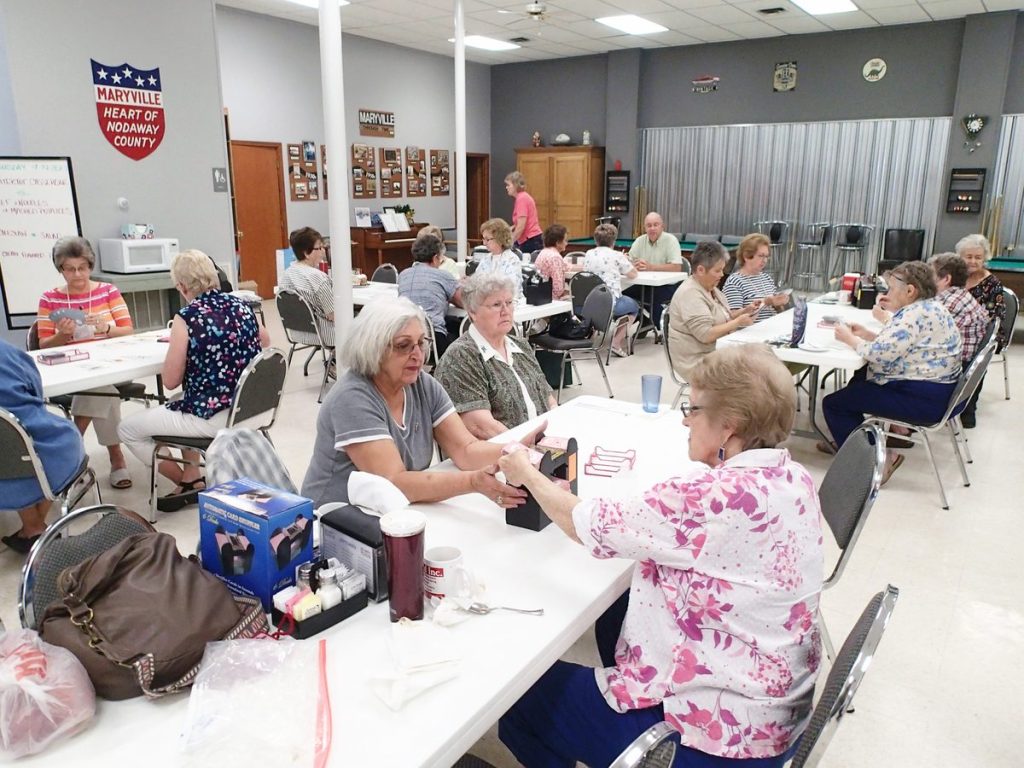
Nodaway County Senior Center patrons are shown playing hand-and-foot canasta in the East First Street facility’s large dining area about an hour before lunch. Despite a funding cut through the Northwest Missouri Area Agency on Aging eliminating about half the center’s $300,000 budget, Administrator Aimee Firavich said Thursday she believes the nutrition-assistance program will continue, though probably at higher cost to those it serves.
A little after 10 a.m. Thursday at the Nodaway County Senior Center — more than an hour before the cafeteria opened for lunch — most of the tables in the large dining area were already filled by groups of card players focusing intently on their twice-weekly session of hand-and-foot canasta.
The smell of oven-cooked food was in the air, and Dwight Gregor, a retired mechanic and volunteer entertainer, was striding through a very creditable version of “As Time Goes By.”
It was just another busy morning at the center, with Gregor’s music floating over the sound of old friends talking together, and the kitchen staff bustling about getting ready for the noon rush.
And according to Senior Center Administrator Amie Firavich, none of that is going to change anytime soon. At least that’s the plan.
Firavich learned late this summer that, for the first time in three decades, the center had been turned down in its bid for state and federal funding through the Northwest Missouri Area Agency on Aging.
The absence of a new contract with the agency means the center faces the prospect of operating on about half its usual $300,000 budget.
And while that means changes are likely in store, Firavich said Thursday the center is still very much a going concern, and that there are no plans to stop serving meals, either in house or via home delivery.
“We are not closing,” said Firavich, who added she has heard rumors about the center getting ready to lock its doors.
A second misconception, she said, is that the center has stopped delivering hot meals to the home-bound elderly and people with handicaps. That program, which depends on volunteer “meals-on-wheels” drivers, also remains active.
What has gone away is once-a-week home delivery by the center of frozen meals to 20 or so Medicaid recipients. That chore, Firavich said, has been taken over by the Area Agency using food prepared at a similar nutrition center in St. Joseph.
As for the near-term impact of the funding cuts, Firavich said it is likely the price of both in-house and home-delivered meals will increase soon after Oct. 1.
Currently, all meals are technically available free of charge to anyone over 60 years of age, though a $4 donation is requested. Patrons under 60 are asked to pay $7.
In reality, many older patrons have been contributing only what they feel they can afford, and Firavich said the center receives an average of $2.37 for each meal served.
Lunch at the Senior Center Cafeteria and home-delivered hot meals are available Monday through Friday except on holidays. The cafeteria is open from 11:30 a.m. until 12:30 p.m. About 65 patrons eat lunch at the center each weekday, with another 95 people receiving meals delivered to their door.
While the final decision will be made by the Senior Center’s board of directors, probably at its next meeting at 10 a.m. Wednesday, on Sept. 20, Firavich said it is likely that, beginning next month, the facility will set up a cashier’s counter and sell meals at so much per tray.
In other words, the operation will become more like a restaurant and less like a community service.
“It won’t be a contribution anymore,” Firavich said. “It will be a specific charge.”
She maintained, however, that no one is talking about closing shop.
Board members she has spoken to, Firavich said, “are determined to have the center survive.”
When the cuts came to light a couple of weeks ago, Firavich said the Senior Center had about $100,000 in cash reserves. She said this week that the final check from the Area Agency on Aging, containing funding for August, has yet to arrive.
The center’s contract with the agency, which operates under the umbrella of the Missouri Department of Health and Senior Services, expired June 30 but continued in force until the end of last month under a 60-day extension.
In the past, discounting government assistance, the senior center has generated about $150,000 a year, including meal donations by patrons totaling between $70,000 and $75,000.
Another $75,000 or so is derived from a countywide property tax earmarked for senior services (around $50,000 a year) and support from the United Way.
Fundraisers, private gifts and donations from service clubs and other civic groups bring in $3,000 to $5,000, Firavich said.




