Groups seeking larger share of city tax dollars
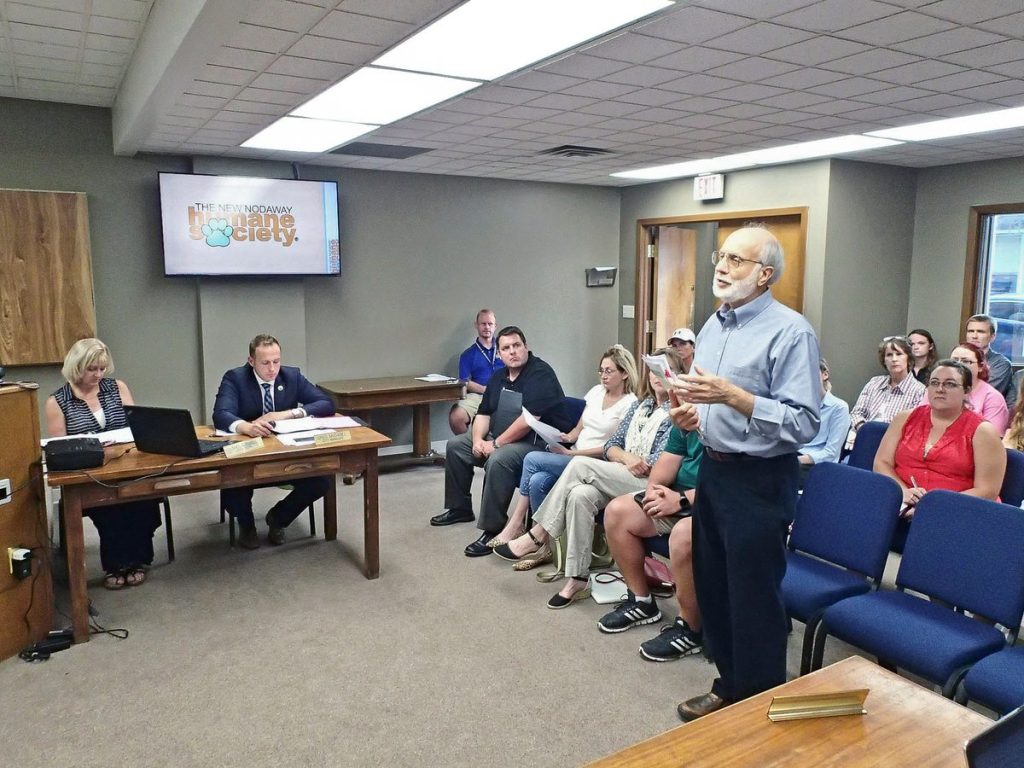
TONY BROWN/DAILY FORUM
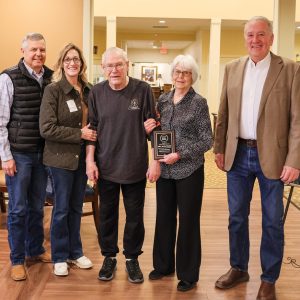
Ray Courter of the New Nodaway Humane Society addresses the Maryville City Council this week during a presentation designed to convince the governing board to increase municipal funding for the society’s no-kill animal shelter from $60,000 to $80,000 a year. Courter represented just one of several organizations requesting additional tax dollars in fiscal 2017. The others included the Community Foundation of Northwest Missouri, the Maryville Downtown Improvement Organization, and the Maryville Public Art Committee.
It’s nearly September, which means the Maryville City Council is hammering together a new budget for the 2017 fiscal year and local organizations are standing in line, hoping to receive municipal funding for various initiatives perceived as providing needed services, economic development opportunities, and improved quality of life.
Four such organizations appeared before the council this week, each making its pitch for increased support during what promises to be a tight budget year for the city as near exhaustion of capital improvement sales tax revenue — a levy that sunsets in Sept. 2018 — places increasing pressure on the General Fund.
While the sales tax produces something like a half-million dollars a year, most of that is obligated for debt service related to earlier expenditures for street reconstruction, water and sewer improvements, and police and fire vehicles.
The opening presentation during Monday’s regular council session came from Ray Courter of the New Nodaway Humane Society, which is seeking an increase in its annual municipal subsidy from $60,000 to $80,000.
Should the council approve the request, it would restore funding for the society’s no-kill animal shelter to the same level as two years ago, just before capital improvement revenues began to dry up.
In making his request, Courter emphasized the shelter’s economic impact on Maryville, noting that the organization pays more than $100,000 in wages while purchasing more than $28,000 in veterinary services and $2,500 worth of supplies.
Local spending by the shelter, Courter said, totals around $140,000, which doesn’t count a similar positive economic impact created by pet owners who adopt animals from the facility.
Courter said the shelter facilitated 258 local adoptions over the past year, and that those owners spend an average of nearly $600 a year on their new pets, an investment representing $150,000 worth of economic activity.
In addition, Courter said the shelter has been a good steward of public funds, having reduced expenses nearly $20,000 last year, when spending totaled $239,099 compared to $258,585 in 2014-2015.
He also claimed a high rate of adoption success, noting that 759 animals were taken into the shelter over the past fiscal year, which ended June 30, and that 676 of those were adopted or otherwise released into someone else’s care.
Courter said the resulting “graduation rate” of 89 percent places the Maryville facility among some of the best-performing shelters in the country.
Other organizations appearing before the council this week included the Maryville Downtown Improvement Organization, whose president, local business owner Matt Gaarder, requested an increase in assistance from $1,000 to $10,000.
Gaarder said MDIO needs the money in order to hire a part-time executive director.
He said Tuesday bringing a paid staff member on board would likely cost around $20,000 a year, and that he is hoping at least some of that money will come from revenues produced by a proposed 5 percent “bed tax” on motel rooms set to go before voters in November.
Also seeking increased funding is the Community Foundation of Northwest Missouri, which received $1,000 in 2015-2016 and would like to see that subsidy increased to $2,500.
The regional non-profit’s president and CEO, Mary Hinde, said the additional money is needed to meet conditions set by a “challenge grant” donor, who has pledged to give the philanthropy/economic development organization $50,000 a year through 2019 if it can raise matching funds totaling $150,000.
A fourth request for assistance came from Diane Sudhoff of the Maryville Public Arts Committee, who requested $13,775 during the coming year, an amount that includes $4,500 the organization itself raised during this summer’s Art, Rhythm, and Brews festival downtown.
Last year’s MPAC subsidy totaled $7,000.
Sudhoff said the group, which was established by the council to procure sculptures for installation around the courthouse square, will use the money to add a fifth artwork downtown; expand its Business Indoor Gallery program, which provides artworks for display inside stores and offices; and provide additional resources for Art, Rhythm, and Brews.
On other budget fronts, the council convened for a workshop prior to Monday’s regular session during which City Manager Greg McDanel outlined proposed General Fund spending for next year.
Total fund expenditures are estimated at $6.7 million on $6.2 million in anticipated revenue, a blueprint that would require nearly $550,000 in spending from reserves and leave a fund balance of $975,299 at the end of fiscal 2017, compared to $1.5 million at the beginning of this year.
However, that amount is still within guidelines that call for a fiscal reserve equal to 20 percent of essential operating expenditures.
In addition, McDanel’s administration typically budgets high and spends low, meaning that expenditures are often less than predicted.
Among General Fund highlights for 2017 are a $1 million rehab of the apron — basically a parking lot for airplanes — at Northwest Missouri Region Airport, 90 percent of which would be covered by a proposed Missouri Department of Transportation grant. Maryville is to fund the remaining 10 percent with a low-interest state transportation loan.
The budget also includes $25,000 for planning and design associated with a proposed new Maryville Public Safety headquarters; $300,000 for asphalt street overlays; $20,000 for blighted or unsafe structure removals; $65,000 for a used dump truck and snow plow; and $30,000 for state-mandated monitoring of the former municipal landfill, most of which will be covered by the sale of heavy equipment to a consortium of private haulers now operating the city’s solid waste transfer station.
Other significant spending includes a proposed 2 percent cost of living wage increase for all city employees and a 2.5 percent merit increase for workers who qualify. Also driving personnel costs during the coming year will be an anticipated 10 percent hike in health insurance premiums.