Animal shelter seeks city funding increase
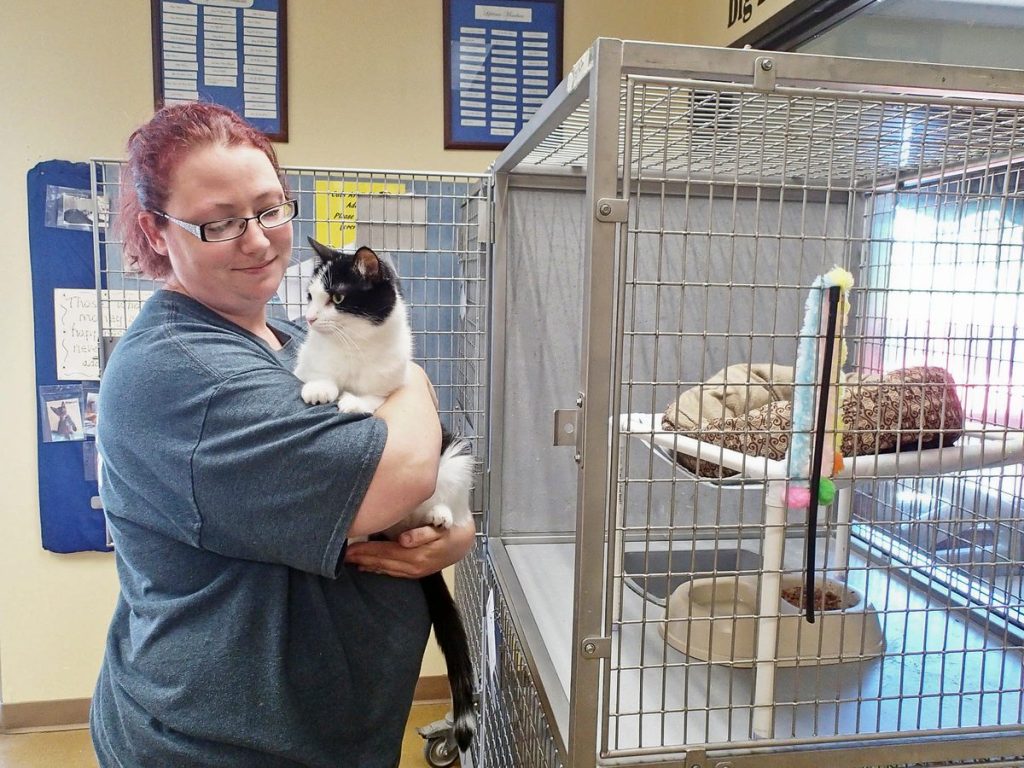
TONY BROWN/DAILY FORUM
Jennifer Bates, clinic manager at the New Nodaway Humane Society animal shelter in Maryville, provides some tender loving care to “Charlie,” one of about 80 cats currently housed at the no-kill facility. Financially struggling following a reduction in municipal funding last fall, the society is requesting an increase in its subsidy from City Hall during the 2016-2017 fiscal year from $60,000 to $80,000.
The New Nodaway Humane Society was to make its annual request for municipal funding to the Maryville City Council this week as the governing board continues to assess anticipated revenues and expenditures in preparation for approving a new budget next month for the 2016-2017 fiscal year, which begins Oct. 1.
Humane Society board President Doug Sutton said Monday the society is asking for $80,000 in assistance next year for operation of its no-kill shelter on South Depot Street, an amount that would also cover citywide animal control services, which are provided by shelter staff.
It has been another tough year for the often financially challenged shelter, which Sutton said is facing a $17,000 deficit. The operation’s total annual budget is around $235,000.
“Currently we are, of course, struggling,” said Sutton following a year in which the council cut the facility’s subsidy from around $83,000 to $60,000.
The society was one of a number of organizations sustaining municipal cuts last year as City Hall trimmed expenditures due to decreasing revenues from Maryville’s half-cent capital improvements sale tax, which goes off the books in September 2018.
Though the levy is still being collected, remaining revenue over the next two year is largely earmarked for servicing debt incurred to finance completed projects, such as the reconstruction of South Munn Avenue and South Depot Street.
That means the council is having to rely more on its property tax-driven General Fund in order to pay for street overlays, sewers, water line repairs, vehicles, and other big-ticket expenditures.
The council has made a priority of placing renewal of the sales tax before voters, probably in the April 2017 municipal election. But in the meantime the city simply has less money to spend.
In an attempt to soften the blow on the society, the city last year provided $12,000 for new LED lighting fixtures at the shelter, which will allow the facility to reduce electricity costs over the long term.
Improved energy efficiency is a stated goal for the society, since the building must operate 24 hours a day, seven days a week and maintain state-imposed heating, cooling, and ventilation levels designed to safeguard animal health and welfare.
Sutton said utility costs at the shelter average between $25,000 and 30,000 a year.
The city also mows the shelter grounds, provides water free of charge, and clears the facility’s parking lot of snow during the winter.
“They do a lot besides just fiscal things to help us out,” said Sutton, adding that the impact of this year’s cut on shelter operations wasn’t as severe as it could have been because the city and the shelter have different budget calendars.
He said the shelter’s spending year lasts from July 1 to June 30, and that the resulting overlap meant the society actually received $80,000 from the city during that period.
In an effort to tailor its request to the city’s limited resources, Sutton the society is asking that the council match that amount during the 12 months between Oct. 1 and Sept. 30, which would yield an actual increase in municipal funding of $20,000.
As of June 30, Sutton said, the shelter had taken in a total of 759 animals in 2015-2016, a number he described a “significantly higher” that the previous year.
More than 670 animals were released last year by the shelter through adoptions, including dogs trained by Maryville Treatment Center inmates participating in the Puppies for Parole program and animals purchased through a special arrangement with the Petco and PetSmart stores in St. Joseph.
The shelter has a current population of approximately 80 cats and 35 dogs.
In addition to working toward higher adoption rates, the society has implemented a number of cost-saving measures, including a contract for discount pricing with the makers of Science Diet pet foods.
Sutton said the deal means the shelter both pays less for food and uses less of it due to the brand’s high nutritional content. He explained that a reduction in food volume cuts both purchase costs and the amount of staff time required to clean up and dispose of waste.
Another economy measure consists of augmenting shelter staff with two work-study students from Northwest Missouri State University, which pays 75 percent of the students’ wages.
Even with only one full-time employee, Shelter Manager Wendy Combs, payroll at the shelter makes up the largest portion of the budget, or about $80,000. There are approximately seven part-time staff, all of whom work for minimum wage with no benefits. Several of those workers have received the training required to serve as animal control officers.
One of the biggest challenges faced by the shelter is the refusal of the vast majority of Maryville dog owners to license their animals. License tags are required by city ordinance and cost $5 dollars for an animal that has been spayed or neutered and $25 for those capable of reproducing.
Sutton estimates there are at least 2,000 dogs in Maryville and said the shelter sells only about 120 tags a year.
“Obviously we need that support or we are really going to struggle,” Sutton said of this year’s request for municipal funding.