
Library faces building repairs, limited funds in upcoming budget
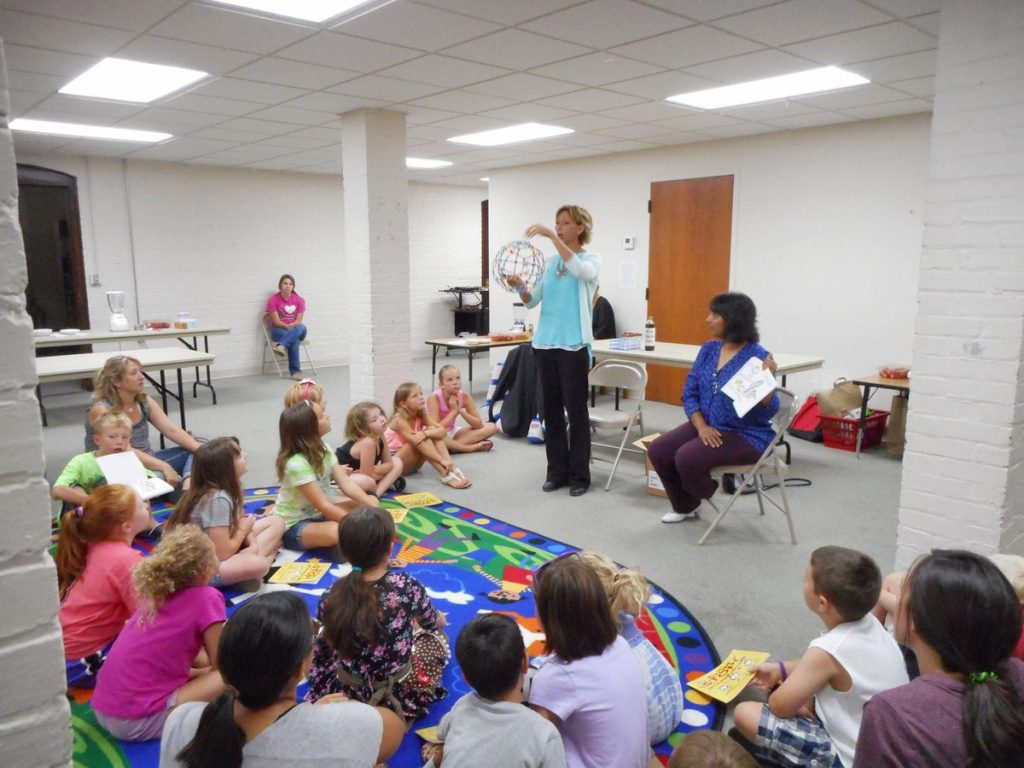
Programming like the Cooking with Kids event in June has expanded in recent years for the Maryville Public Library in an effort to provide more to the community. Budget constraints and increased building costs, however, make it increasingly difficult for the library to fund these types of programs.
Maryville Public Library Director Stephanie Patterson is knee-deep in the budget process for the new fiscal year that will start October 1.
As always, numbers are not in stone yet because revenue received from the state and federal level has been frozen for a number of years, with a decline even in last year’s budget.
Patterson must also wait to see what the library’s levy will be set at before she can get a grip on what local tax revenue will be.
“The purchase of Energizer will be a plus for the taxing entities, but it’s hard to know what they will be assessed at since the warehouse company won’t have the same personal property assets that Energizer did,” she said.
The biggest struggle Patterson has been facing in recent years is the deterioration of the library’s aged structure. In the last several years the facade, roof, and basement have all leaked, forcing repairs both budgeted and unbudgeted, to be made.
“Most libraries that have our kind of tax revenue are in one-story buildings that they can feasibly keep up with repairs and utility costs,” Patterson said. “On the other hand, libraries with buildings like ours have budgets three or four times the size of what we operate on.”
Because of that, Patterson worries that with the downward trend of revenues at the state and federal level, and stagnant funds from local taxes, the library’s existence and budget will be primarily focused on maintaining the building.
Into the upcoming budget, Patterson said the executive board will have to decide whether or not to pull from reserves to pay for a $31,000 basement wall project to keep them from leaking after rains.
“So far we’ve managed to keep up with our goal of increasing the book and materials budget by one percent the last few years so we can get closer to the state standards,” Patterson said. “But I worry that our focus on building upkeep will begin to limit what we’re able to provide our patrons. We’ve saved money over the years where we can, including energy-saving utilities, but we just can’t seem to escape the costs that come with an aged building.”
The ever-tightening budget has also kept Patterson from applying for grants, both because of time, and lack of resources.
“A lot of the grants that we apply for are for materials or services that require long-term commitment even after their funding stops,” Patterson said. “It could be a great idea and you know you want to try it, but when you don’t have the means to pay for it after the grant ends, it’s just not feasible. We’re also having a hard time maintaining qualified staff to operate some of the things offered through grants because we’ve been limited in our staffing budget as well.”
For the first time since she became director, Patterson said this was the first year she didn’t apply for any non-localized grants because she worried the library wouldn’t have the means to continue any service or product after the grant ended.
“It pains me to see the grant money go to another library that has the resources to maintain that program or service after the grant expires,” she said.
Patterson also noted that the consistent growth of the library programming may have reached a peak without additional resources.
“Building-wide we are seeing record usage,” Patterson said about the library’s programs, circulation, and overall usage. “Looking forward I think we are going to have to focus our efforts on the quality of what we offer our tax payers instead of looking to expand what we do. Are people finding what they need when they come here? That is what we need to be asking ourselves instead of increasing our outreach like we have been. We need to be providing the experience people expect from us.”
Patterson fears that the budget is reaching a point where the building upkeep is going to take precedence over books and programming without a growth in the budget.
“People have a misconception that because we are seeing record circulation and programming numbers that we are receiving more money from the government, and that’s not the case,” Patterson said. “Libraries are not funded based on performance like schools, but when we start lacking in our performance it’s at the local level that we see a drop in support and we don’t want to reach that point.”
As far as volunteer and fundraiser efforts, Patterson said that equates to approximately five percent of a library’s budget. Unfortunately for Patterson, those funds and efforts go toward things most libraries are able to pay for out of budget.
“When people donate to a library they want it to provide books or other materials, things that people can see,” she said. “Unless someone dictates to us what the funds are for, we typically put it in to help pay for our programming. I fear that fundraising for us is becoming a crutch instead of an additional asset. Our operating budget alone would not pay for programming and books.”
Patterson said because of the lack of state and federal revenue, last year’s fundraiser budget equated to 8 percent of the total money into the library.
“We’re very grateful for the support that we get,” Patterson said. “Without it we would not be at the point that we are with record numbers across the board. What I fear is that our budget may be reaching a point where our purpose will move to sustaining the building we’re in instead of catering to the people that support us.”