Maryville native recounts Panama Canal transition
By JENNIFER DITLEVSON HAGLUND Staff writer
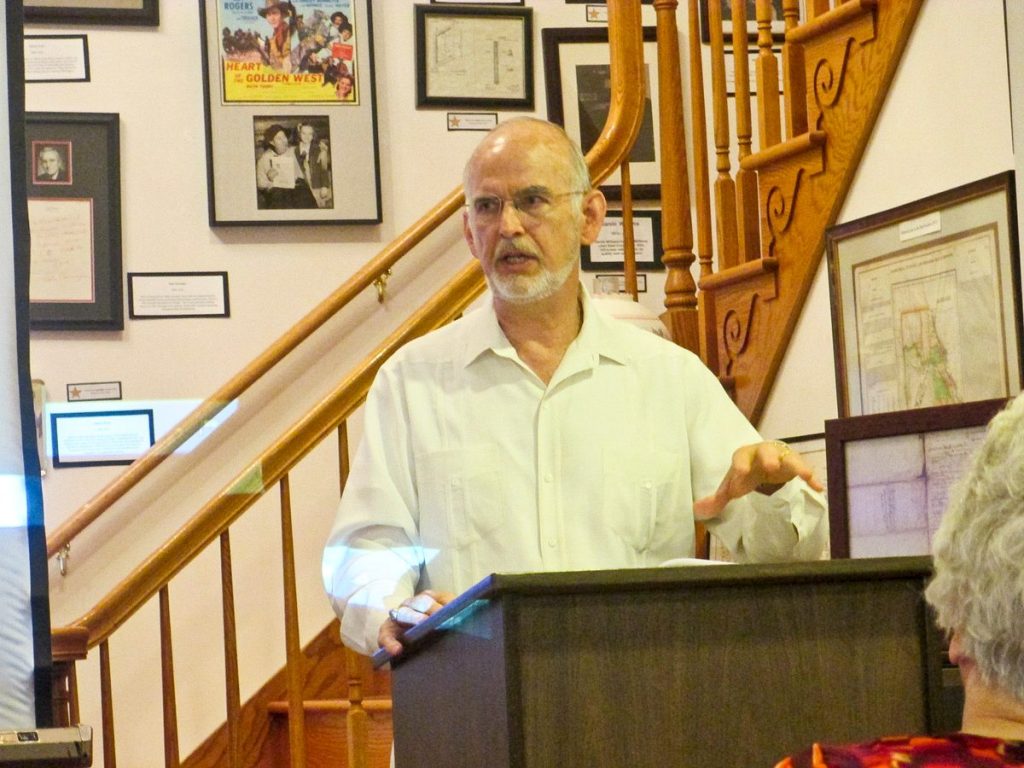
Retired U.S. Army Col. Joe Cornelison
Quoting the opening lines of Charles Dickens’ “A Tale of Two Cities” during a presentation at the Nodaway County Historical Society Museum on Saturday, Joe Cornelison summarized both times he lived in Panama.
While serving as a colonel in the U.S. military from 1985 to 1989, it was the worst of times. Gen. Manuel Antonio Noriega was the military dictator of the country, and the country was full of violent protest.
Six months after Cornelison left, Operation Just Cause brought Noriega to the United States, where he was tried and convicted for drug trafficking, money laundering, and racketeering and sentenced to 40 years in prison, later reduced to 30.
When Cornelison returned to Panama in the mid-1990s as the deputy administrator of the Panama Canal, the highest U.S. position at the Canal, it was the best of times.
Cornelison returned to Panama under the appointment of President Bill Clinton to ensure that the transfer of control promised in the Panama Canal Treaty would occur with ease.
While in Panama, Cornelison also met his wife Ellita, who was the executive assistant to the canal administrator.
Cornelison highlighted the challenges of collaborating with two governments and the shipping industry, noting that much of his work couldn’t have been as successful without the political engineering of the late 1970s.
In 1977, President Jimmy Carter and Panamanian leader Omar Torrijos signed two treaties that promised to end U.S. control in 2000; deliver control, defense, and operation of it to Panama; and preserve the neutrality of the canal as a neutral water passage.
For 20 years, according to Cornelison, both countries worked toward a common goal of assuring that there was no disruption to the daily operations of the canal.
“Although there were some points of tension, in general, there was agreement,” Cornelison said. “The differences were more in degree than concept.”
Cornelison said the calm during the transition was due, in part, because Panama had 10 years to rebuild itself after Noriega was removed from his position as a military leader.
“It resulted in 10 years of a stable government to prepare for the canal’s transfer,” he said.
Since the Cornelisons returned to Maryville in 2005, they’ve returned to Panama to visit Ellita’s family. They planned to visit again this summer to celebrate the opening of the canal’s expansion but cancelled due to a recent outbreak of H1N1 flu virus in the area.
The expansion project that cost $5 billion added two new locks and widened shipping lanes that can transfer cargo ships with twice the capacity of Panamax ships.
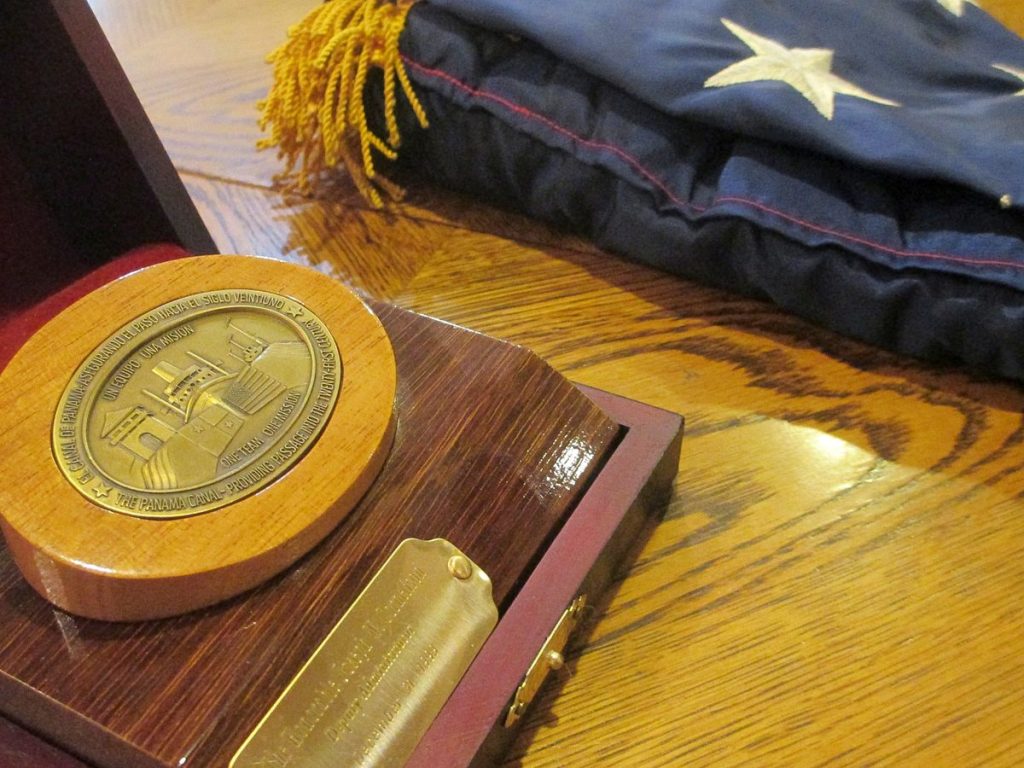
Cornelison donated two mementos he brought back to the United States with him from his time as deputy administrator to the museum, the American flag from his office and a medallion with the inscription “One team One mission.”
By JENNIFER DITLEVSON HAGLUND Staff writer
Retired U.S. Army Col. Joe Cornelison donated this medallion and flag to the Nodaway County Historical Society Museum Saturday after presenting about his experience assisting in the transition of the Panama Canal.