Missourians can apply for grants covering children’s medical expenses
By JENNIFER DITLEVSON HAGLUND Staff writer
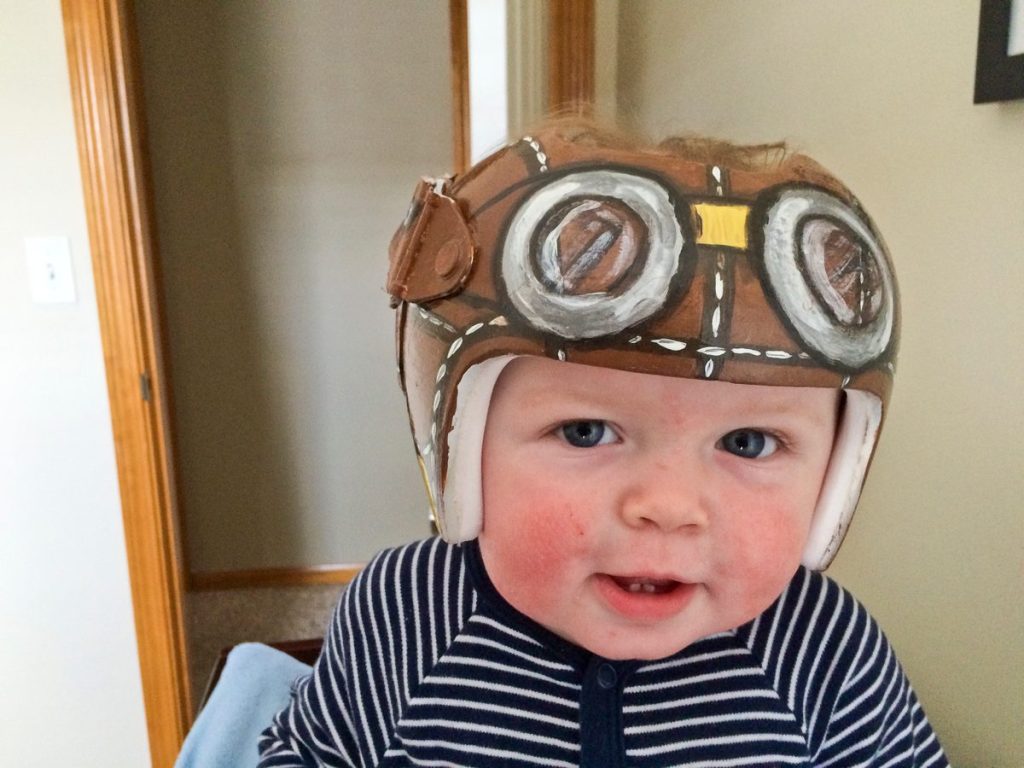
Lincoln Ellsworth, son of Jeremy and Tina Ellsworth of Peculiar, Missouri, had to wear a cranial band helmet due to having four extra bones in his skull. The Ellsworths’ insurance company did not pay for the helmet, so they had to pay $2,300 out of pocket for it. Through the UnitedHealthcare Children’s Foundation, however, they received a grant that reimbursed them for the total amount.
Soon after Tina Ellsworth of Peculiar, Missouri, had her son Lincoln in 2014, she noticed a baseball-sized lump at the back of his head.
Scared that it might be a tumor, she had him undergo several tests until a CT scan revealed that Lincoln has four extra bones floating at the back of his skull. These caused his head not to form to a spherical shape. The normal range of asymmetry in a person’s head is 0-3 mm. With the difference of 7 mm or more, doctors often suggest putting an infant in a cranial band helmet. Lincoln’s head measured 18 mm difference.
To correct the asymmetry of Lincoln’s head, he had to wear a helmet. Each helmet is customized for the infant’s unique head shape, and Lincoln’s cost $2,300. The Ellsworths paid for the helmet in cash.
“And it’s not chump change,” said Ellsworth.
The family would have had to deal with the cost of the equipment in addition to doctor’s visits, and diagnostic imaging, if it hadn’t been for luck.
During one of many trips to the doctor, Tina’s husband Jeremy noticed a pamphlet about receiving financial assistance through a grant from UnitedHealthcare Children’s Foundation. When the couple discovered that they were eligible to apply for aid, they were excited for the chance to take some of the burden of medical expenses from their budget.
“I was surprised no one had ever told us about it,” Tina said.
UHCCF grants help to pay for medical services and equipment such as speech therapy, surgeries, prescriptions, wheelchairs, hearing aids, and orthotics for children younger than 17.
The application is only offered online, and those interested in applying should know their adjusted gross income from 2015. For reimbursement, applicants should have proof of payment, the child’s birth certificate, and a physician’s certification of the child’s medical condition.
Grants are only awarded to those covered by a commercial health insurance plan, so no one on Medicaid or Medicare will receive grants. Other exclusions apply and are detailed on the foundation website.
Guidelines on the website state that the application process takes up to 30 minutes if applicants have all the necessary information readily available, but Tina said it took her about four hours.
Although UHCCF has awarded more than 10,000 grants valued at more than $29 million across the country since 2007, the foundation hasn’t had many applicants from Missouri in the last year.
Because so few families in Missouri have applied for grants from the foundation, the organization is working with media outlets around the state to inform residents like the Ellsworths of their potential to receive aid.
Missouri ranks 41 of 50 states and Washington D.C. when it comes to obtaining affordable health insurance from state or national-level exchanges via the Affordable Care Act.
Understanding the labyrinthine nature of health care plans can be difficult, too. What plans cover, what they don’t, special exceptions, and finding network providers only adds to the stress when faced with an unexpected medical condition.
Because Lincoln’s condition did not affect the function of his brain, the Ellsworth’s health insurance did not cover the cost of the helmet.
“It was not a good deal,” said Tina. “And I had no idea what these things cost.”
Within a month of applying for the UHCCF grant, the Ellsworths received a check for the total amount of the helmet, which was only two months after they purchased it.
Lincoln, who will celebrate his second birthday in July, wore the helmet 23 hours a day for seven months. Now, he no longer needs to wear his helmet.
“He’s a totally fine, happy, healthy baby,” said Ellsworth. “If we wanted his head to be perfect, we would’ve had him had surgery, but it’s so close now that we don’t find it worth it to put him under the knife.”
Ellsworth said she was glad to tell people about her experience receiving the grant because she and her husband already had other bills to pay.
For more information about UHCCF, visit the website at http://www.uhccf.org.