
The ‘Warren & Charlie Show’ certainly is a sight to behold
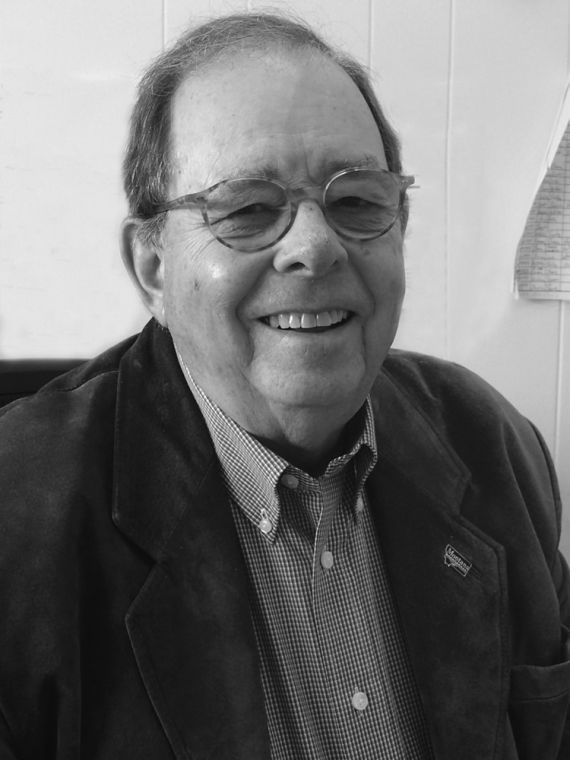
Jim Fall
To begin with, let me make it perfectly clear that I am not a financial guru.
Nor would I be considered a wizard when it comes to anything Wall Street.
Fact of the matter is, I am pretty much out in the cold when it comes to even the basics — like balancing a checkbook.
I am about money and banking almost as much I am about computers, iPads, and smartphones, and the apps that make them work.
I will admit that the combination of the applications that enable me to make deposits without even having to go to the bank and pay bills without having to remember to write the checks has simplified my life exponentially.
On the other side of that coin, I shudder to think what happens the day the computers that are “the cloud” crash.
The world as we know it might end, right then and there.
Our economy could also have been mortally wounded a week or so ago had something tragic occurred around the time of the gathering of shareholders for Berkshire Hathaway’s annual meeting in Omaha.
Company officials had feared somewhat of a letdown in attendance this time — at least compared to last year’s 50th annual clambake that attracted an estimated 45,000 attendees — but a crowd pegged at more than 30,000 exposed the fallacy in their concerns.
The dedicated shareholders would obviously rather see the show, first hand, than take advantage of its being streamed worldwide.
They also spend enormous bucks during the accompanying trade show — of Berkshire Hathaway-owned products.
The CenturyLink Center in downtown Omaha is taken over by the crowds who flock to town to see Berkshire Hathaway chairman Warren Buffett and vice chairman Charlie Munger hold forth with their candid views on the economy as they see it.
And they see it pretty clearly — through rose-colored glasses, you might say, after reviewing the Berkshire Hathaway balance sheet that reflects total assets in excess of $552 billion.
That’s right, $552 billion — with a “b;” with a capital “B.”
That revenue stream is generated by a stable of more than 90 individual companies, ranging from See’s Candies to the Burlington Northern Santa Fe Railroad, and just about anything you can think of in between.
A writer for Yahoo Financial a couple years ago compiled a piece about a fictitious consumer — he named her Jane Berkshire — who went through her entire day using nothing but Berkshire Hathaway products.
She awakened in the morning to her alarm clock powered by Duracell batteries and showered with Johnson & Johnson bath products.
Her wardrobe includes Fruit of the Loom undies and stockings purchased from Costco; her car was purchased from a “company” dealership, and it is insured through Geico, of course, one of several insurance and re-insurance companies owned by Buffett interests.
She eats lunch at Burger King or Dairy Queen, adding Heinz Ketchup on her Ore Ida potatoes, and pays the tab with her American Express card.
That’s an abbreviation, but you get the idea.
From Russell athletic clothing and Brooks running shoes to a significant chunk of Wells Fargo Bank; from Justin boots to Helzberg Diamonds, Mr. Buffett is into it. Like from Larson Juhl picture frames, and Benjamin Moore paint for the walls to hang them on, to Nebraska Furniture Mart.
And into it big time.
The Berkshire Hathaway shareholders meeting, for which I scored passes from the executive director of the Nebraska Press Association, who is also a former secretary of state in Nebraska, is one of those things I’d have on a bucket list, if I had a bucket list.
It is a chance to rub shoulders, literally and figuratively, with the vast majority of the heads of maybe 450 of the Fortune 500. It is a chance to see the Oracle of Omaha engage in a head-to-head, newspaper-throwing competition with Bill Gates — yes, the Bill Gates of the Microsoft Gateses.
It was reassuring to find out that Mr. Buffett and I do have at least one thing in common, however.
From different perspectives, to be sure, but a mutual interest, nonetheless, in community newspapers.
Confession is supposedly good for the soul, and since I have come clean on the “not a financial whiz” aspect of my life, I may as well admit to this other foible of mine — and Warren’s.
We are both addicted to Coca Cola.
In a similar way, and in very different ways, I need to add.
Whereas I am known to drink maybe two, sometimes three, Diet Cokes in a day, Buffett unabashedly derives 700 calories a day from drinking Coca Cola, the real, high-speed version, in the red can.
And what “all that sugar” potentially does to him seems to concern him about as much as how much less money BNSF made last year compared to the past when coal was booming.
There is one other difference between our interests in Coke, too.
I pretty much wait for 12-pack sales at Hy-Vee or Walgreen’s to buy mine.
Buffett, on the other hand, owns 23 percent of Berkshire Hathaway, which owns 400 million shares of the Coca Cola Company, valued at roughly $16 billion.
Mr. Buffett deems himself “a very happy guy,” and was quick to add, “and happy guys tend to live longer.
“I really wish I had a twin that had eaten broccoli his entire life. … I know I would have been a lot happier and I think the odds are I would have lived just as long,” he quipped. “I think Coca Cola is a marvelous product.”
Munger, too, weighed in on Coca Cola, noting that it is impossible to measure the bad in anything without also considering the good.
And that pair of elderly sages — Buffett is 85, Munger is 92 — certainly have a lot to be happy about, not the least of which is America’s economy.
Bring on Hillary Clinton, or Donald Trump; they think the U.S. economic system is too strong for either of them to mess up.
And they’ve been pretty much right so far, so why go against them now?
What makes them think so?
Buffett has a personal bet — a $1 million personal bet — that the S&P 500 will outperform a selection of hedge funds as selected by Protegé Funds over a 10-year period.
At the latest accounting, Buffett’s interests were up more than 64 percent. The hedge funds, 21 percent.
Any more questions?



