Safety Acres comes to Maryville
By JENNIFER DITLEVSON HAGLUND Staff writer
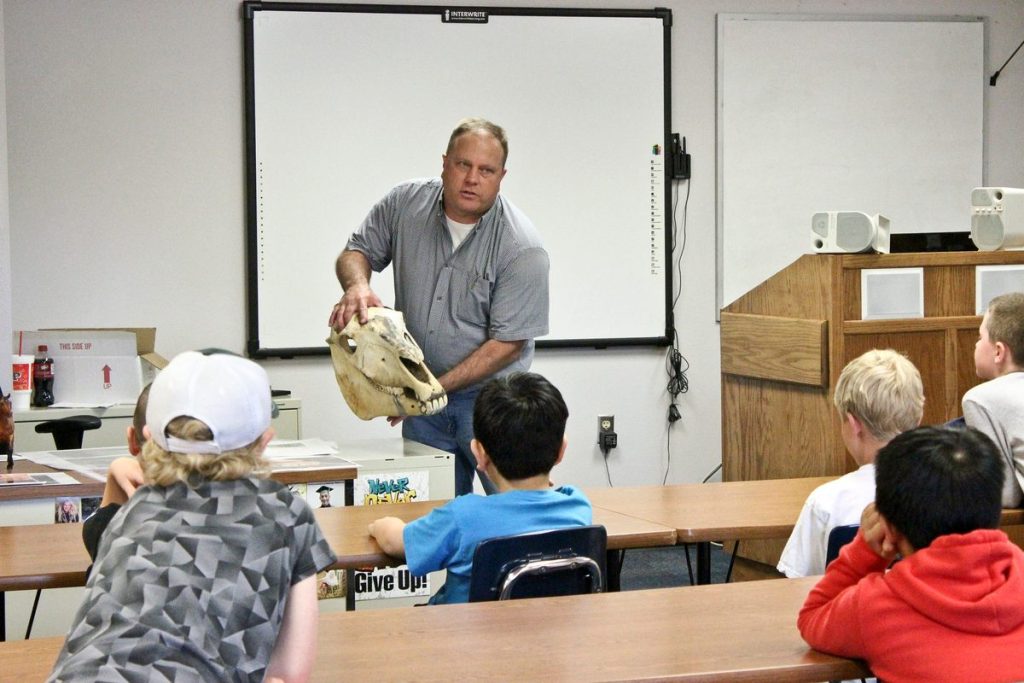
Jim Humphrey, a livestock specialist with the University of Missouri Extension, explains to Howard Dumke’s and Kelly Obley’s third grade classes of Eugene Field Elementary School how to respect the comfort zones of livestock. With this horse skull, Humphrey demonstrated how to avoid provoking fighting behavior in large animals.
St. Joseph Safety and Health Council and the Maryville R-II School District partnered to bring Safety Acres, a farm safety program based in St. Joseph, to the Northwest Technical School Thursday and Friday.
Safety Acres began in the 1990s as a community outreach program to educate children about farm and outdoor safety. This year the program covers issues related to water, livestock, firearm, grain bin, four-wheeler, and fire hazards.
Getting schools involved in the past several years revitalized the program, according to Sheldon Lyon, executive director of the St. Joseph Safety and Health Council.
At NTS, three groups of third and fourth grade students from Eugene Field Elementary School visited stations with speakers teaching about one aspect of safety.
Kati Hornickel, a fourth grade teacher at Eugene Field, said she doesn’t know if any of her students live on farms, but most of them know people who do.
Lyon said farm safety needs to be taught to children who live in rural areas but do not live on farms because they are likely to visit friends or relatives on farms, but may not know the rules.
“Farms are fun,” Lyon said. “They’re full of adventure, and we want to make sure it stays safe.”
Jim Humphrey, who is a livestock specialist with the University of Missouri Extension, taught the students about how to be safe around animals, particularly the big ones like horses and cattle.
Just like people, Humphrey explained, animals have a comfort zone. If a person enters it, the animal will respond in three possible ways. It might leave, stand still — or worse, it might fight.
As Humphrey raised photos of animals in different postures, he asked the students to identify which images showed signs of danger. About half the children could tell the difference between a tense and relaxed animal.
“When their ears are laid back, that almost always means that you’ve gotten in their zone and they’ll probably want to fight,” Humphrey said.
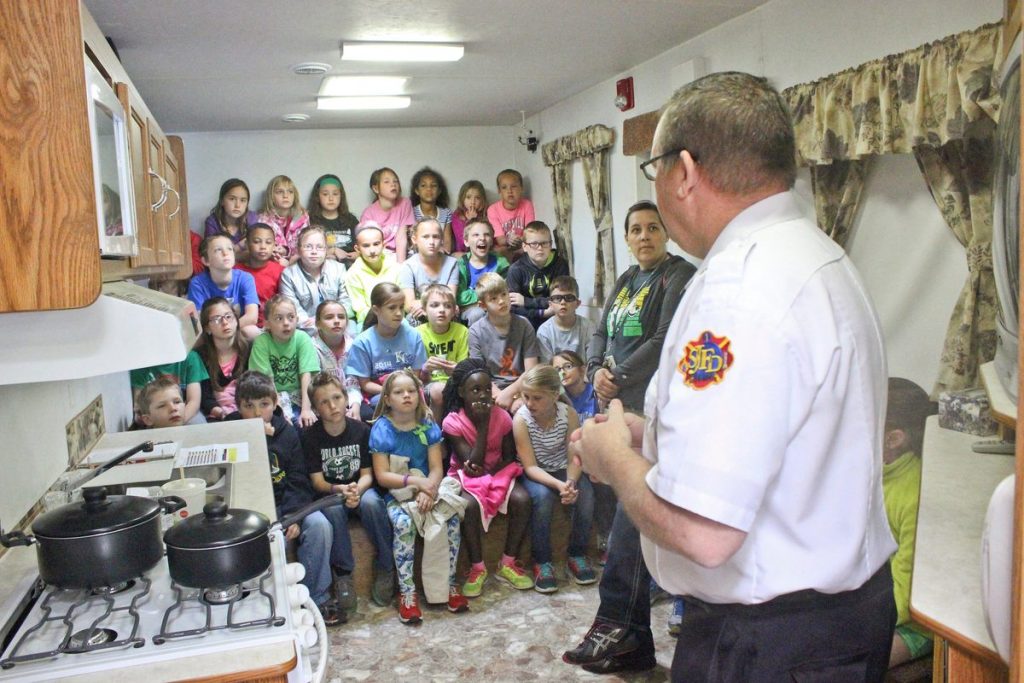
By working with the St. Joseph Safety and Health Council, schools of Nodaway County were able to access the St. Joseph Fire Department smoke house trailer to learn about fire safety. Fire Inspector Steve Henrichson of the St. Joseph Fire Department told the children that they should never be afraid to have emergency services check their homes, even if an inspection would only take five to 10 minutes.
He also reviewed cooking safety, including putting out grease fires and keeping pot handles turned in, away from younger siblings who might pull them onto themselves.
From year to year, Lyon said Safety Acres organizers change topics they cover. In previous years, Safety Acres incorporated weather and train safety situations.
“It’s certainly important to get this kind of information out there,” Lyon said.
For lunch, the Nodaway County Cattlemen’s Association contributed their time by cooking hamburgers for the students.
Eugene Field Assistant Principal Kim Walker said the students seemed to have a good time yesterday, and she would like to see Safety Acres return for another field trip opportunity for the district next year. Today, Maryville Middle School fifth graders and other area schools will participate in the same program.
By JENNIFER DITLEVSON HAGLUND Staff writer
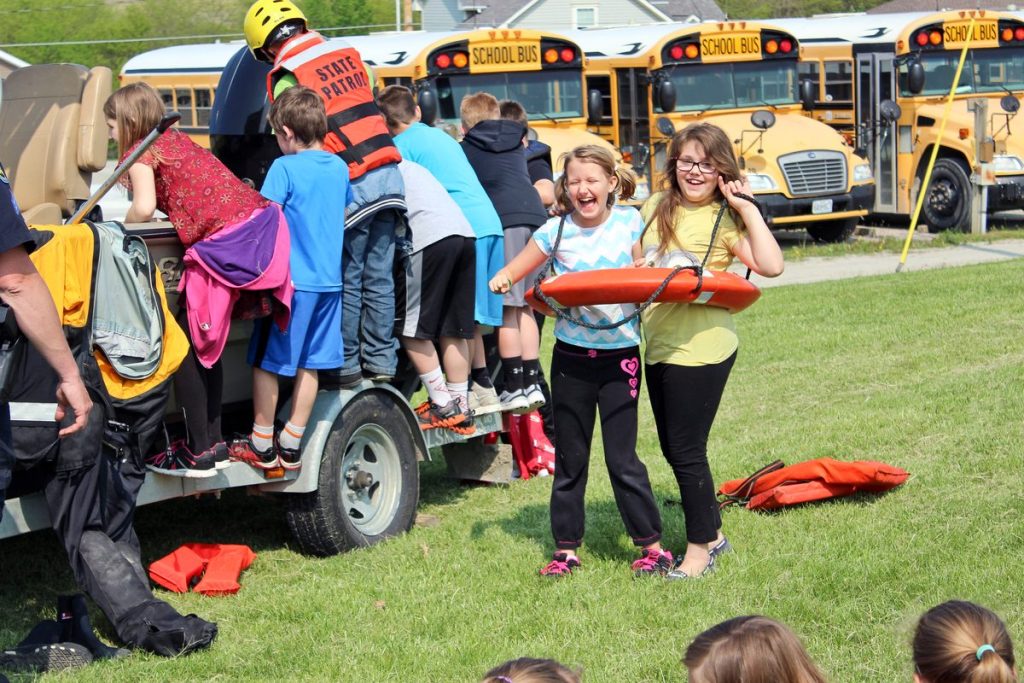
Eugene Field Elementary School fourth graders Aubrie Wixom and Emily Holtman have some fun with water safety equipment after learning about being responsible in and near water.
By JENNIFER DITLEVSON HAGLUND Staff writer
Eugene Field Elementary students squeezed into the St. Joseph Fire Department smoke house to learn about some easily forgotten fire prevention habits. Students heard about keeping smoke alarms up to date and putting out grease fires by removing their sources of oxygen instead of giving them more air to spread.