
Is it that time in history again, when the country needs a hero?
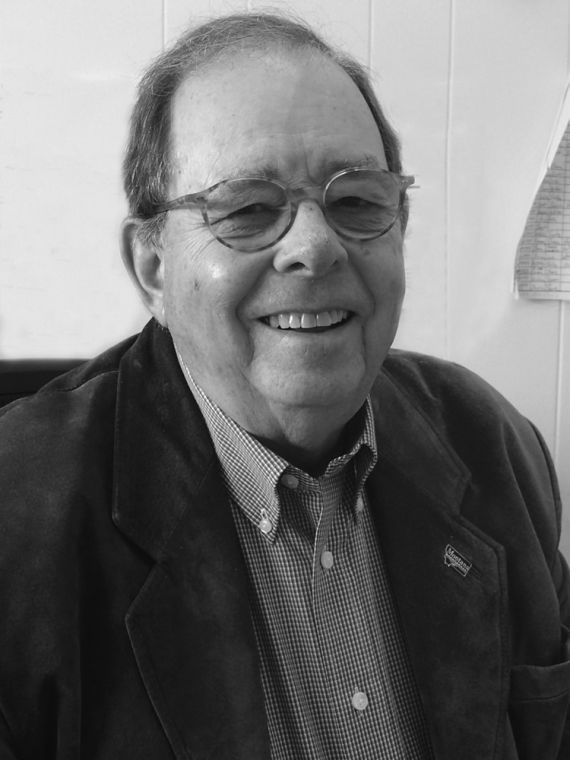
Jim Fall
Once upon a time, long, long ago, there was this somewhat itinerant newspaper guy who took a flier on an employment opportunity way out West.
Make no mistake, this wayward journalist was quite content to maintain his then-current employment and his residence in Missouri, but visions of a years-before vacation bounced through his brain, and he submitted his application to become associated with the newspapers in the Treasure State, Montana, Big Sky Country.
As the truth were to be told some years later, after he was securely entrenched in his new position, there had been a paucity of “real” applicants for the open position, so the selection process was not so complicated as had been anticipated.
As related by the then-president of the newspaper association in later years, although there were three score and a dozen applicants submitting, when those who readily admitted to having as their foremost desire to fish for the wily trout and/or hunt for the elegant elk, “there was not all that many left to choose from.”
Well, to abbreviate what could be a much longer fable, I was able to hold my position with the Montana Newspaper Association for more than 10 years, and while living in Helena for that period, had the good fortune to be across-the-street neighbors with a couple of pretty important people.
As luck would have it, we moved into our new home on West Hauser Boulevard, at the foot of idyllic Mount Helena, at about the same time another new family, from New Orleans, moved in across the street.
Their house was almost an obstruction as we looked out from our front windows to admire the city’s other iconic landmark, the Sleeping Giant landmass some 20 miles north of town.
(Note to those who know me: The Sleeping Giant was how I knew north from south in Helena, just as the Mississippi River had been my east-west compass when I was growing up in West Memphis, Arkansas. The “giant” was north; the “river” was east, and without them, I would have been pretty much lost.)
Our neighbors to the north were Stephen and Moira Ambrose.
Yep, the same Stephen Ambrose who was the acclaimed biographer of Dwight Eisenhower and Richard Nixon and the author of several other historical pieces centered around World War II.
His “Band of Brothers” had been published a couple of years before, while he was still on the faculty at the University of New Orleans, and “D Day” was pretty new when we arrived in Helena.
“Undaunted Courage,” the story of the Lewis and Clark Expedition’s journey in search of the headwaters of the Missouri River, and a water route to the Pacific Ocean, hit the best-seller lists in 1996, the year after we arrived in Helena.
I don’t mean this in a mean way, but Stephen was not the most friendly of neighbors, until Jan delivered a cherry pie to Moira, and then he pretty much softened up.
So much so that when he was involved with Colin Powell’s testing the waters for a presidential race, the national news services would roll into their driveway at something like 4 a.m. to interview Stephen — and their lights would flood the neighborhood.
He apologized for any bother that was to us — our bedroom was on the front of the house, so the TV lights poured through the windows — but we assured him it was not a bother.
When “Undaunted Courage” climbed to the top of the charts in 1996, the senior Ambroses moved to a new, and larger, home and their son, Hugh, who was Stephen’s researcher and eventually finished “The Pacific” after his father died, became our neighbor.
The senior Ambrose once attributed the extreme success of “Undaunted Courage” in great part to its timing.
He said it came along — recounting the almost unbelievable accomplishments of Lewis and Clark’s Corps of Discovery — at a time when America was desperately in need of a hero.
Lewis and Clark undoubtedly filled that role for a nation that the historian saw as needing someone to look up to after years of seemingly nothing but bad news and fallen heroes.
Well, after an event I was privileged to be a part of Friday night in Kearney, Nebraska, it just might be that time again.
The event I attended was the annual meeting of the Nebraska Press Association, and the Friday night speaker was my friend from newspaper association days, Morley Piper, the former executive director of the New England Newspaper Association.
Aside from that distinction, Piper was also a 19-year-old lieutenant in the 29th Infantry Division when his 43-man platoon was thrust ashore early on D-Day, June 6, 1944.
He said in his remarks Friday night that only 17 answered roll call the following morning. Overall, the unit sustained 150 percent casualties.
I had heard Morley’s presentation last year at the Missouri Press Association meeting, but never thought twice about hearing it again last weekend.
It is spellbinding. Heart wrenching. Tear jerking.
The audience Friday night, including Nebraska Gov. Pete Ricketts, did not utter a sound as it sat, enraptured, following the introductory standing ovation. Not a cough, never even so much as the clanking of a glass.
The audience was fixated as Morley told his story — his story of ordinary young men of extraordinary valor.
Young American men.
American heroes.
And afterwards, the line of listeners waiting to express their gratitude to him went on, and on, and on.
Heartfelt thanks from crusty newspaper editors whose “dad was in your war,” or who remembered “my granddaddy talking about the war.”
Handshakes. Hugs all around.
When Morley, now 90, sat as the line of visitors continued, one middle-aged man knelt in front of him and took his hand as he explained his connection to “Morley’s war.”
It was a touching scene.
As I visited with Morley before the evening ended, I mentioned the Stephen Ambrose story about our country’s needing a hero, and wondered with him if, perhaps, our nation is at that point, again.
And our World War II veterans, along with those who served so bravely in Korea but now seem to be somewhat forgotten, are those we are needing to fill that role.
There are Morley Pipers in all our lives — real heroes to whom we owe the freedoms we enjoy today.
The freedoms we seem to take for granted, and all too often tend to abuse.
The next time you encounter one of those real heroes, take time to say your thanks — and pay your respect.



