
Like watching a child grow up, I followed Mozingo since Day 1
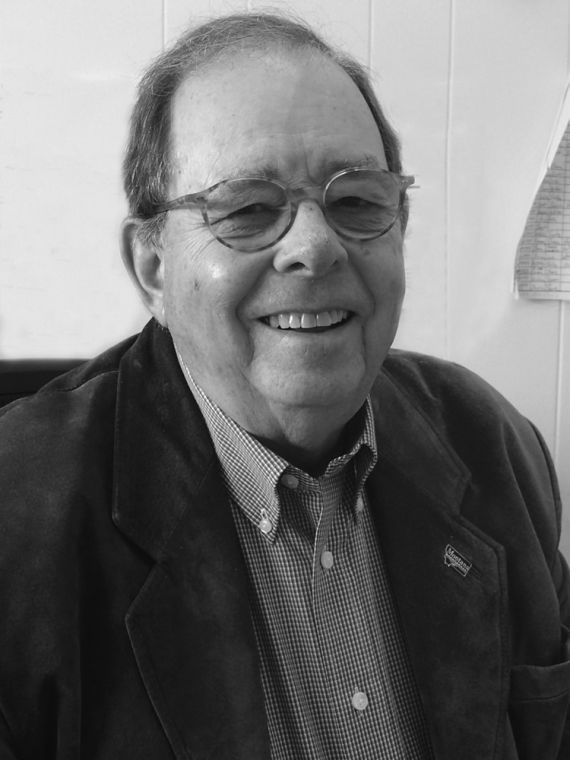
Jim Fall
I have always cherished the difference between the “news” in a newspaper, and the “opinion.”
The lines have become a bit more blurred than when I first began in this crazy business that I love so much, but any newspaper worth its salt still maintains a distinct line between “fact” in news stories and “opinions” as expressed in personal columns and/or editorials.
And to my way of thinking, that line is still valid, and sacred.
So, just in case there is any doubt about what you are — hopefully — about to read, this is not a news story.
It is an opinion piece.
My own personal opinion.
About a subject I am pretty passionate about, and have been for some 25 years now.
Yes, it has been that long since the City of Maryville, faced with something of a dilemma over where to obtain its raw water, first began to consider, and then address, the possibility of constructing an entirely new water supply source. The One Hundred and Two River had served, passably, for many years, but, as the saying still goes — the times they were a-changin’.
An alternative water supply source had been talked about off and on several times before, but nobody really got serious until that summer in the mid-1980s when the city and Northwest Missouri State University were on the verge of having to truck water in — from somewhere, anywhere, that had water to sell.
It was serious on the Friday before the waterlift was scheduled to begin on Monday — and then, miraculously, it rained.
The immediate emergency was averted, but the lesson had been driven home, and the wheels of progress began to turn.
Any attempt to list those at the forefront of the movement would be futile, but one name immediately comes to the top of my list — Vilas Young, councilman, and later, mayor.
That in itself is a long and arduous story of perseverance for another time, but the idea was ultimately sold to the city’s electorate and what we know today as the Mozingo Lake Recreation Park was born.
I missed the actual conception of the lake idea, but I was on board throughout the construction of the dam which impounded those 1,000 beautiful acres of water and gave rise to the multitude of benefits that have grown up around its more than 25 miles of shoreline.
No one, probably not even Vilas, or then-City Manager Bill Galletly, ever imagined what would become the great resource most in Maryville all too often take for granted today.
In the beginning, Mozingo meant that neither Maryville, nor the rural water district, would ever want for a constant supply of that precious commodity again.
I remember attending one public meeting when the engineers were asked what would happen “when the lake went dry?”
And I have never forgotten the answer, which put my simple mind, at least, at ease.
It was to the effect that on a 100-degree day in August, when the city’s demand was at its highest, more water would be lost to evaporation than to consumption.
Fair enough for me.
Just as distinctly, I remember chronicling week-by-week the construction of the dam, walking the golf course when it was still nothing more than a vision in Don Sechrest’s mind, and losing a favorite 35mm Nikkor lens somewhere in what is a treelined hazard where I have since lost more than a few golf balls.
In the year after I moved from Maryville to Montana, the golf course was opened for play, the RV park began to take shape and accept campers, and the swimming beach emerged, all under the watchful eye of David Middleton, who was more responsible than anyone for the development that park visitors have came to appreciate.
When I moved back to Maryville almost a dozen years later, Curly was still the park’s de-facto superintendent and the park that greeted me upon my return was almost more than even I could imagine.
Almost.
The Mozingo Advisory Committee was formed, and I was fortunate enough to become its first chairman.
I remembered, years before, brainstorming about what “could be,” and most of us on that group were satisfied, but not totally, with what currently “was.”
Without being egotistical, when I joined Glenn Jonagan on the city council, we cranked up the pressure to bring Mozingo to its full potential.
We pushed our fellow councilmen, city officials, and city planners to develop ideas, present plans, for Maryville’s future, for Mozingo’s future.
There were official meetings, and some unofficial ones, with potential developers of lodging and meeting space. For every couple of steps forward, there was most often one back, but Maryville has come to where it is today and the future of that 3,000-acre landmark facility is skyrocketing.
City Manager Greg McDanel; his assistant, Ryan Heiland; and the entire park staff have given those basic ideas a whole new dimension. Dr. Bruce Twaddle, whose amazing efforts to bring the Watson 9 junior golf course to fruition, and local investors who are developing a magnificent new lodge to compliment the existing cabins operated by the city, have brought Mozingo to hardly imaginable heights.
And the proposed conference center project being put before city voters April 5 stands to be the crown jewel of the entire development, the linchpin that keys Maryville’s maturation into a regional tourism attraction — and in this case, tourism most certainly equals economic development.
Mozingo is recognized as one of the great fishing spots in the country, hosting numerous tournaments every year. Think about enhanced facilities for those participants.
The Sechrest 18 course is known throughout the region for top golf, and the Watson 9 is recognized as one of the 15 best hybrid courses in the country, and it doesn’t even open until May. Think about increased tournaments, and the recognition — and revenue — they can generate.
Think about corporate retreats and team-building programs the MOERA facility can attract with added facilities.
Think about weddings, anniversaries, reunions, all desperate for places to congregate. Think about varied internships for Northwest students.
Think about a facility right here in Maryville, Missouri, that is — pardon me, but I’m biased — world class.
I have thought about it for more than 20 years, seemingly day and night most recently, and I truly believe all that I imagine, and more, is about to become reality.
Vote “YES” for Mozingo — and for Maryville.



