Health center board names new administrator
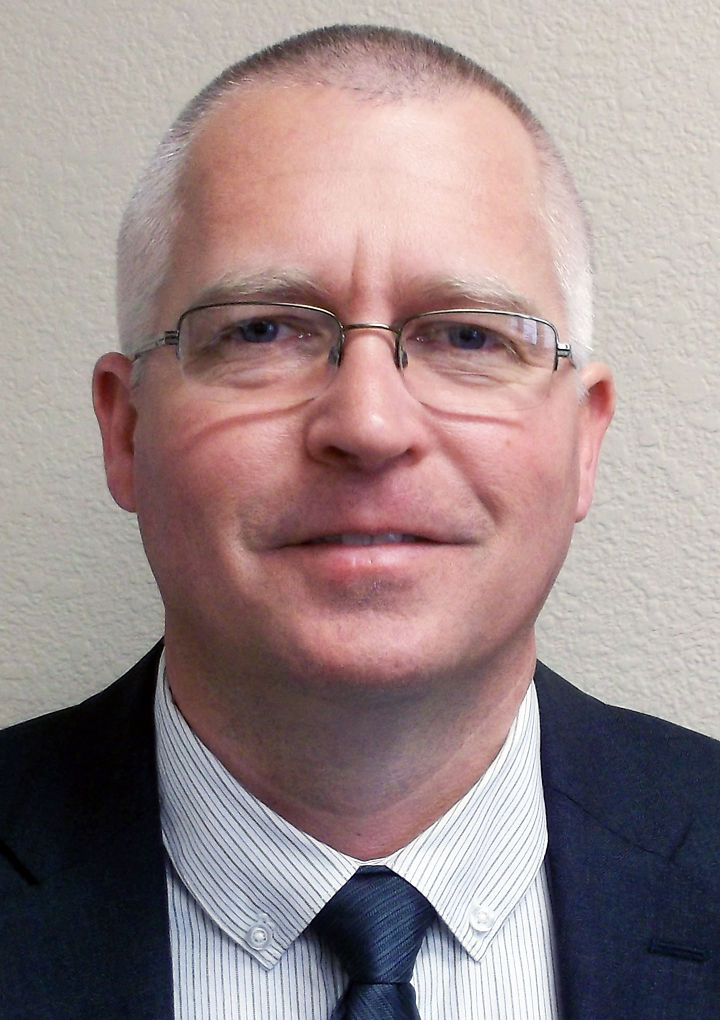
Tom Patterson
The Nodaway County Health Center Board of Trustees has announced its appointment of Tom Patterson to serve as the public health agency’s administrator.
Patterson, who will assume his new duties April 1, has served as the center’s environmental public health specialist since 2008. He replaces Della Rhoades Watkins, who is retiring after serving in the administrator’s role for the past 14 years.
“Tom has been a key part of our organization, and we are pleased to promote him to this important position,” said Joyce Tinsley, board chair.
Often referred to as the county health department, the center provides a wide array of health services, including immunizations, restaurant inspections, food handler classes, childcare provider classes, birth and death certificates, and blood pressure clinics.
It also serves as the local administrative agency for the Special Supplemental Nutrition Program for Women, Infants, and Children — WIC — a federal assistance initiative managed by the U.S. Department of Agriculture’s Food and Nutrition Service.
A native of Texas, Patterson attended college at Texas State University in San Marcos and, before coming to Maryville, was an agriculture education teacher in Macon County (Missouri) public schools.
In addition to serving as a public health specialist, a role that includes inspections of restaurants, food markets, sewer hookups, hotels, and licensed daycare centers, Patterson is also the center’s emergency response planner.
This is a different job than the position of county emergency management director, which is held by Christy Forney of Maryville Public Safety.
Patterson said Thursday he envisions no immediate major changes at the center but anticipates a “period of adjustment” as he settles into his new role.
He said his initial goal, aside from finding someone to fill the soon-to-be-vacant environmental public health post, is simply to “make sure we maintain our services and programming.”
The center currently operates with a full-time staff of four people that also includes a public health nurse and a health educator. That team is augmented by a part-time registered dietician.
In assuming the administrator’s job, Patterson inherits a significant legacy left by Rhoades Watkins, who took over the center less than a year after beginning there as a health educator. She was previously a paid staff member with the American Cancer Society.
In both 2014 and 2015, Nodaway County was declared the healthiest county in Missouri according to an annual statistical analysis conducted by the University of Wisconsin Population Health Institute in conjunction with the Robert Wood Johnson Foundation.
The survey has ranked Nodaway as one of the top five healthiest counties in the state in each of the last 10 years.
Rhoades Watkins also presided over the center’s move to its current suite of offices at 2416 S. Main St., the former home of the Maryville R-II School District Area Cooperative for Educational Support.
She said the move from smaller quarters at 515 N. Main and, briefly, 2322 S. Main have provided the center with all of the office space, client service areas, and storage that will be required for the foreseeable future.
As for specific public health initiatives, Rhoades Watkins said she is most proud of assisting with the campaign to ban smoking from local restaurants, a prohibition made official by city ordinance in 2006.
Similar efforts on the part of the health center and no-smoking advocates such as former St. Francis Hospital staffer Teri Harr, led to the proscription five years later of smoking in all Maryville workplaces, including bars and private clubs with paid staff.
Rhoades Watkins said Maryville was the first city in Missouri to ban smoking in restaurants and banquet halls and “set the bar” for communities statewide.
On other fronts, Rhoades Watkins actively supported the Nodaway County Coalition Against Cancer, whose efforts, she said, helped the county achieve a lower incidence rate for colorectal cancer than posted by the state or the nation as a whole.
Both the anti-smoking and anti-cancer campaigns, Rhoades Watkins said, touched the heart of the health center’s mission, which she described as “changing social norms in ways that benefit our community.”
She said actually watching local health trends improve with regard to certain cancers and smoking-related illnesses over a period of years was “a privilege that few in public health get to see.”
More recently, the health center helped organize an ongoing effort to improve child safety countywide. The initiative was launched in response to a series of child deaths tied to abuse, firearms, and other causes.
Rather than attack child-risk areas one at a time, Rhoades Watkins and a volunteer committee implemented a comprehensive program offering education and outreach to families covering a range of topics, including water safety, prescription drugs, poisoning, and home firearm safety.