
I didn’t even know I owned a petard to hoist myself upon
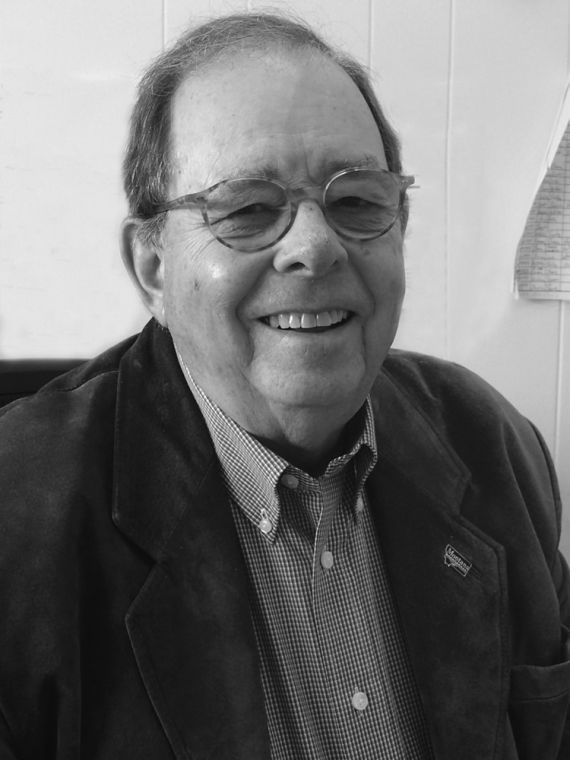
Jim Fall
Although it was never really on my bucket list — like seeing a World Series game involving the Kansas City Royals — I will admit the annual Sundance Film Festival in Park City, Utah, had crossed my mind a couple of times.
I suspect the first time was while living in Montana, we took something of a family trip to Salt Lake City, which ultimately included a 30-mile detour of sorts to Park City, a resort kind of place that is most popular during ski season.
The second time was last week, when I apparently made an appearance in the documentary, Audrie & Daisy, which has received some positive reviews — along with being acquired by Netflix for release later this year.
I must admit, however, my “appearance” must not have been as well received as the overall film.
According to Leslie Felperin, a Hollywood Reporter reviewer on assignment at the Sundance festival last week, my 15 seconds — or however long it was — of fame was enough to allow “Sheriff David Glidden” and me “to hoist themselves upon their own petards as they parade their vile, sexist attitudes before the camera.”
In all honesty, I did not even realize I had a petard, much less one of my own — and at my age, I’m not hoisting myself upon much of anything any more.
But it must be true, I read it straight off my iPhone, direct — well, second, or third, hand, to be honest. Someone I trust had forwarded the link to me from the mobile edition of the Hollywood Reporter.
Nigel M. Smith of The Guardian and Dennis Harvey of Variety have also posted their impressions of the 95-minute film from directors Bonni Cohen and Jon Shenk, but neither was as severe as Felperin in their criticism of me and what I am portrayed as saying when interviewed at the Maryville City Hall.
Smith at least properly identified Darren White as the Nodaway County sheriff and spelled my name correctly. Felperin had labeled me as “local Mayor Jim Fell,” among four factual errors in one paragraph related specifically to Maryville.
Obviously, the film has a serious local connection in that it details — to what extent I still am not certain because I have seen only clips from it — some of the events and the aftermath of the unfortunate occurrences that took place during and following a late-night teenage party in Maryville in January of 2012.
The Daisy in the title is obviously Daisy Coleman, who was a 14-year-old freshman at Maryville High School at the time of the incident.
The Audrie is Audrie Pott, also a high school freshman, from Saratoga, California, who, like Coleman, was assaulted by boys from her high school.
The major difference is that Pott ultimately hung herself after her encounter . She was 15 at the time of her death.
All of this is a resurrection of sorts of the sordid events that transpired on that night some four years ago — admittedly, right here in Maryville.
I was not proud of what allegedly took place that night when it came to light while I was fortunate enough to be serving as mayor — an honor of which I am still quite proud when looking back at the accomplishments of that term, and the many ideas which were fostered during that term — nor am I proud of it today.
But what happened, happened.
And nothing can change that.
Not any amount of name-calling, not a Netflix documentary.
Nothing can change what happened that night, and we all have to live with it.
Thankfully, nobody died.
It was a tangle that wound its way through the justice system, and I am certainly not qualified to judge the correctness of that outcome. I do know that in addition to our local officials’ participation, one of the most respected legal personalities in Kansas City was appointed as special prosecutor, and she played a role in determining the eventual penalties imposed on the accused.
The ramification that will always haunt me, personally, is the underserved unfavorable publicity that has been wrought on the community where I live, the community I love.
I have been involved with Maryville, to one degree or another, since 1975, and it hurts my heart for it to be subjected to unwarranted criticism, especially when much of that criticism in not founded in fact.
Daisy Coleman, who is now a freshman in college “on a wrestling scholarship,” according to an interview she granted Democracy Now in Park City. She said in the interview that she received many critical e-mails and messages through social media that led her to consider taking her life, too.
She also drew support from the Anonymous group, which organized a rally in Maryville.
I have said before, and I do not hesitate to reiterate, that I, as mayor, and other members of the city council, also received hundreds of e-mails, from people around the world, literally, who were as viciously critical, vulgar, of our presumed inactions as anyone could have been about Daisy’s circumstance.
I contend that is a local example of one of the major problems we have in our country today — every situation is black or white, red or blue — and “if you don’t agree with me, you can go to hell.”
If whatever I said during my interview — which I was led to believe was to be for inclusion in an educational film to be used to help young people understand the potential dangers involved with the indiscriminate use of social media — can be judged to have been reflective of a “vile, sexist attitude,” then I humbly and sincerely apologize — to my friends, and my entire community.
But, I do not apologize for whatever might be misinterpreted as vile and sexist, when it is actually an expression of an honest feeling about the matter, any matter, whether or not it actually coincides, or conflicts, with someone else’s point of view.
I am somewhat confident that, as Smith says his The Guardian review, the film will “provoke a national discussion after events that led to a California teen’s suicide.”
It certainly should.
And I am just as adamant in disputing his other deduction, that it should “… scare viewers from laying foot near Maryville, Mo.”



