Italian education approach guides Leet Center principles
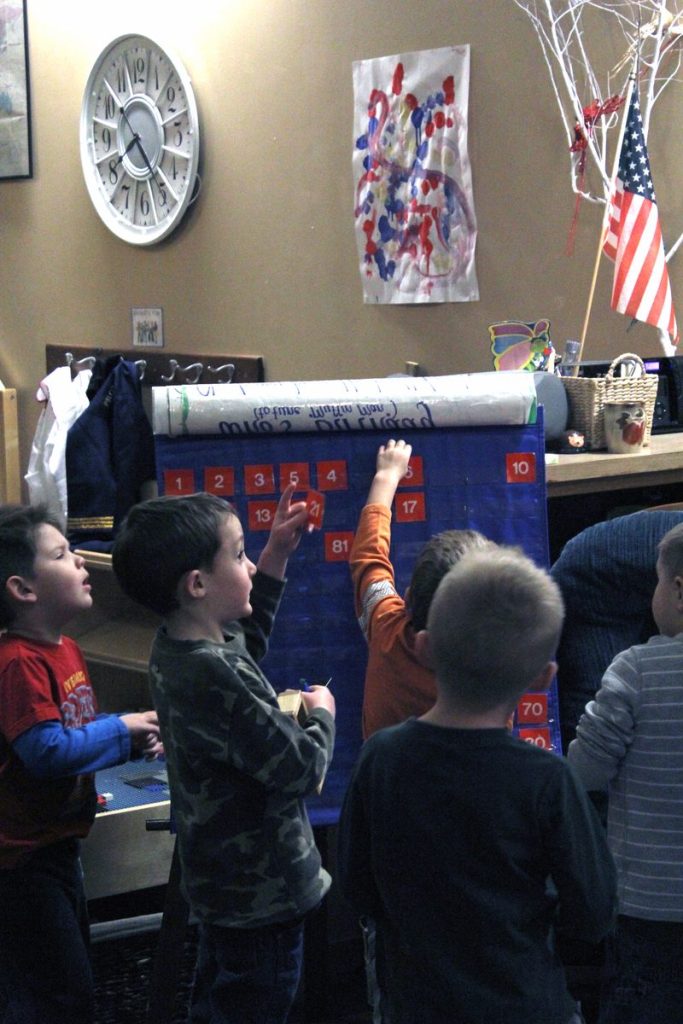
JENNIFER DITLEVSON HAGLUND/DAILY FORUM
At the Leet Center, teachers watch children ages 3 to 5 play to structure their lessons. The preschool follows the Reggio Emilia Approach that originated in a city by the same name in Italy shortly after World War II.
What looks like playing at the Phyllis and Richard Leet Center for Children and Families on Northwest Missouri State University’s campus actually amounts to a day’s work for teachers, helpers, and the children at the preschool.
While one little boy begins to paint at the easel, most of the rest of his classmates gather on a rug to place numbers on a chart to count to 100. Then a few of them decide that instead of putting the numbers in their proper places, the numbers should hide, and the counting crew turns into a search party.
The little boy at the easel takes no notice, and the little girl with a brown ponytail is playing with blocks in the loft in the corner of the room while the group scatters to find the rascally numbers that got away. One from the group breaks away to stack bear-shaped cookies at a table.
It’s not necessarily chaos, but it’s not exactly how teacher Meghan Sheil planned the day either. Sheil, who is a 1994 graduate of Northwest has been teaching at the preschool for 10 years total, said she makes lesson plans, but she watches the children to find out what they want to learn.
“We honor what they’re making,” Sheil said.
That means teachers leave toys the way they are unless it’s cleanup time because the children might not be finished. That also gives Sheil and her fellow teachers ways to extend the imaginative play into lessons.
If two children start talking about tying string from one end of the room to the other, Sheil might ask the children how much they will need, and then she sets out rulers. When they take interest in the rulers, then she begins to discuss measuring units.
That’s how the Reggio Emilia Approach works. Similar to Montessori education, the Reggio Emilia method encourages play and exploration as a means to learning. The Italian approaches differ in several ways. For example, Reggio Emilia focuses on group projects and activities, whereas the Montessori is based on the individual child.
Classes at the preschool aren’t separated by age, either. Leet Center Director Cindy Rouner said she divides the children into groups and mixes the ages and sexes together because she doesn’t view cognitive or physical development as necessarily tied to a number.
The center employs both undergraduate and graduate Northwest students to assist in the classroom. They often track student progress in anecdotes kept in binders. Information might include how children are relating to their peers and their academic readiness. Aides track counting, color and letter identification, and listening skills through games like stacking cookies or sorting objects.
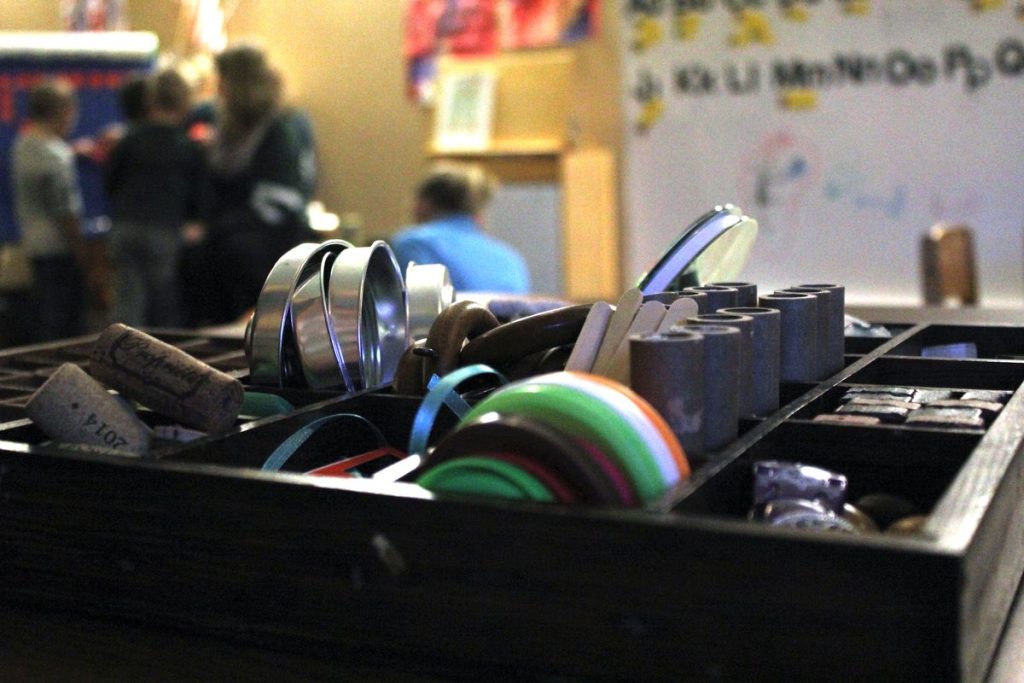
The visual aesthetic also plays a key role in organizing the Leet Center. Unlike most preschool classrooms, there aren’t as many primary colors or plastic toys. Instead, the children engage with wooden and glass playthings. According to Rouner, it’s not dangerous because the children know what to do if something breaks. They lift their hands and say, “Glass!” until a teacher comes to help them.
“We want to give them an environment that’s worthy of the miracle that they are,” said Rouner.
In late 2013, the Leet Center received a $100,000 grant from the Missouri Preschool Project, which was created to expand opportunities for high quality early care and education for preschool-age children. The grant enabled the school to offer reduced tuition for a 12-month all-day program for families with low-income.
Rouner said this was a breakthrough because she believes in the benefits of this approach so much that she wants it to be available to anyone who would want their child to learn in the environment the Leet Center provides.
“All people need to feel needed and necessary,” she said. “Every child deserves to learn like this.”
For seven years, Rouner worked in public schools. When she switched jobs, she said she wasn’t sure how it could work. It seemed too disordered at first. Working within the Reggio Emilia framework surprised Rouner, particularly when it came to discipline.
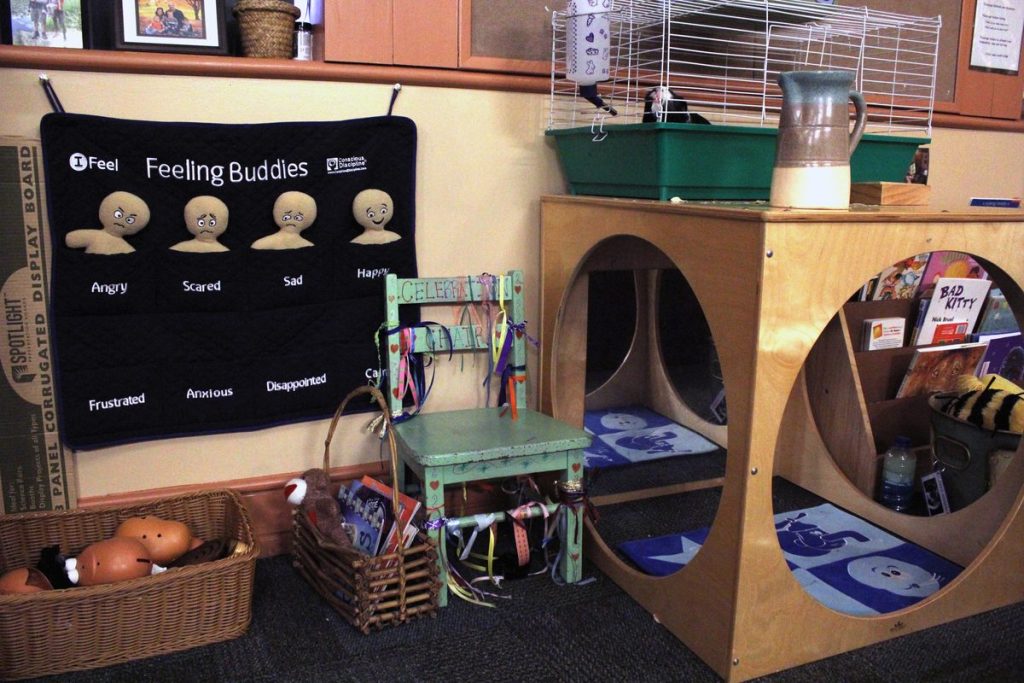
In lieu of administering discipline to children, teachers encourage students to identify their feelings and behaviors to learn self-discipline through Conscious Discipline. On the wall, there are dolls with happy, sad, angry, and scared faces so children can know what they look like when they feel these emotions.
Teachers don’t give them to the children. The children find them on the wall and get them to communicate their feelings or ask classmates how they are doing.
“We teach the kids to welcome their emotions, even anger,” Rouner said. “We want there to be a safe place where children can regulate their emotions and find out what they need.”
This spring some Leet Center staff and a few students from Northwest will travel to Reggio Emilia, Italy for a study abroad opportunity to learn from others around the world who use this method.
“This is really a dream come true,” Rouner said.
Although Rouner said she’s had some parents question whether the approach will get children ready for kindergarten, the general response has been positive.
JENNIFER DITLEVSON HAGLUND/DAILY FORUM
The Leet Center uses Conscious Discipline to teach children about their emotions. The box, pictured at right, is a safe space for children to choose to sit if they need time to be alone or process their feelings. Each picture on the blue mat designates a type of breathing the child learns to use to calm themselves.
JENNIFER DITLEVSON HAGLUND/DAILY FORUM
This “tinker box” is filled with everyday objects for the children to use. Playthings at the Leet Center look a lot like what children would find at home. Items are often made of glass, wood, and metal which might otherwise be considered “off limits” for small children.