Freemasons share love of the brotherhood
Jennifer Ditlevson Haglund
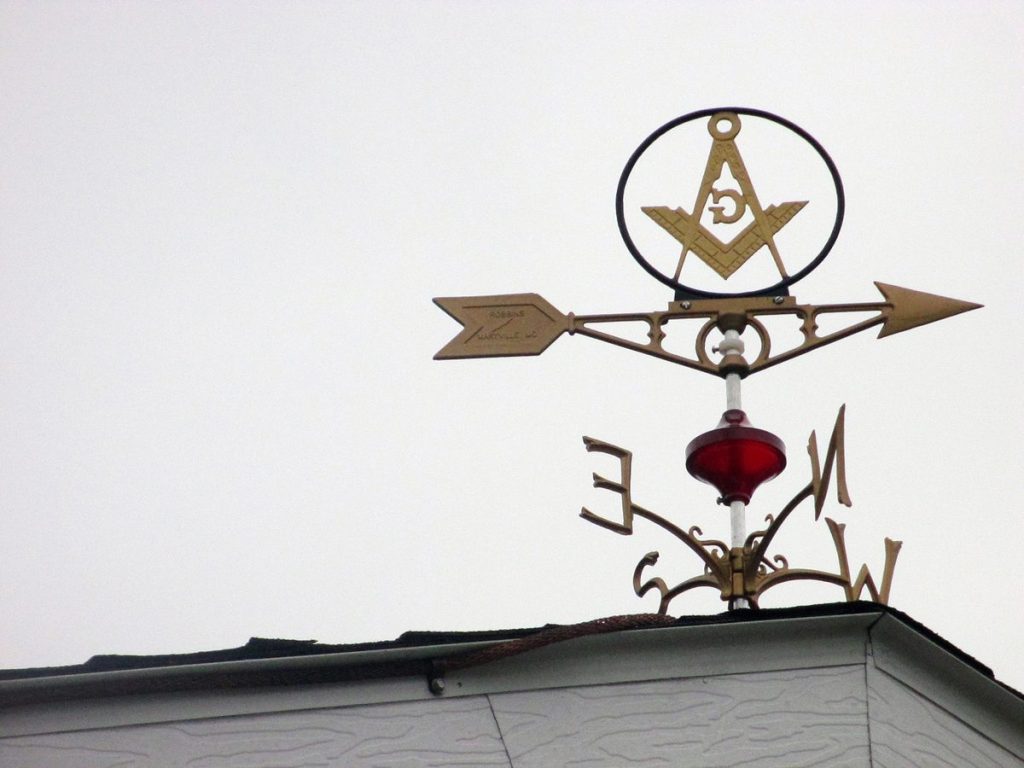
This weathervane incorporating the Masonic square and compasses, is displayed at the Maryville residence of longtime Freemason Bill Hollingsworth, a retired Missouri State Highway Patrol trooper. Hollingsworth has collected Masonic memorabilia for nearly 60 years.
They have secrets, but they’re not all that mysterious. There are rituals, but it’s not a religion.
That’s what the men of the Maryville Masonic Lodge at 1622 N. Main St. want people to know.
However, according to member Mike Thompson, Freemasonry is a way of life full of opportunities for spiritual experiences and personal growth.
Thompson, a former Maryville mayor, is currently the Maryville lodge’s treasurer. He got into the organization while researching his family’s history. Everywhere he looked, he found more Freemasons.
For Thompson, being a Freemason has enlarged the circle of friends he can trust to help him when he’s in need. He said he views it as a reciprocal experience that allows him one more way of connecting and committing to his community.
“We have a saying,” says Thompson’s fellow Mason Bill Hollingsworth. “We take good men and make them better.”
A Mason for nearly 60 years, Hollingsworth joined along with his brother after both had served in the Korean War. The two men had a grandfather and great-grandfather who were Freemasons as well.
Hollingsworth has been a Mason almost longer than he’s been anything else, and signs of his involvement surround him. A weathervane decorated with Masonic symbols sits atop his garage. A small stone with the Scottish Rite logo on the steps of his front porch indicates his having reached the 33rd degree of Masonry. A Bible on an end table in his living room bears a gold-embossed square and compasses, perhaps Freemasonry’s best-known symbol.
Harmon Mothershead, a retired Northwest Missouri State University history professor, joined the Masons around the same time as Hollingsworth when he was going into the military to serve at Fort Leonard Wood.
Mothershead married in, so to speak. His wife was part of the International Order of the Rainbow for Girls, a Masonic youth organization, and her father was a Mason.
Although Mothershead had been involved with Freemasonry before, it wasn’t until Hollingsworth talked to him about it in the late 1990s that he began participating regularly.
Maryville’s Masonic heritage dates back to 1857. According to Hollingsworth, the town once had two lodges, one each for the north and south ends of town. The lodges merged in 1931.
At one time, Hollingsworth said, Nodaway County had 11 lodges, but membership numbers have fallen considerably, and last year Maryville absorbed the Skidmore lodge.
Having more active members, Hollingsworth said, enables the lodge to better support community outreach projects like MoCHIP, an identification program that helps families and law enforcement officials track missing or abducted children.
The process involves compiling a file for each child comprising digital photos, fingerprints, and dental impressions then creating ID cards and lists of emergency contacts.
Although Masons take pride in being active in their community, they are hesitant to identify themselves or talk much about their organization in public.
They wear rings or pins, and they may have signs on their vehicles or homes, but members seem to enjoy maintaining a certain sense of mystery. Thompson said that may be part of the appeal.
The organization’s penchant for secrecy, according to Mothershead, has caused a lot of misconceptions.
Televangelists, conspiracy theorists, and movie plots often make much of Freemasonry’s supposed influence over government and business, which Thompson said has skewed public opinion about the organization.
But Hollingsworth, Mothershead, and Thompson say they still enjoy catching pop culture references to Freemasonry, even if they are not entirely factual.
“If you’re not a Mason, you’ll miss it,” Thompson said.
Films like “Conspiracy Theory” and “From Hell,” to name only two, have helped encourage the notion that Freemasons belong to some kind of cult or are secretly controlling the government.
“One of the biggest problems is people think it’s a religion, but it’s not,” Thompson said. “You never have to leave the door of your church. There is no way that there should be anything getting in your way of practicing your religion.”
The requirement that members believe in the “True and Living God,” Hollingsworth said, doesn’t exclude any particular faith or denomination.
“We’re just about the most ecumenical group out there,” Mothershead said.
In order to discourage the perception that Freemasonry is a religion, members refer to their meeting place as a “lodge” instead of a “temple,” the latter having been the common term for several centuries.
Sheriff Darren White, the local lodge’s senior warden, said that growing up he knew his grandfathers were Freemasons but little else about the group.
“The Masons are very much an organization of tradition and ritual,” White said.
Mothershead added that ritual is what bonds Masons together, and he and Hollingsworth agree that when the organization dropped the requirement for new members to learn the ritual about 15 years ago, it may have achieved the opposite of its intended effect.
If the relaxed requirement did encourage men to join, it perhaps failed to ensure their commitment.
“Our friendship is built, in part, because we’ve all done the same thing,” Mothershead said.
Hollingsworth said the average age of Freemasons in Maryville is over 60, and Thompson wondered if that’s a reflection of how social organizations are faring in rural areas generally.
“That’s a concern I have,” Hollingsworth said. “I’m not sure how rural areas are going to maintain membership.”
All of the men interviewed for this article said they valued the fellowship gained from belonging to a fraternal organization, and they speculated that such relationships may be hard for younger generations to understand after growing up with social networking and the Internet.
Jennifer Ditlevson Haglund
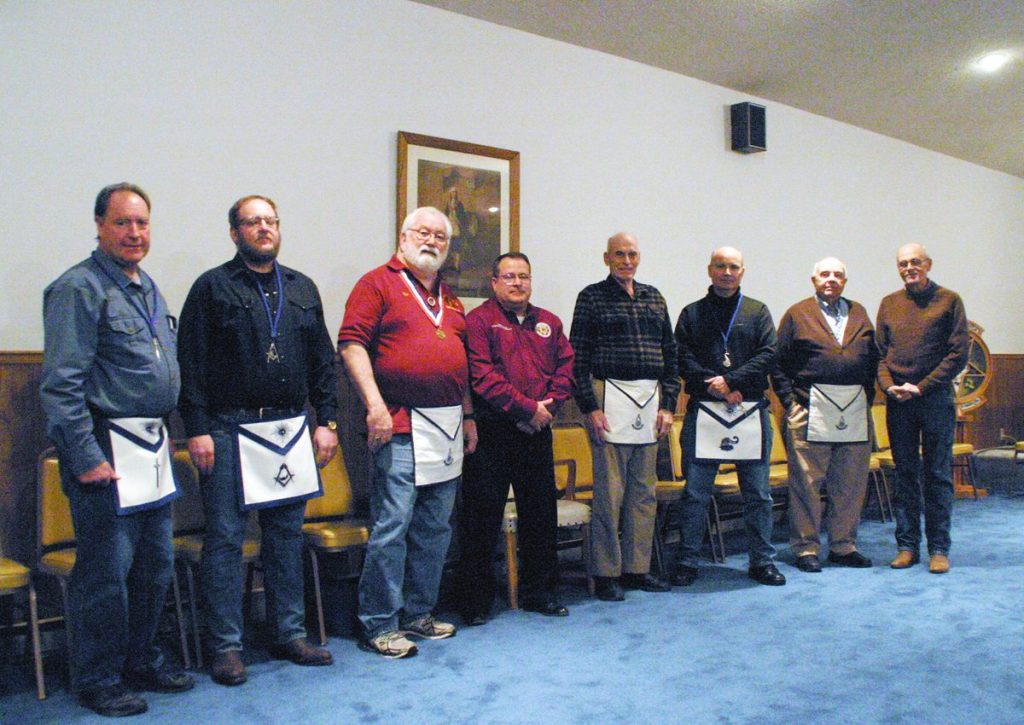
The local Masonic lodge, members of which are pictured here, meets at 7:30 p.m. on the first and third Mondays of each month at 1622 N. Main St. The Maryville organization was established in 1873.