County claims taxes owed on Energizer plant
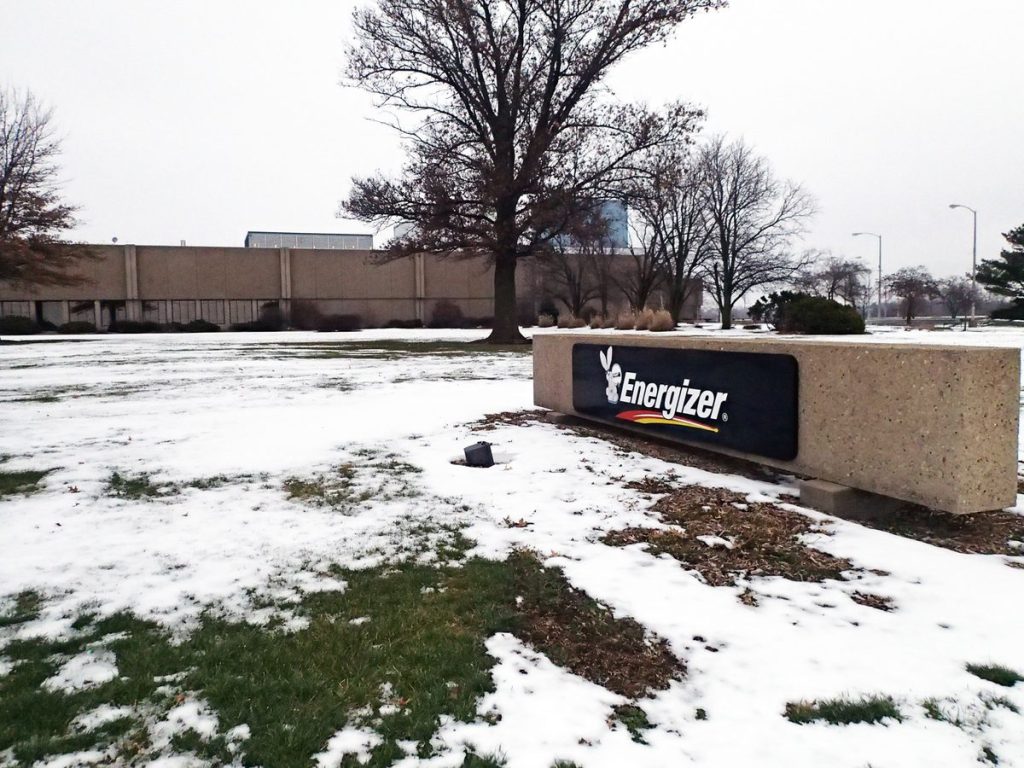
TONY BROWN/DAILY FORUM
Currently owned by a non-profit corporation seeking to sell the property in order to finance microloans in developing nations, the former Energizer battery plant on Highway 136 has been idle for more than two years. However, Nodaway County Collector-Treasurer Marilyn Jenkins told the County Commission on Wednesday that previous owner Energizer Battery Manufacturing Inc. still owes nearly a half-million dollars in back property taxes, most of which are earmarked for the Maryville R-II School District.
In an echo of a dispute that arose more than a year ago between Nodaway County and the defunct Carbolytic Materials Company plant east of town, County Collector-Treasurer Marilyn Jenkins told the County Commission Wednesday that the now-vacant Energizer battery factory, located at 3131 E. First St., owes nearly a half-million dollars in back taxes for 2015.
Jenkins brought up the delinquent real estate and personal property tax bills during the first quarterly officeholders meeting of 2016, which took place in the commission chambers at the County Administration Center.
As of Jan. 1, Jenkins said, Energizer Battery Manufacturing Inc., which in Maryville operated as subsidiary of St. Louis-based Energizer Holdings, owes the county $206,456 in real estate property taxes and $253,603 in personal property taxes related to fixtures and equipment, a total of $460,059.
In addition, Jenkins said, the corporation owes nearly $44,000 in penalties and will be charged an additional 2 percent penalty for each month that the tax bill remains outstanding.
Though the funds would be paid to the county, most of the money — nearly $317,000 — is actually owed to the Maryville R-II School District.
Jenkins said the unpaid tax bill has had a significant impact on 2015 collections, which are currently running at just over 92 percent of payments made over revenue owed. In a typical year, she said, property tax collection at the end of the first week in January averages around 97 percent complete.
Energizer no longer owns the property, having sold it in early December “for one dollar and other valuable consideration” to a non-profit company that subsequently transferred both the building and grounds to a limited liability holding corporation with the same street address.
In a warranty deed dated Dec. 4 and recorded on Dec. 8, Energizer Manufacturing Inc. of St. Louis agreed to hand over the factory, empty since late 2013, to the Mercy Foundation Group, a 501(c)(3) non-profit corporation headquartered in Tampa, Florida.
A subsequent warranty deed dated Dec. 7 and recorded Dec. 8 granted the property “for no consideration and as a matter of business convenience” to Mercy-controlled 3131 E. 1st. Street LLC.
Mercy Foundation’s website at mercyfoundation.org describes the organization as a non-profit “that works to reduce the effects of poverty by supporting microloans to the poor across the globe.”
The site further states that the company funds these efforts by “obtaining tax deductible charity donations through the acquisition of underutilized assets.”
It is possible, Jenkins said, that Mercy, as the current owner, would owe prorated taxes accrued between the time of the sale and Jan. 1 depending on the terms of the agreement between it and Energizer. However, she said Energizer is still responsible for all of the 2015 taxes that accumulated during its final 11-plus months of ownership.
Jenkins said she has yet to consult Nodaway County Prosecuting Attorney Robert Rice about the situation but plans to do so in the near future.
In the similar case of the failed Carbolytic Materials plant, the county ended up seizing the property and selling it at auction in April 2014 in an attempt to collect about $350,000 in back personal property taxes plus more than $35,000 in attorneys’ fees and penalties.
Jenkins said a similar action with regard to Energizer is possible, but not before a required series of administrative procedures, including notification of the tax debt by certified mail, is completed.
“We may have a check in the mail today,” she said. “I don’t want to jump the gun.”
After announcing in late 2012 that it was shutting down the 500,000-square-foot plant as part of a corporate consolidation, Energizer put the factory up for sale through a real estate broker specializing in industrial properties, but no buyers were forthcoming.
At the time the closure was announced, the plant had been downsizing for some time and had about 300 full-time employees plus another 150 contract workers, down from a payroll of around 700 employees in the 1970s and ’80s.
Less than a year before the decision to close the facility, the plant celebrated its 40th anniversary. Construction on the 80-acre campus began in Nov. 1969 and ended in the summer of 1971.
Energizer Holdings, which reports serving markets in more than 160 countries, remains a major manufacturer of batteries and personal care merchandise and is best known for Energizer and Eveready household batteries; Schick, Wilkinson Sword, Personna, and Edge shaving products; Playtex feminine hygiene and baby products; and Hawaiian Tropic and Banana Boat sunscreen products.