Smokeout: Now is always the best time to quit
ALANNA WOLF Staff Writer
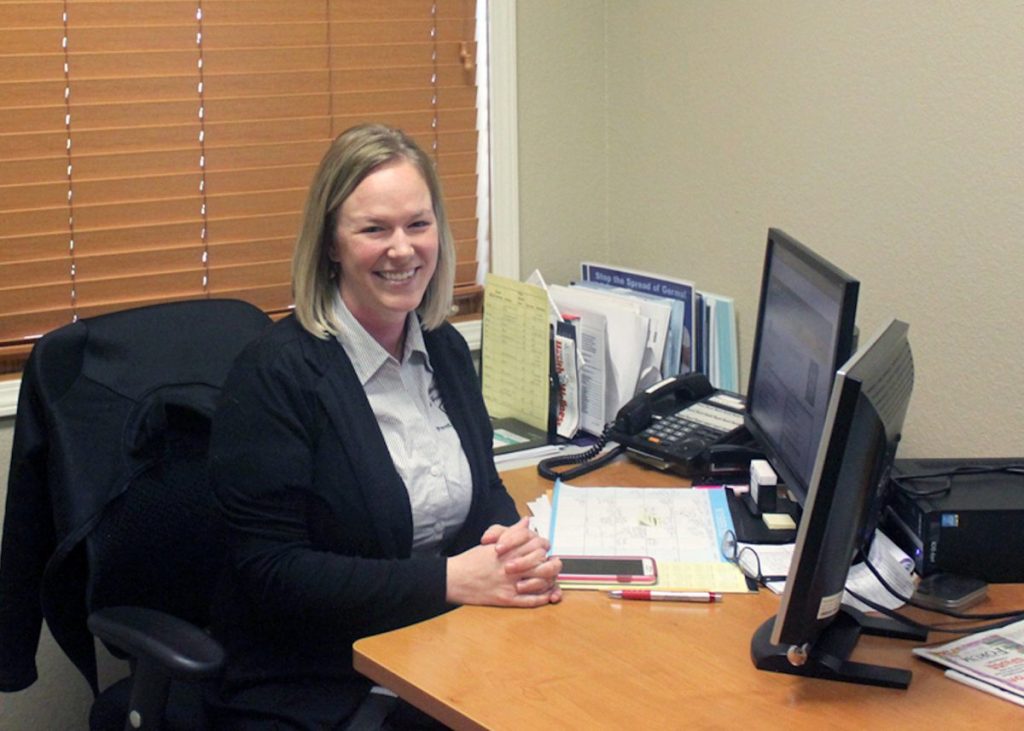
Christy Tapps, health educator with the Nodaway County Health Center, helped coordinate this year’s Great American Smokeout campaign. Though the national emphasis ended Thursday, Tapps says that any day of the week and any hour of the day is a good time to leave that last cigarette in the pack.
In its 40th annual Great American Smokeout campaign, the American Cancer Society is still telling smokers to call it quits.
Each November the organization sets aside the third Thursday of the month to encourage smokers to give up the habit for good. Yesterday, smokers and tobacco users everywhere were asked to make a plan to quit using tobacco and begin the journey toward a healthier life.
Friday works too, organizers say.
In support of the Great American Smokeout, the Nodaway County Health Center joined the American Cancer Society to help spread the message that when it comes to smoking it’s OK to give up.
“The number-one step to quit smoking is to plan a quit day,” said Christy Tapps, health educator at the Nodaway County Health Center. “The hope is that by setting this day every year, that will give people a quit date to start with, and that way people are joining thousands of others who are going to quit too. That way they will know that they are not alone in the battle of quitting smoking.”
Abandoning cigarettes can add nearly a decade to a person’s life, and the health benefits begin immediately, Tapps said.
On the downside, continuing to light up can lead to strokes, heart disease, high blood pressure, decreased lung function, premature aging, and several different types of cancer.
Once a smoker quits, heart rate and blood pressure drop within 20 minutes. Three months after quitting, circulation improves and lung function increases. Nine months after quitting, lungs begin to regain normal function, and coughing and shortness of breath decrease.
One year after quitting, the excess risk of coronary heart disease is half that of someone who continues to smoke.
Five years after quitting, the risk of mouth, throat, esophagus, and bladder cancer is reduced by 50 percent, the risk of cervical cancer in former female smokers falls to that of a non-smoker, and the risk of a stroke also falls to that of a non-smoker.
“The health benefits of quitting smoking far outweigh whatever perceived benefits smoking has,” Tapps said. “And not just for the smoker but for everyone around them. Secondhand smoke has been proven to have just as many risks and to be just as deadly and dangerous as smoking itself.”
Tapps cited the extremely addictive ingredients used in cigarettes as the No. 1 reason it is so hard for people to quit smoking.
The second reason, she said, is that smoking has become an ingrained habit and part of a smoker’s daily routine. Changing that can cause severe anxiety.
“Due to the addictive properties of the nicotine, and the fact that it’s such a habit, it’s very hard for smokers to just stop smoking,” Tapps said. “There will be withdrawal symptoms. The smoker will be anxious and irritable because their habit that is so extremely addictive has been taken away.”
Tapps said the best thing for those around a smoker attempting to quit is to be supportive and encouraging.
“So many people relapse because they don’t feel supported,” she said. “Or they slip up and have a cigarette, but there is no one there is say, ‘It’s OK. It’s not the end of the world. Try again.’”
According to Tapps, if someone who is trying to quit smoking makes a mistake, they often lose heart and relapse.
“So to encourage that person through their slipups and remind them that quitting is so important for their health and well-being, that plays a huge part in their journey to quit smoking,” she said.
Setting a quit date and formulating a plan about how to quit smoking are essential first steps in quitting smoking, Tapps said. She also advised consulting a physician.
“A doctor can help you monitor your nicotine replacement intake and help you figure out exactly what sort of replacement plan you should be on,” Tapps said.
But she warns against resorting to e-cigarettes.
“Using an e-cigarette is just as harmful as smoking, and so is the secondhand vapor they produce,” said Tapps. “They’re not FDA regulated, so we have no idea how much nicotine is in the liquid used for e-cigarettes, or exactly what other ingredients go into that liquid. They’re just very dangerous.”
Those interested in quitting smoking can find more information at cancer.org/smokeout or by calling 800.227.2345.